Your business,
on autopilot.
One platform for creating, running and growing your business, powered by AI.
ChatGPT Subscription vs API for Agents: The Break-Even Math





Last updated: September 2026. All prices and terms were checked on September 28, 2026.
A $20 ChatGPT Plus plan beats pay-per-token API pricing once your agent does about 80 runs a month. It stops being the right answer the moment the agent runs without you. That is the whole ChatGPT subscription vs API for agents question in two sentences: the flat plan wins on price for work you do yourself, and loses on terms, limits and reliability for work that runs on its own.
This guide puts real September 2026 numbers on both sides: what each ChatGPT and Claude plan actually includes, what the API charges per token, where the break-even sits, and what OpenAI's and Anthropic's terms say about pointing an agent at a consumer plan.
- The break-even is low. At current mid-tier API rates, a typical agent run costs about $0.25, so a $20 plan pays for itself at roughly 80 runs a month, a $100 plan at about 400, and a $200 plan at about 800
- The flat price has a ceiling. Every plan meters usage in five-hour windows plus weekly limits. Past them, extra usage is billed at roughly API rates, so heavy users pay the plan fee and the per-token bill
- The terms split by who is driving. Anthropic forbids routing Claude Free, Pro or Max credentials through third-party apps and has enforced it since April 2026. OpenAI tolerates personal use in coding tools but tells you to use an API key for programmatic workflows
- Unattended agents belong on the API. Scheduled jobs, customer-facing bots and anything running inside your own product need an API key, whatever the math says
Quick Comparison
| Plan | Price per month | What it gives an agent | How usage is capped |
|---|---|---|---|
| ChatGPT Plus | $20 | Codex and ChatGPT Work, GPT-6 Sol and Luna | 15 to 150 GPT-6 Sol messages per 5 hours, plus weekly limits |
| ChatGPT Pro | $100 (5x) or $200 (20x) | 5x or 20x the Plus allowance | Same windows, bigger buckets. New 20x sign-ups paused |
| ChatGPT Business | $25 per user ($20 billed annually) | Codex and ChatGPT in a shared workspace | Plus-level limits per standard seat |
| Claude Pro | $20 ($17 billed annually) | Claude Code, scheduled tasks, connectors | 5-hour session limit plus a weekly limit |
| Claude Max | $100 (5x) or $200 (20x) | 5x or 20x the Pro allowance | Same windows, bigger buckets |
| API (OpenAI or Anthropic) | Pay per token | Any model, any tool, any schedule | Your budget and the provider's rate limits |
What a ChatGPT Subscription Includes for Agents
OpenAI now sells its agent features inside the ChatGPT plans. According to OpenAI's pricing documentation, ChatGPT Work and Codex are included in every plan from Free upward, and "ChatGPT Work and Codex share usage": the agent inside ChatGPT and the Codex coding agent draw from one allowance.
The individual plans are Free, Go at $8 a month, Plus at $20, and Pro from $100. Pro comes in two sizes, 5x and 20x the Plus limits, at $100 and $200. Business costs $25 per user per month, or $20 billed annually, with a minimum of two users.
OpenAI does not publish a fixed message cap. It publishes ranges, because a message that kicks off a long agent task uses far more of the allowance than a quick one:
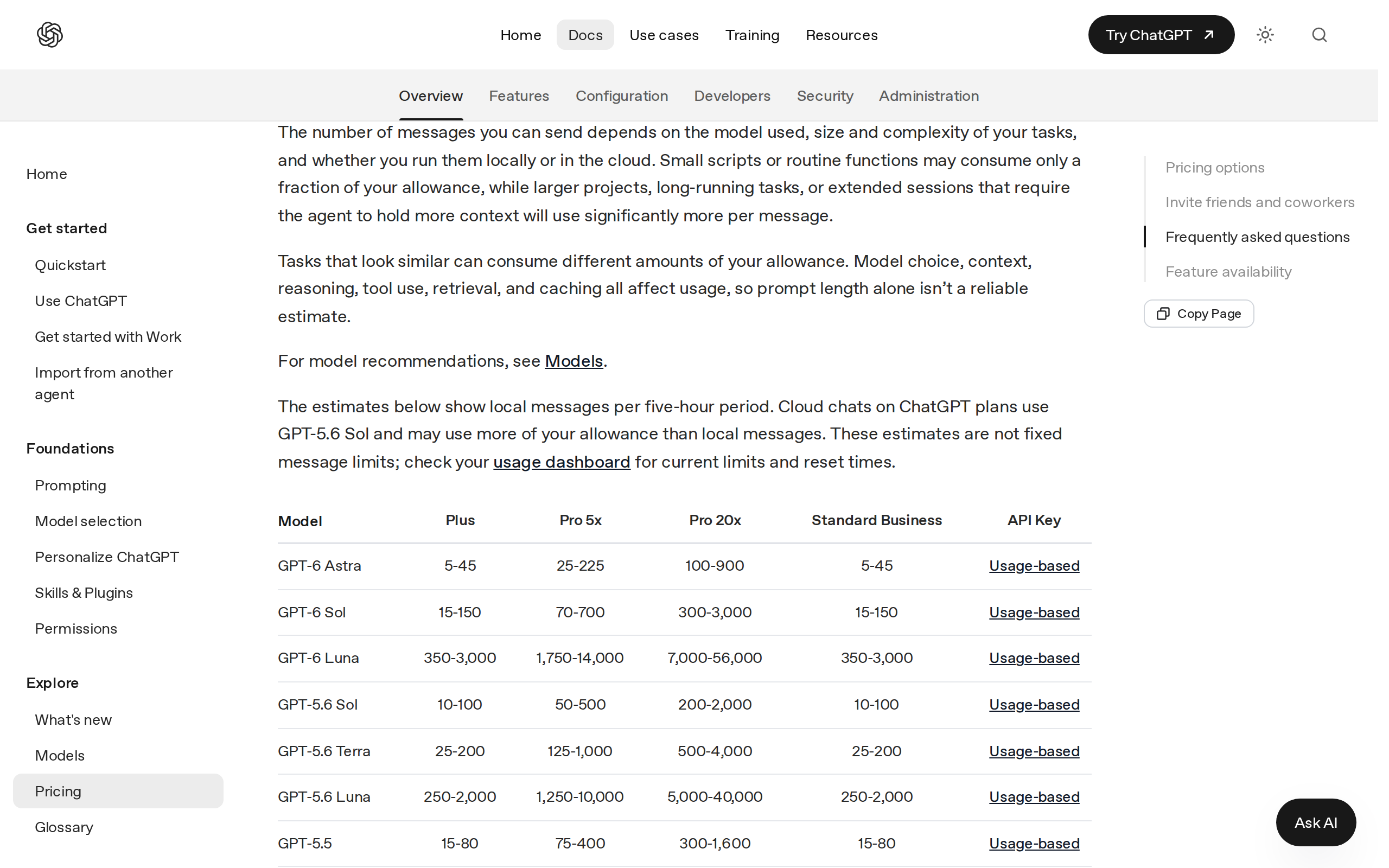
On Plus, that is 15 to 150 GPT-6 Sol messages per five hours, 5 to 45 on the larger GPT-6 Astra, and 350 to 3,000 on the small GPT-6 Luna. "Weekly limits may also apply." When you run out, you can buy credits and keep going, or switch to an API key, "with usage charged at standard API rates."
Two current details matter if you are choosing a plan this month. First, OpenAI paused new sign-ups and upgrades to the $200 Pro tier on September 10, 2026, citing demand for GPT-6 Astra. Existing subscribers and the $100 tier are unaffected. Second, the same pricing page notes that GPT-5.5 retires from ChatGPT and Codex on October 14, 2026, while the API is not affected. Subscriptions move you onto new models on OpenAI's schedule. The API lets you pin one.
What the Claude Plans Include
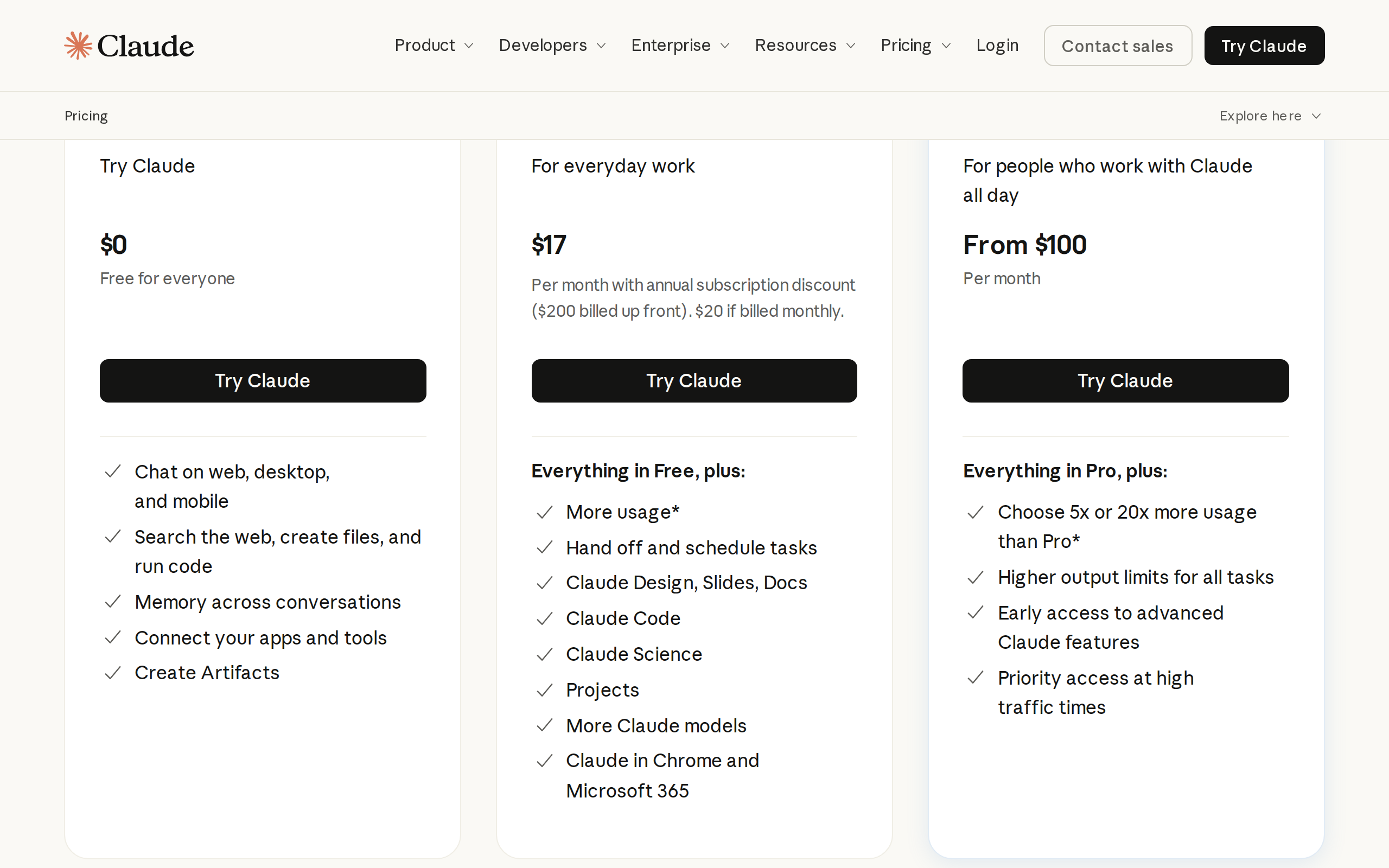
Anthropic's pricing page lists Pro at $20 a month, or $17 a month billed annually, with Claude Code, scheduled tasks, connectors to your apps, and Claude in Chrome. Max costs $100 for 5x or $200 for 20x the Pro allowance, billed monthly only. For companies, Team seats cost $25 per person a month ($20 billed annually), and premium seats with 5x the usage cost $125 ($100 billed annually).
Anthropic, like OpenAI, meters in windows rather than tokens. Its usage limits article says usage across the Claude apps and Claude Code "counts towards the same usage limit," and the limit depends on conversation length, model and effort level. Session limits reset every five hours, with a weekly limit on top.
Past the limit, Pro and Max subscribers can switch on usage credits, which are "billed at standard API rates," with a daily redemption cap of $2,000. That sentence is the key to the whole comparison, and we come back to it below. If you want the coding side in depth, our Claude Code guide covers what it can do on each plan.
The API: Pay per Token
The API has no plan and no windows. You pay for the tokens each call reads and writes, and every major provider now discounts repeated input and work that can wait. Per million tokens, from the OpenAI API pricing page and the Claude API pricing page:
| Model | Input | Cached input | Output | Batch |
|---|---|---|---|---|
| GPT-6 Astra | $10.00 | $1.00 | $50.00 | 50% off |
| GPT-6 Sol | $2.00 | $0.20 | $10.00 | 50% off |
| GPT-6 Luna | $0.10 | $0.01 | $0.50 | 50% off |
| Claude Opus 5.5 | $4.00 | $0.20 | $20.00 | 50% off |
| Claude Sonnet 5.5 | $2.00 | $0.20 | $10.00 | 50% off |
| Claude Haiku 4.5 | $1.00 | $0.10 | $5.00 | 50% off |
Caching cuts repeated context, the instructions and history an agent re-sends on every step, to a tenth of the input price or less. Batch halves every rate for requests you can wait up to a day on. Batch suits nightly jobs such as tagging a day's support tickets, but not a live agent loop, where each step needs the previous answer before it can start.
We walked through a full agent's token bill, step by step, in our breakdown of AI agent running costs. The number this article needs from it is the per-run cost: a 12-step business agent run with caching on comes to about $0.25 at GPT-6 Sol or Claude Sonnet 5.5 rates, and about $0.45 at Claude Opus 5.5 rates.
ChatGPT Subscription vs API: The Break-Even Math
The break-even is one division: the plan price divided by the API cost of one run.
Runs per month at which a flat plan starts to win = plan price ÷ API cost per run
| Flat plan | At $0.25 a run (GPT-6 Sol or Sonnet 5.5) | At $0.45 a run (Opus 5.5) |
|---|---|---|
| $20: ChatGPT Plus, Claude Pro | 81 runs | 45 runs |
| $100: ChatGPT Pro 5x, Claude Max 5x | 407 runs | 224 runs |
| $200: ChatGPT Pro 20x, Claude Max 20x | 814 runs | 447 runs |
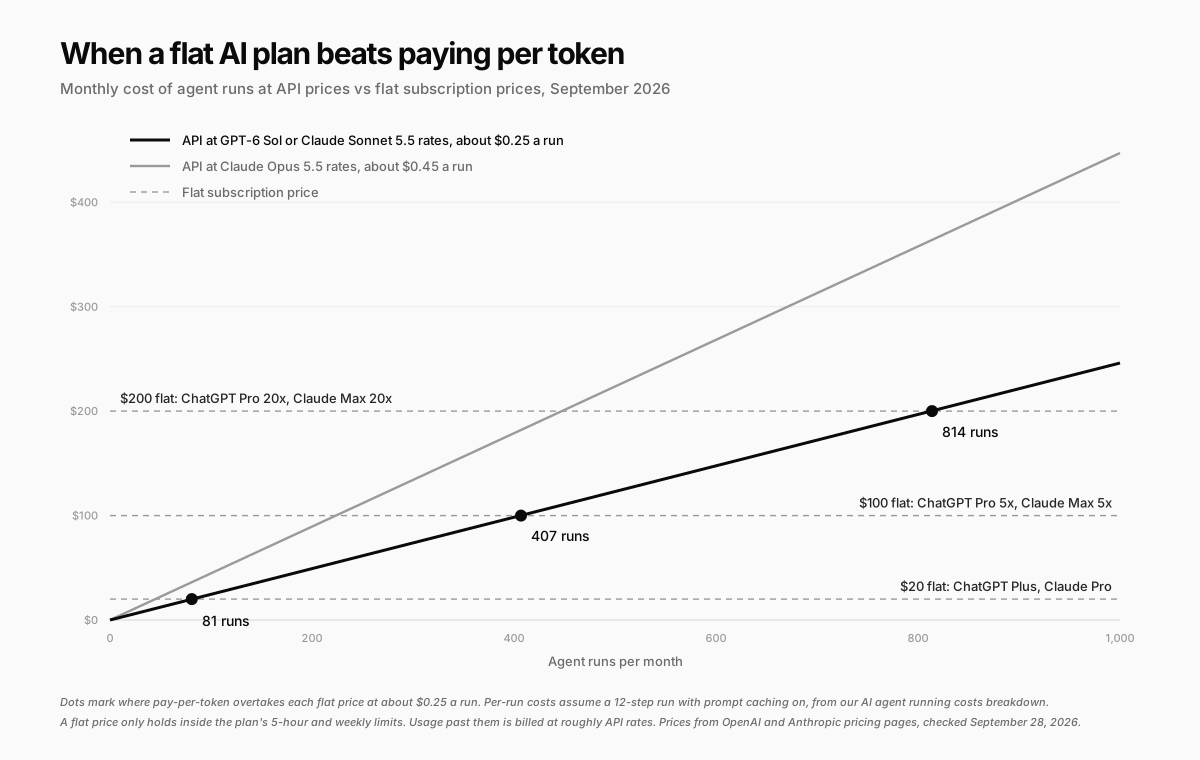
OpenAI's own figures suggest $0.25 is the cheap end. Its pricing page says GPT-5.6 usage "averages 5-30 credits per message," roughly $0.20 to $1.20 at about four cents a credit, a rate worked out below. Heavier runs pull every break-even lower: at $1.00 a run, the $20 plan pays for itself after 20 runs.
Below 81 runs a month, about three a working day, the API is cheaper than even the $20 plan at mid-tier rates. Above it, the flat plan wins, and it wins by a lot if you use the model all day. If one agent run is roughly one message, a single Plus window at the bottom of OpenAI's range (15 GPT-6 Sol messages) is already about $3.75 of API-equivalent work. Six such windows a month cover the $20.
Now the part most calculators leave out. The flat price only holds inside the windows. Both providers bill overflow at roughly API rates. Anthropic's usage credits are "billed at standard API rates." OpenAI prices desktop voice at $0.05 a minute or 1.25 credits, which puts a credit at about four cents, so GPT-6 Sol's 50 credits per million input tokens in Codex lands right on its $2.00 API price. A heavy user who blows through the limits every week does not pay a flat $200. They pay $200 plus a per-token bill, which is strictly more than the per-token bill alone.
That gives three rules:
- Under about 80 runs a month, use the API. It costs less than the $20 plan, and a quiet month costs almost nothing
- Between about 80 and 800 runs, done by you at the keyboard, buy the plan that matches your volume. A $20 plan for daily use, $100 once you hit the windows every week
- If you regularly go past your plan's limits, you are paying twice. Move the overflow work to an API key and drop to a smaller plan
What the Terms of Service Say About Agents
Price is only half the question. The other half is whether you are allowed to point an agent at a consumer plan at all, and here the two providers have gone in opposite directions.
Anthropic: Claude plans are for Anthropic's own apps
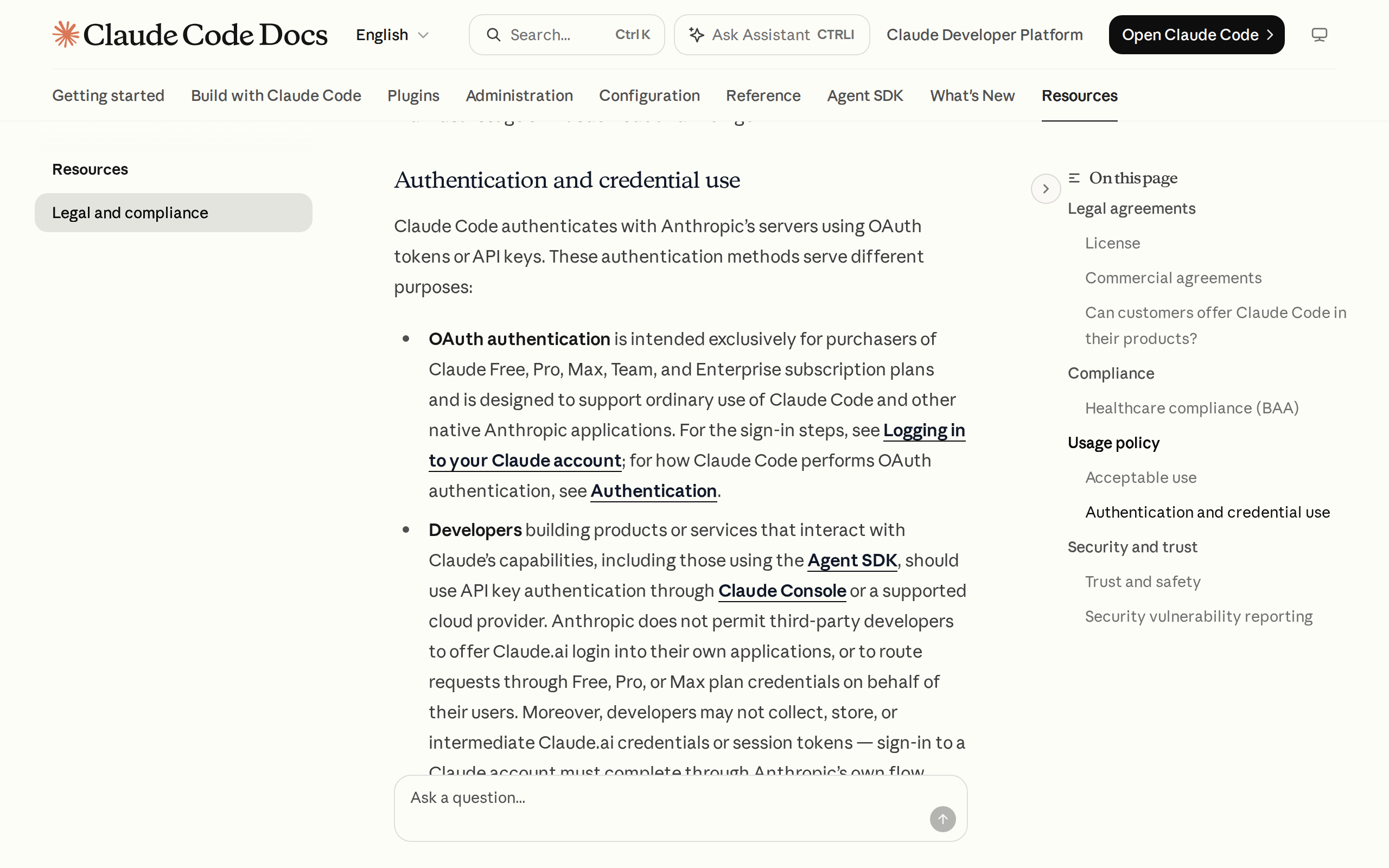
Anthropic's consumer terms prohibit accessing Claude "through automated or non-human means, whether through a bot, script, or otherwise," except through an API key "or where we otherwise explicitly permit it." Claude Code's legal page spells out what is permitted. Subscription sign-in is "intended exclusively for purchasers of Claude Free, Pro, Max, Team, and Enterprise subscription plans and is designed to support ordinary use of Claude Code and other native Anthropic applications." Anthropic "does not permit third-party developers to offer Claude.ai login into their own applications, or to route requests through Free, Pro, or Max plan credentials on behalf of their users."
The same page adds that advertised Pro and Max limits "assume ordinary, individual usage of Claude Code and the Agent SDK," and that Anthropic reserves the right to enforce these rules "without prior notice." It has: from April 4, 2026, Claude subscriptions stopped working in third-party agents such as OpenClaw, and users were pointed to extra usage or an API key.
What that means in practice: a Claude plan is fine for Claude, Claude Code and the scheduled tasks inside them. It is not a cheap engine for a third-party agent, a custom bot, or a product you sell.
OpenAI: tolerated for you, an API key for automation
OpenAI's terms of use prohibit you from "automatically or programmatically extract[ing] data or Output" and say you "may not share your account credentials or make your account available to anyone else." In practice, OpenAI has been more relaxed than Anthropic about personal use in other coding tools. Its Codex for Open Source page says "developers should code in the tools they prefer, whether that's Codex, OpenCode, Cline, pi, OpenClaw, or something else."
For anything that runs unattended, OpenAI's own documentation points the other way. The Codex authentication docs say to "use API key authentication for programmatic Codex CLI workflows, such as CI/CD jobs," and the pricing page describes the API key option as "great for automation in shared environments like CI." Tolerance in a blog post is not a contract, and the credential-sharing rule has not changed.
What that means in practice: using your own ChatGPT plan in an open-source coding tool you run yourself is a risk OpenAI currently accepts. A scheduled business job, a bot other people talk to, or a service built on one person's login is not.
Team and business seats do not change this
ChatGPT Business and Claude Team add admin controls and no training on your data by default, but a seat is still one person. Giving a seat to a bot that serves your whole team, or your customers, is the account sharing both sets of terms forbid. If more than one person or no person is driving the agent, you want an API key under a business account.
Which Should You Choose?
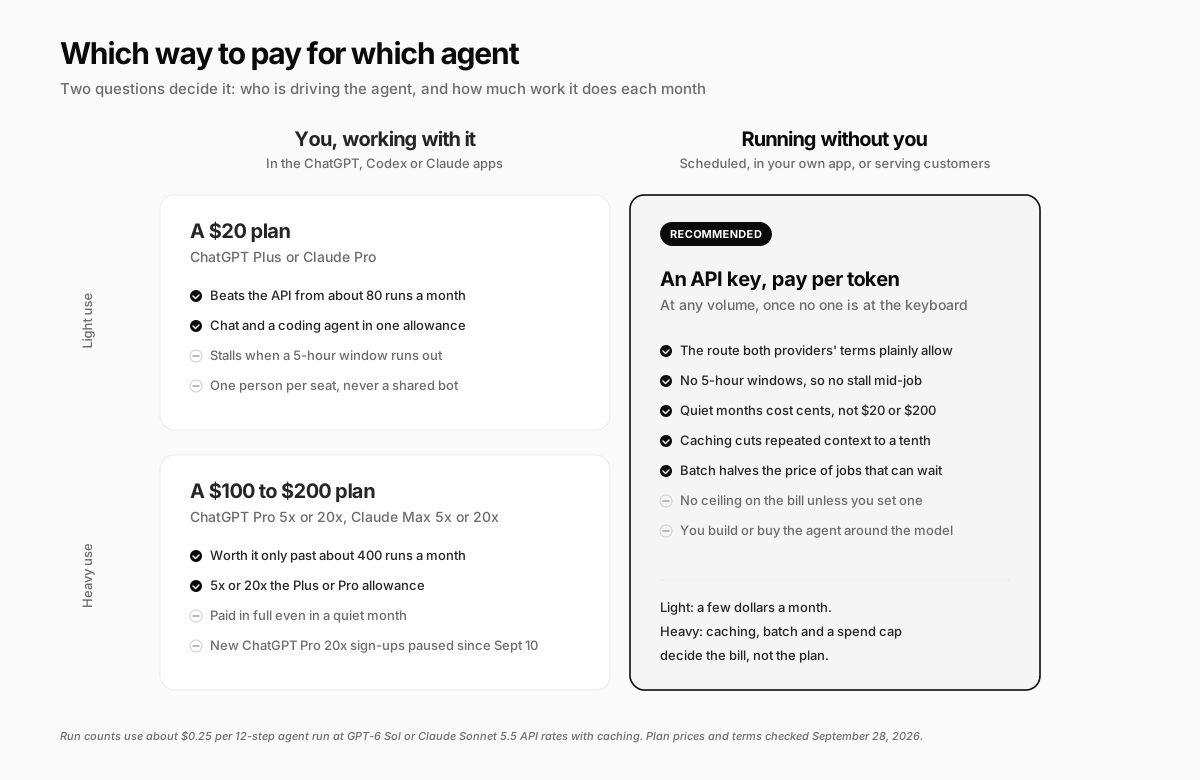
The choice comes down to two questions: who is driving the agent, and how many runs it does in a month.
- You, a few times a day, in the ChatGPT, Codex or Claude apps: a $20 plan. It is the cheapest option above about 80 runs a month, and it comes with the apps
- You, all day, hitting the windows every week: a $100 plan, and $200 only if the $100 plan's limits stop you several times a week. Check the usage dashboard for two weeks before upgrading
- An agent that runs on a schedule, inside your own tools, or for other people: an API key, at any volume. Turn on caching, set a monthly spend cap in the provider console, and send work that can wait through batch
- Both: most small businesses end up here. Keep one personal plan for the thinking you do yourself, and put the automated jobs on an API key, where the bill tracks the work
Whichever you pick, the agent still needs a person checking its work, and that review time usually costs more than the model. We covered how to decide what to check and what to let run separately.
What Nobody Tells You
- A "message" is not a fixed amount of work. OpenAI's own page warns that "tasks that look similar can consume different amounts of your allowance." A long agent task can eat a window that a hundred short questions would not
- Windows stall scheduled work. A limit that resets every five hours is fine when you are at the keyboard. For a job due at 9:00, "try again at 11:40" is a failed job, unless the agent has a backup model it can switch to on an API key
- Limits change without a price change. The published figures are estimates, and OpenAI paused its top tier a week after a model launch. An API price is written down per token. A plan allowance is not
- Speed settings spend the allowance faster. OpenAI's fast mode uses 2.5 times the standard credit rate, and image generation uses included limits three to five times faster
- The newest model can cost more per word. Anthropic notes that its newer tokenizer produces about 30% more tokens for the same text. Under a plan you feel that as a shorter window. On the API you see it on the invoice
Where Crevio Fits
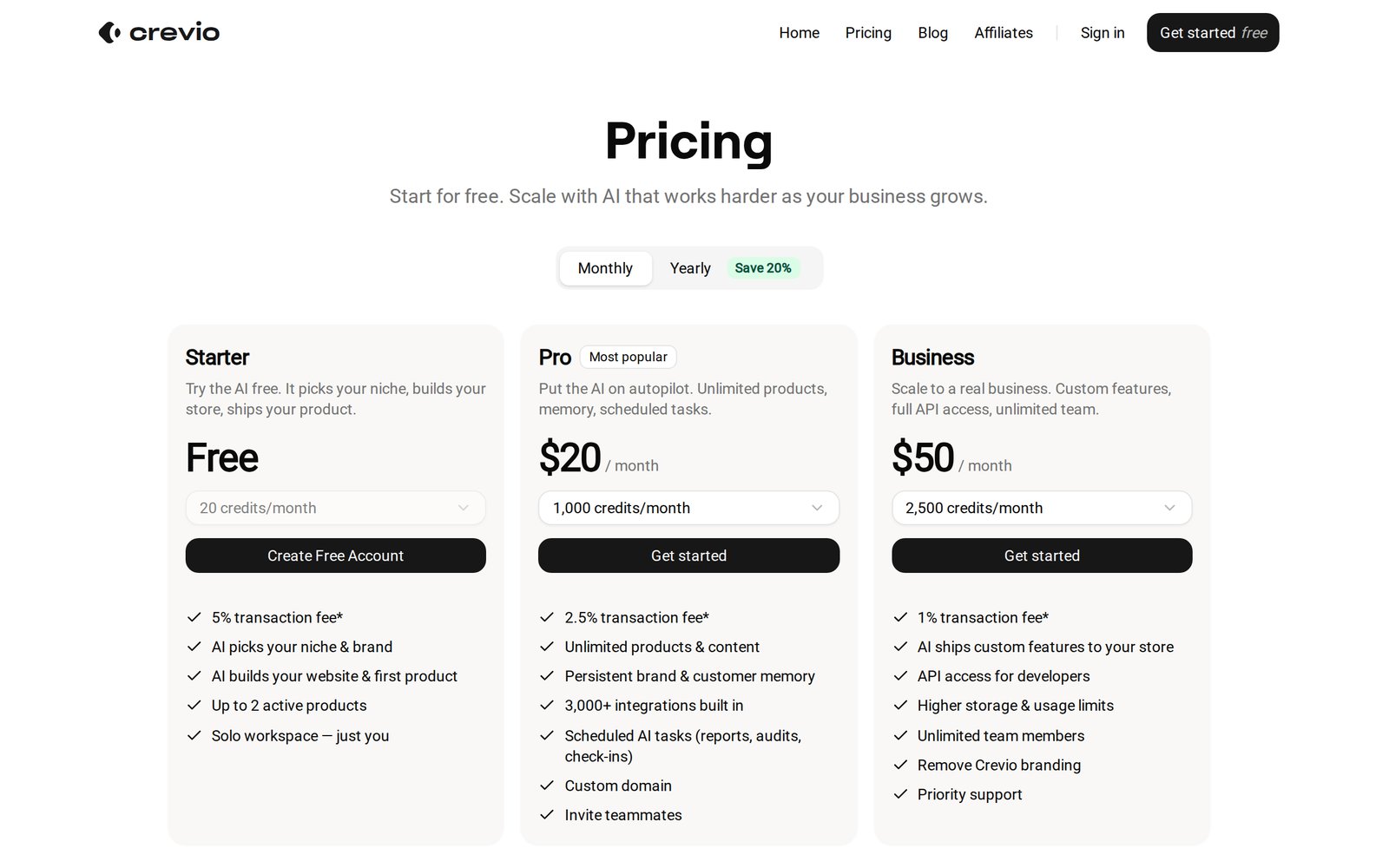
Most of this article is about running an agent yourself. Crevio is an AI business builder that does that part for you: its agent builds your website, writes and ships your products, runs your email marketing, and works through the tasks you schedule, on models Crevio pays for. You do not need a ChatGPT subscription or an API key to use it. The AI work draws from one credit balance: 20 credits a month on the free Starter plan, 1,000 on Pro at $20 a month, and 2,500 on Business at $50 a month, with larger allowances and top-ups available on the paid plans.
To be clear about what it does not do: you cannot plug your own ChatGPT or Claude subscription, or your own API key, into Crevio today. Its agent runs on the credits included in your plan. What you can do with a Claude plan you already pay for is connect Crevio to it. In Claude, go to Settings, then Connectors, add Crevio as a custom connector and sign in, and you can ask Claude to launch a product or run your marketing from inside the Claude app. That is ordinary use of Claude's own connector feature. Claude's side of the conversation comes out of your plan, and any work Crevio's agent does for you uses Crevio credits.
The trade-off is the same one every flat price makes. Credits give you one predictable number and hide the token-level detail, so you cannot pick a model or tune caching yourself. Transaction fees also apply on every plan: 5% on Starter, 2.5% on Pro and 1% on Business.
ChatGPT Subscription vs API FAQ
Can I use my ChatGPT Plus subscription instead of the OpenAI API?
For your own work in ChatGPT and Codex, yes, and above about 80 agent runs a month it is cheaper. For automated jobs, bots other people use, or anything in your own product, no. OpenAI's terms bar programmatic extraction of output and credential sharing, and its documentation says to use an API key for programmatic workflows.
Is Claude Max cheaper than the Claude API for agents?
Only for work you do yourself in Claude and Claude Code, and only above about 400 runs a month for Max 5x at Sonnet 5.5 rates. Anthropic does not allow Pro or Max credentials in third-party agents or products, and has blocked that use since April 4, 2026. Extra usage past your limits is billed at standard API rates.
How many agent runs does it take for a subscription to pay off?
Divide the plan price by the API cost of one run. At about $0.25 a run, a $20 plan pays off at 81 runs a month, a $100 plan at 407, and a $200 plan at 814. At Claude Opus 5.5 rates, about $0.45 a run, the same plans pay off at 45, 224 and 447 runs.
A subscription is a discount on work you do yourself. The moment the agent works without you, the only honest price is the one on the API invoice.
Related Blog Posts
What will you sell today?
Describe what you want to sell — Crevio builds, launches, and grows it. Products, payments, and marketing, all on autopilot.
Start for free