Your business,
on autopilot.
One platform for creating, running and growing your business, powered by AI.
Dropshipping vs Affiliate Marketing: Which Is Better in 2026?





Dropshipping gives you a bigger cut of every sale and a lot more to run. Affiliate marketing gives you a smaller cut and almost nothing to run. That one trade-off decides most of the dropshipping vs affiliate marketing question, and the rest of this guide shows you how to weigh it against your budget, your time and your tolerance for customer complaints.
- Dropshipping: you run the store, set the price and handle customers. A supplier stores and ships the product.
- Affiliate marketing: you recommend someone else's product and earn a commission when your link leads to a sale. The merchant does everything else.
- Cost to start: affiliate marketing is cheaper almost every time. Dropshipping needs a store plan, apps and an ad budget.
- Margin: dropshipping usually pays more per sale. Affiliate commissions are fixed by the merchant and often land in single digits.
- Best fit: dropshipping suits people who want to build a brand and will take on customer service. Affiliate marketing suits people who would rather build an audience and stay out of fulfillment.
Quick Comparison
| Dropshipping | Affiliate marketing | |
|---|---|---|
| Who sells and takes payment | You | The merchant |
| Who ships and handles returns | Your supplier, with you managing the customer | The merchant |
| Typical startup cost | Hundreds of dollars (store, apps, ads, samples) | Often under $200 (domain, hosting, content) |
| Typical margin | Often 15-40% gross before ads and fees | Fixed commission, from about 1% to 10% on many Amazon categories |
| Pricing control | Full | None |
| Customer relationship | Yours | Theirs |
| Main risk | Ad spend, refunds, supplier delays | Program changes, low commissions, traffic dependence |
What Dropshipping Actually Is
In dropshipping you list products in your own store, and when a customer orders, a supplier ships it straight to them. You never touch inventory. You pay the supplier's wholesale price after the customer pays you, and you keep the difference.
That sounds simple, and the first sale often is. The hard part is everything around it. You choose the products, build the store, run the ads, answer the emails and absorb the refund when a package shows up late. Our guide to the best dropshipping products to sell covers how to pick products that keep their margin after ad costs.
What dropshipping costs to start
The store itself is the first expense. Shopify's plans start at $29 a month on the Basic plan, with a promotional offer of 3 days free then $1 a month for 3 months. Add a domain, a product-sourcing app, a theme if you want one, and an ad budget. Industry guides tend to put a professional setup at somewhere between a few hundred and about $1,000, and our own ecommerce business ideas guide uses a $100 to $1,000 range for dropshipping.
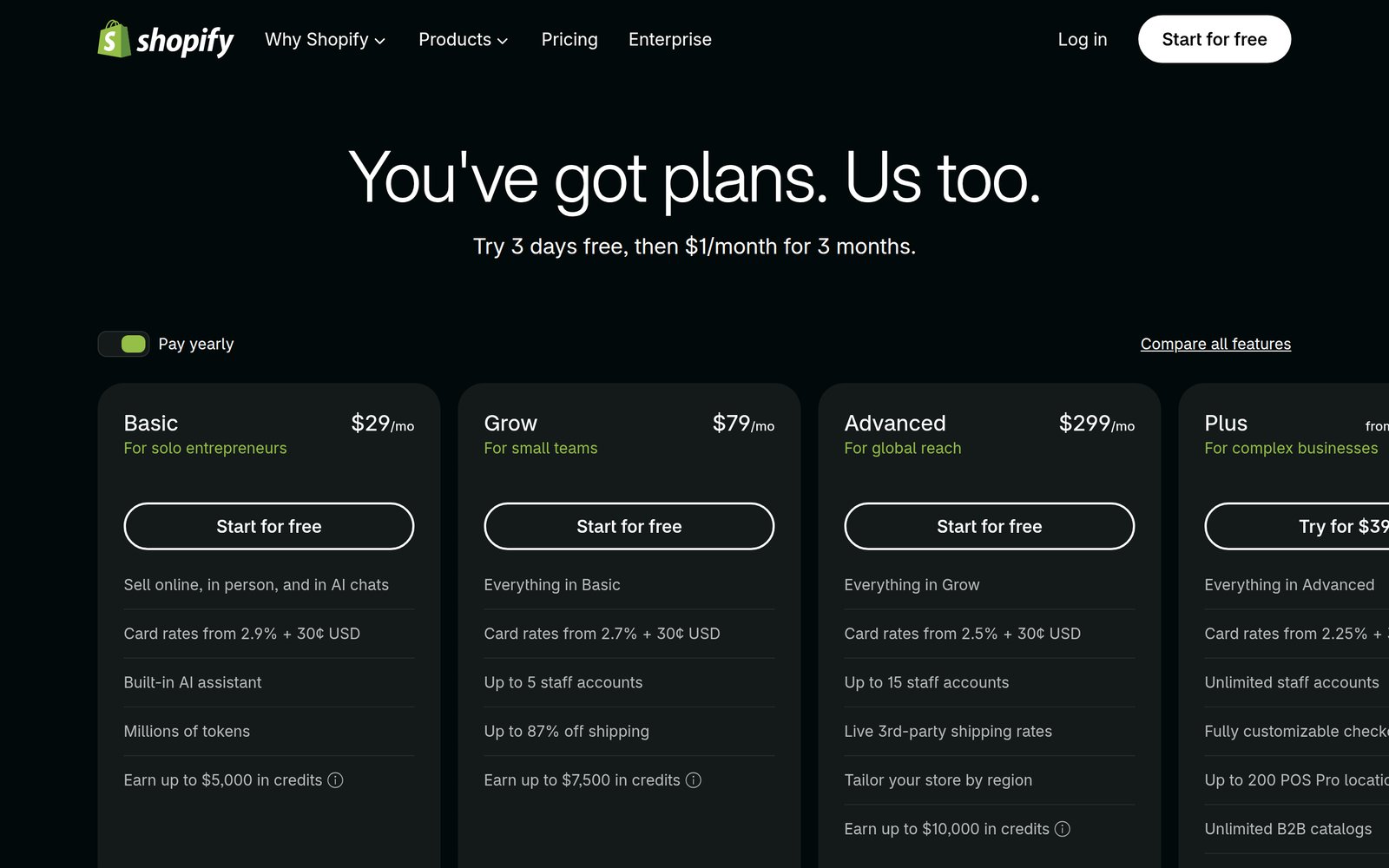
Shopify is one of several store builders that work for dropshipping, and it is the most common choice. The point is not which one you pick, it is that a store is a recurring cost from day one, before you have earned anything.
Where dropshipping margins go
A gross margin of 15 to 40% looks healthy until you subtract what it takes to get the sale. Paid ads, payment processing, app subscriptions and refunds all come out of it. Many dropshippers report losing money in their first months while they work out which products and ads convert, so treat the first quarter as tuition, not income.
Because identical products are often listed by many sellers at once, price competition is the other margin killer. If your only edge is a lower price, someone will undercut you.
What Affiliate Marketing Actually Is
In affiliate marketing you promote a merchant's product with a unique link. When someone buys through that link, you earn a commission. You do not hold stock, process payments or answer support tickets. Your job is to attract an audience that trusts your recommendations.
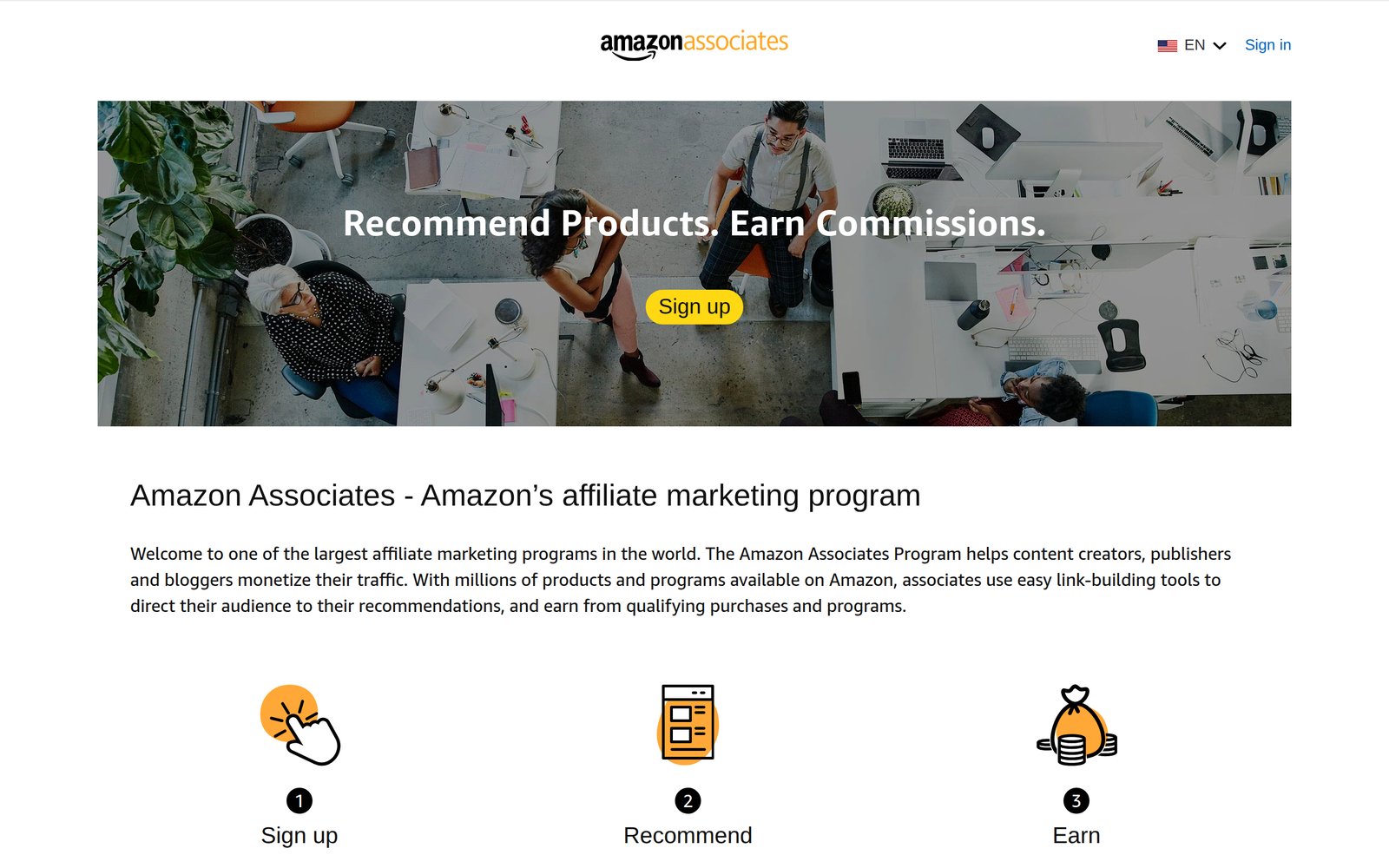
The most familiar example is the Amazon Associates program, where you link to products on Amazon and earn a percentage of qualifying purchases.
How affiliate commissions really look
Commissions are set by the merchant, not by you. Amazon's published fixed rates show the spread: luxury beauty pays 10%, physical books 4.5%, toys and furniture 3%, and grocery and health and personal care just 1%. The default for unlisted categories is 4%.
Software and digital products often pay noticeably higher or recurring commissions, which is why many affiliates move toward those niches. Check each program's own terms, because rates and cookie windows change.
What affiliate marketing costs to start
Almost nothing, if you already have an audience. A domain and hosting, or just a social profile, are enough to begin, and most programs are free to join. The real cost is time: writing content, building search traffic or an email list, and waiting for it to compound. Affiliate income tends to start slowly and grow as older content keeps ranking, which is why it feels like "passive income" only after a lot of unpaid work.
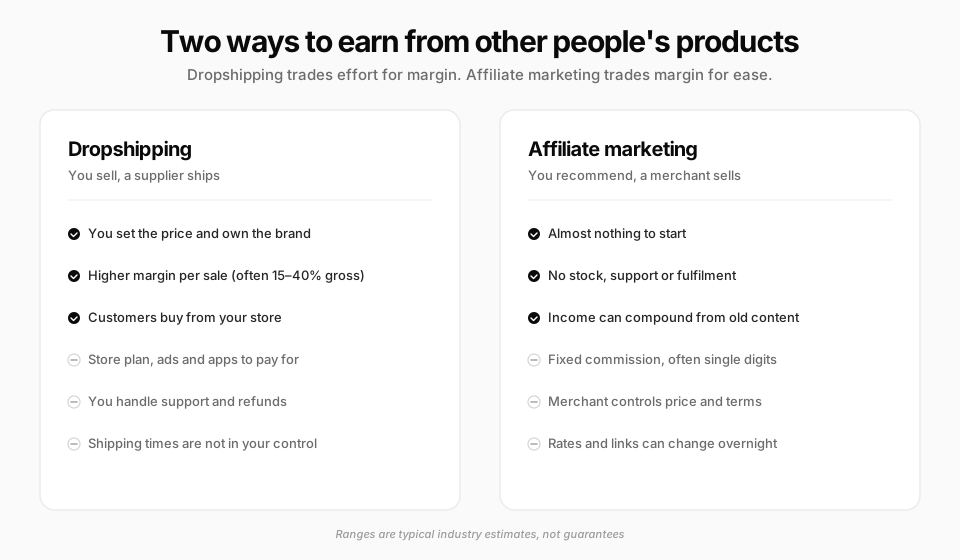
Dropshipping vs Affiliate Marketing: Head to Head
Startup cost and speed to first sale
Affiliate marketing wins on cost. You can begin for the price of a domain. Dropshipping can technically launch in a weekend, but a faster first sale does not mean faster profit once ad spend is counted.
Profit per sale
Dropshipping wins on margin per sale, because you set the price. Affiliate commissions are capped by the merchant. The catch is that a high-margin sale in dropshipping still carries ad cost, refund risk and support time, so compare what you keep after costs, not the headline percentage.
Control and brand
Dropshipping gives you control: your store, your prices, your customer list. Affiliate marketing gives you none over the product, the checkout or the customer. A merchant can cut your commission, shorten the cookie window or end the program. That is the quiet risk of building your whole income on someone else's program.
Daily workload
Dropshipping is a customer-facing business. Orders, tracking questions, returns and supplier issues arrive daily. Affiliate marketing is a content business: you publish, promote and improve, but nobody emails you asking where their parcel is.
Risk
Dropshipping risk is financial and reputational. You pay for ads before knowing what converts, and you wear the blame when a supplier ships late or sends something poor. Affiliate risk is dependency: your income lives on traffic sources and programs you do not control. In both models, a platform or algorithm change can hurt you quickly.
Rules You Cannot Skip
Both models come with obligations that beginners miss.
- Disclose affiliate links. The FTC says you must disclose a material connection, such as a financial relationship with a brand, and that the disclosure should sit prominently with the endorsement, not buried in a profile.
- Check supplier quality. In dropshipping, order samples before you advertise a product. You are the one customers blame.
- Read ad platform rules. Some ad networks restrict affiliate-style landing pages, which pushes many affiliates toward organic content instead.
- Keep your own records. Track sales, refunds and commissions from the first month so tax time is not a surprise.
Dropshipping vs Affiliate Marketing: Which Should You Choose?
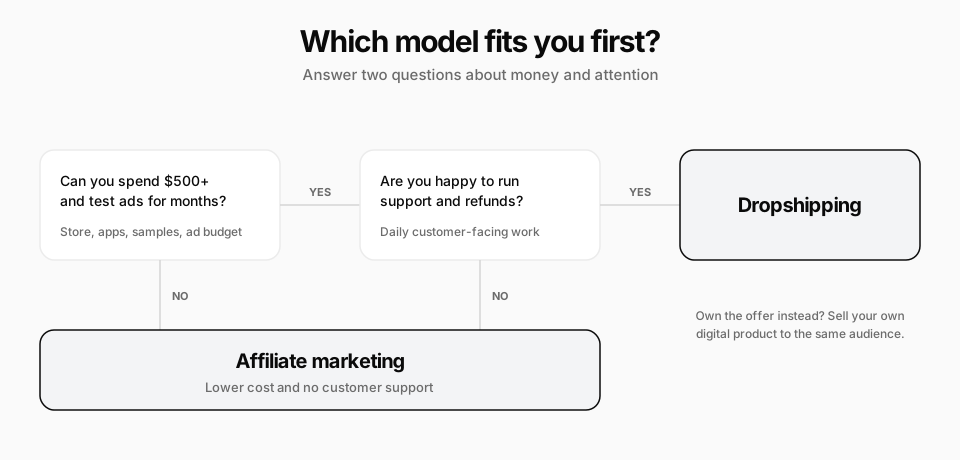
Choose dropshipping if you can fund a few months of testing, want to own a brand and customer list, and do not mind handling support. It rewards people who enjoy product research and paid acquisition.
Choose affiliate marketing if you want the lowest cost to start, prefer writing, video or community building, and would rather never touch fulfillment. It rewards patience and trust more than cash.
Many people combine them: an affiliate site that builds an audience first, then a small branded store once they know what that audience buys.
The third option: sell something you own
Both models share a structural limit: someone else owns the product. In dropshipping the supplier does, in affiliate marketing the merchant does. That is why margins stay thin and why programs can change on you.
An audience you built for either model can also buy something you made yourself, such as a guide, a template pack, a course or a membership. Digital products have no inventory, so the margin is yours. Our guides on how to sell digital products and making money online without selling anything cover both sides of that decision.
Where Crevio Fits (and Where It Does Not)
Crevio is an AI business builder: you describe what you want to sell and it builds the storefront, handles payments and manages customers. It is not a dropshipping platform. Crevio does not handle physical inventory, shipping or fulfillment, so if you run a dropshipping store you still need a platform built for that, such as Shopify.
Where Crevio helps is the digital layer. An affiliate publisher or dropshipper can use it to sell a niche guide, course, download or paid community to the audience they have already built. The free Starter plan has a 5% transaction fee and a limit of 2 published products, and the paid plans lower the fee to 2.5% on Pro and 1% on Business. For an affiliate, it is also a place to send readers that you control, instead of relying only on a merchant's checkout.
FAQ
Dropshipping usually pays more per sale because you set the price, but net profit depends on ad spend, refunds and fees. Affiliate marketing pays less per sale with far lower costs. Neither is reliably more profitable; the better question is which one you can run consistently.
Yes, and some businesses do. You might review products on a content site with affiliate links while running a small store for items you can source reliably. Keep the two clearly separate so customers always know who they are buying from, and disclose any affiliate links.
Affiliate marketing, because most programs are free to join and you can start with content alone. Dropshipping needs a store plan and a testing budget before you know whether anything sells.
It can be, but competition is high and margins are squeezed by ad costs. It works best when you pick a specific niche, vet suppliers and build a brand instead of competing on price.
Related Blog Posts
What will you sell today?
Describe what you want to sell — Crevio builds, launches, and grows it. Products, payments, and marketing, all on autopilot.
Start for free