Your business,
on autopilot.
One platform for creating, running and growing your business, powered by AI.
How to Sell on eBay: A Step-by-Step Guide for 2026





You can sell on eBay today with a free account and a phone, but the sellers who actually profit are the ones who understand the fees before they list anything. eBay ended 2025 with about 135 million active buyers and $79.6 billion in gross merchandise volume, so the demand is real. The catch is that most categories take roughly 13.6% of the sale plus a per-order fee, and that is before shipping and the cost of the item itself.
This guide walks through how to sell on eBay from the first account screen to the first payout, what it really costs, and how to avoid the mistakes that sink new sellers.
- Setup is free: you can open an account and list your first items without paying a subscription.
- Fees are the whole game: most categories charge 13.6% of the total sale (shipping included) plus $0.30 or $0.40 per order.
- Listings win or lose the sale: clear photos, an honest condition description and a keyword-rich title matter more than a low price.
- A marketplace is rented land: eBay owns the buyer relationship, so smart sellers also build a store they control.
How to Sell on eBay: The Six Steps
1. Create your seller account
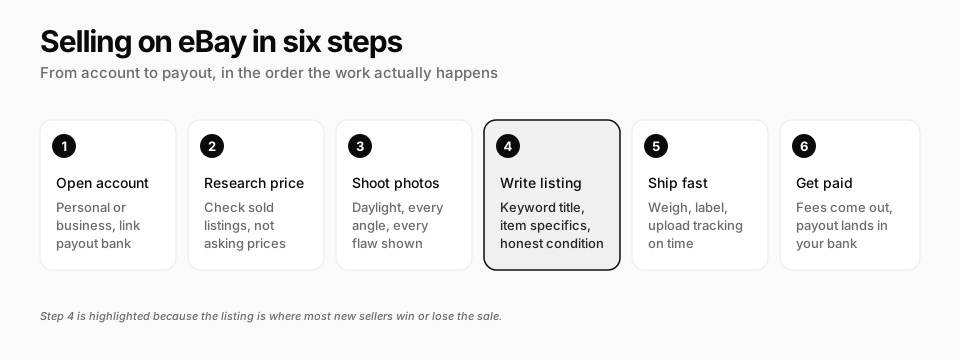
Go to eBay, register, and choose a personal or business account. Personal accounts suit someone clearing out a closet. A business account is the better fit if you plan to sell regularly or resell items you buy, and it unlocks Store subscriptions. You will confirm your identity, add your tax details and link a bank account for payouts.
New sellers often start with limits on how many items and how much total value they can list per month. Third-party guides commonly cite figures such as 10 items or $500 a month for a brand-new account, though eBay adjusts these limits and raises them as you build a track record. Treat your first month as a trial run, not a launch.
2. Research what actually sells
Do not price from active listings. Anyone can ask $200 for a used camera lens. What matters is what buyers paid. Search for your item on eBay, then filter the results to Sold items. That shows real completed prices, which is the number you plan around.
Look for three things:
- Sell-through: how many sold versus how many are currently listed. Lots of listings and few sales means a crowded, slow market.
- Price range: the spread between the lowest and highest sold price tells you how much condition and completeness matter.
- Variants: model numbers, sizes and colorways often sell at very different prices, so match yours exactly.
3. Photograph like a buyer is suspicious
Buyers cannot touch what they are buying, so photos do the work of a shop floor. Shoot in daylight against a plain background, take every angle, and photograph every flaw up close. eBay allows multiple photos per listing, so use them. A listing that shows the scratch on the side gets fewer returns than one that hides it.
4. Write a listing that search can find
This is where new sellers win or lose. eBay is a search engine first, so your title is your ranking factor.
- Title: use all 80 characters. Lead with the brand, model and the words a buyer would actually type. Skip filler such as "L@@K" and "wow".
- Item specifics: fill in every field eBay offers (size, color, material, model). These feed filters and search.
- Condition: be exact and blunt. "Used, light wear on left corner, works perfectly" beats "good condition".
- Product identifiers: add the UPC, ISBN or model number when you have it.
Then choose a format:
| Format | Best for | Watch out for |
|---|---|---|
| Buy It Now | Common items with a known market price | You may leave money on the table on rare items |
| Auction | Rare, collectible or hard-to-price items | A weak ending time or low starting bid can sell cheap |
| Best Offer | Items where buyers expect to negotiate | You must be ready to decline lowball offers politely |
5. Set shipping and ship on time
Weigh and measure the packed item before you list so you can quote shipping accurately. You can charge the buyer, or offer free shipping and build the cost into the price, which tends to convert better. When the item sells, buy the label through eBay, pack it well and upload tracking promptly. Late shipping is one of the quickest ways to damage your seller rating.
Offer returns. A 30-day return window is common among competitive listings and lifts buyer confidence, and high return rates can trigger extra fees if they get out of hand, so photograph and describe accurately to keep them low.
6. Get paid
Buyers pay eBay, and eBay pays you after fees. You can choose a payout schedule (daily, weekly, biweekly or monthly) in Seller Hub, and funds typically become available within a business day or two of the buyer's payment clearing. New accounts can see temporary holds while eBay verifies identity and tax details, so do not count on instant cash in your first weeks.
How Much It Costs to Sell on eBay in 2026
According to eBay's selling fees page, the structure is:
- Insertion fee: up to 250 zero-insertion-fee listings per month, then $0.35 per listing in most categories.
- Final value fee: 13.6% of the total sale amount (item plus shipping) up to $7,500 in most categories, plus $0.30 per order on sales of $10 or less and $0.40 on larger ones.
- Category exceptions: books, movies and music run higher at 15.3%, and jewelry and watches at 15% on sales up to $5,000.
- International fee: 1.65% when the buyer's address is outside the US.
- Optional extras: listing upgrades and Promoted Listings, which cost more on top and are worth testing rather than assuming.
Here is the part beginners miss. The fee applies to the shipping you charge too. A $50 item with $8 shipping is a $58 sale, so the fee is calculated on $58.
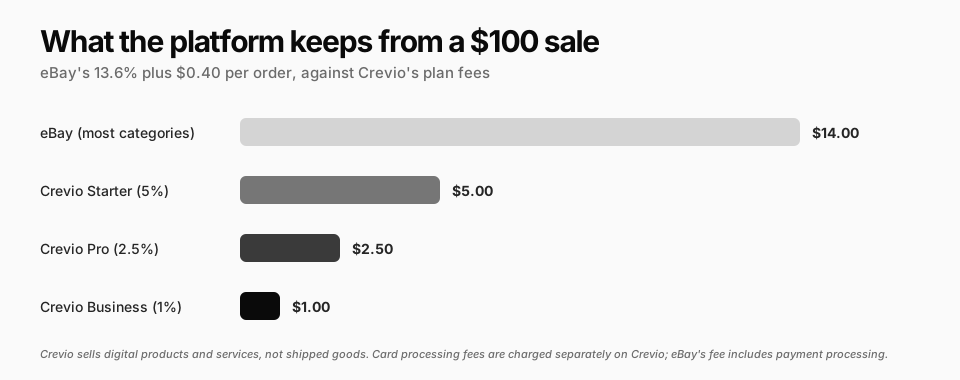
On a $100 sale with free shipping, eBay keeps $14.00. You still have to pay for the item and the postage out of the remaining $86. Run this math before you buy inventory, not after.
Store subscriptions
If you list a lot, a Store subscription lowers fees and adds free listings. Published 2026 pricing ranges from a Starter tier at around $7.95 a month ($4.95 billed yearly) up to Basic, Premium and Anchor tiers, per recent fee breakdowns. The break-even point is simple: if the discount on your monthly fees exceeds the subscription price, upgrade. If not, stay on the free tier.
What to Sell on eBay
The best first items share a few traits: easy to ship, known demand and a price high enough to survive 14% fees.
- Things you already own: electronics, brand-name clothing, books, collectibles and tools. Zero inventory cost makes this the safest starting point.
- Thrift and estate-sale finds: the classic resale route. Research sold prices first and buy only what clears a healthy margin.
- Collectibles and trading cards: strong demand, but also strong competition and authenticity concerns.
- Parts and niche gear: hobbyists search eBay specifically, and low competition can mean steady sales.
Avoid heavy, fragile or low-priced items at first. A $12 item that costs $9 to ship disappears into fees. If you are thinking about sourcing products to resell, note that eBay has rules about listing items you do not hold, so read the policy before you try it.
Gotchas Nobody Mentions Until Month Three
- Taxes are real: eBay reports to the IRS. For the 2026 tax year, a Form 1099-K is issued when you exceed $20,000 in gross payments and 200 transactions, but income is taxable whether you get the form or not. Track your costs from day one.
- Disputes cost money: eBay lists a $20 fee per disputed transaction, so clear communication and tracked shipping protect you.
- Currency conversion fees stack up: selling across currencies adds a conversion fee on top of the international fee.
- Seller standards matter: below-standard performance can add percentage points to your fees.
- You do not own the customer: you rarely get an email address or any way to reach a buyer outside eBay's messaging. Every repeat sale has to be earned on eBay's terms again.
When eBay Is Not Enough: Build a Store You Own
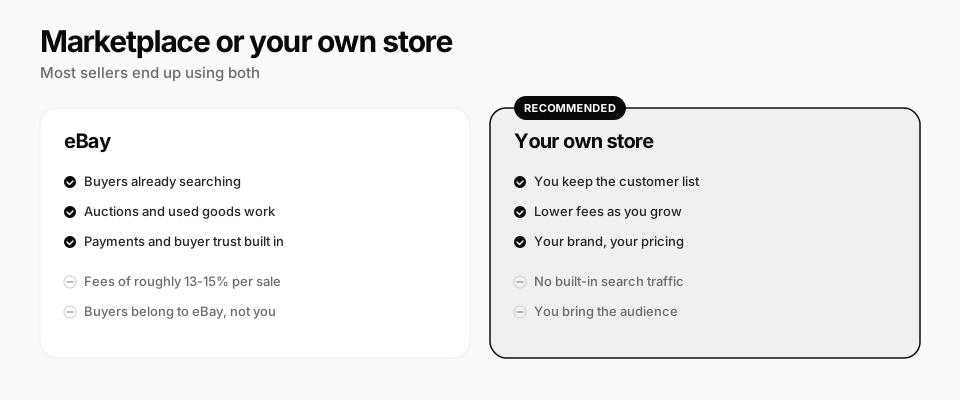
eBay is excellent for finding buyers who already want your item. It is a weak place to build a brand, and fees of 13-15% mean your margin is always at the platform's mercy. That is why many sellers use eBay as a sales channel and a storefront of their own as the home base.
Where Crevio fits, and where it does not
Let's be direct: Crevio does not ship physical goods. It has no inventory, fulfillment or shipping tools, so it is not a replacement for eBay or for Shopify if you sell secondhand sneakers or vintage cameras. If your business is moving physical items, keep eBay for that.
What Crevio is good for is the business that grows around your eBay selling. Crevio is an AI business builder: you describe what you want to sell, and it builds the store, handles payments through Stripe and helps with marketing. Plenty of experienced resellers have knowledge that sells without shipping a box:
- A sourcing and flipping course or guide that teaches others what you learned
- Downloadable spreadsheets, listing templates or pricing cheat sheets
- A paid membership or community for newer resellers
- A simple website and lead form if you run a local resale or consignment service
Crevio has a free Starter plan with a 5% transaction fee, 20 AI credits a month and two published products. Pro is $20 a month ($16 billed annually) with a 2.5% fee, and Business is $50 a month ($40 billed annually) at 1%. Payment processing fees are charged separately, and a physical-goods marketplace like eBay bundles that cost into its fee, so the comparison above is about platform fees, not a like-for-like total. If you want to see how it works for digital products, our guide to how to sell digital products covers the full process, and how to price your digital products helps you set a number.
Common Mistakes That Cost New Sellers Money
- Pricing from asking prices: always use sold listings.
- Forgetting shipping in the margin: calculate fees on the total, not the item price alone.
- Vague condition notes: every undisclosed flaw is a future return or a dispute.
- Slow shipping: ship within your stated handling time, every time.
- Buying inventory before testing: sell five things you already own to learn the process first.
- Skipping record keeping: save receipts and log your cost per item for tax time.
FAQ
Opening an account is free, and you get up to 250 zero-insertion-fee listings a month. You pay a final value fee when an item sells, which in most categories is 13.6% of the total sale plus a small per-order fee.
In most categories, 13.6% of the total amount (item price plus shipping and sales tax where applicable) up to $7,500, plus $0.30 or $0.40 per order. Some categories, such as books and music, are higher. Always check your category's rate before you list.
Buyers pay eBay, which deducts its fees and pays the remainder to your linked bank account. You can choose how often payouts arrive in Seller Hub. New accounts may see holds while eBay verifies details.
Yes for used, collectible and hard-to-find items, where buyers search eBay first. It is less compelling if you want to build a brand or own your customer list, which is why many sellers add their own store alongside it.
The Bottom Line
eBay rewards sellers who treat it like a small business: research sold prices, write honest listings, ship fast and know their fee math cold. Do that and it is one of the fastest ways to turn things into cash. Just remember that on a marketplace, the buyers are eBay's, and the best long-term move is building something that is yours.
Related Blog Posts
What will you sell today?
Describe what you want to sell — Crevio builds, launches, and grows it. Products, payments, and marketing, all on autopilot.
Start for free