Your business,
on autopilot.
One platform for creating, running and growing your business, powered by AI.
12 Best Ecommerce Business Ideas to Start in 2026 (With Real Startup Costs)





Global ecommerce sales are on pace to cross $6.8 trillion in 2026, and the honest problem isn't whether there's room, it's that "start an ecommerce business" covers a dozen genuinely different businesses with wildly different startup costs, margins, and daily work. Print-on-demand and dropshipping can start for under $500. Private label and wholesale can eat $10,000 before your first sale. Digital products need almost no capital but live or die on distribution. This guide breaks down 12 real ecommerce business ideas for 2026 with actual cost ranges and margins for each, so you're picking based on your own money and time, not a generic "just start" pep talk.
- Startup costs range from $0 to $10,000+ depending on the model, and the gap is almost entirely about inventory: do you hold it, does a partner hold it, or does it not exist at all.
- Margin and capital trade off against each other. Digital products carry the highest margins because there's nothing to manufacture or ship; private label and wholesale carry the lowest because you're competing on price against everyone with access to the same factory.
- "Ecommerce" and "digital products" overlap more than most lists admit. Templates, courses, and memberships are ecommerce, they just never touch a warehouse.
- Fulfillment is the part people underestimate, not marketing. A viral product with no restock plan turns a good month into a refund nightmare.
How to pick the right ecommerce business idea for you
Before the list, one framework that matters more than which niche you pick: how much capital you're willing to risk before you know if the idea works, and how much of your time goes to logistics versus building the actual business. The two aren't the same axis. A $50 print-on-demand hoodie store and a $5,000 private-label skincare line can both fail for the same reason (nobody wants the product), but only one of them costs you $5,000 to find that out.
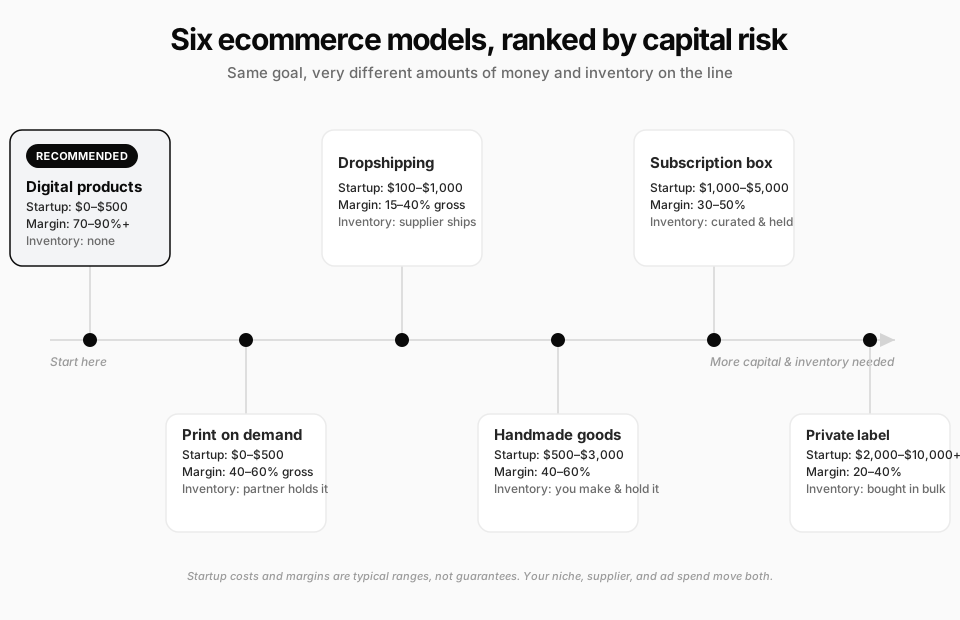
Use that spectrum as a filter, not a ranking. The model furthest left isn't "best" for everyone, it's the one with the least room for a first attempt to go wrong while you're still learning what your customer actually wants. If you already have deep product or supplier expertise, starting further right can be the smarter move.
12 best ecommerce business ideas for 2026
1. Digital products (templates, guides, and downloads)
 Digital products, Notion templates, spreadsheets, design assets, PDF guides, are the lowest-capital entry point in this entire list because there's no unit cost after you build the thing once. Startup cost: $0–$500. Margin: typically 70–90%+, since the only real cost is your time and a payment processor's fee.
The tradeoff is that the entire business is distribution. Nobody searches "buy a Notion template" the way they search "buy running shoes," so you're building an audience or SEO presence before you're building revenue. Our guide on how to sell digital products covers platform choice and packaging, and how to price your digital products covers the pricing mistakes that cap revenue before it starts.
2. Online courses and cohort programs
A step up in production effort from a static download: a course sells expertise as a structured, often video-based, experience, and can command a meaningfully higher price point than a one-off template. Startup cost: $0–$1,000 (a decent microphone and screen-recording software cover most of it). Margin: 80%+ once built, since delivery cost per additional student is close to zero.
The catch is that courses take real production time before they earn a dollar, and completion rates matter for refunds and reputation. Our online course launch checklist walks through the sequence that avoids building the whole thing before validating anyone wants it.
3. Print-on-demand merchandise
Print-on-demand (POD) lets you sell custom apparel, mugs, and posters without holding inventory: a partner prints and ships each order after it's placed. The category is growing fast, Grand View Research values the global POD market at roughly $13.1 billion in 2026, projected to reach $57.49 billion by 2033 at a 23.6% compound annual growth rate. Startup cost: $0–$500. Margin: 40–60% gross, per Printful's own margin breakdown, which puts non-apparel items like mugs and stationery at the higher end because their base cost is lower.
 Quality control and unit economics both sit with the print partner, which is the point and the limitation: you can't undercut on price the way a private-label seller can once volume grows.
4. Dropshipping
Dropshipping means listing products a third-party supplier ships directly to your customer, so you never touch inventory. Market-size estimates vary a lot by methodology, Grand View Research puts the 2026 global market at roughly $583.5 billion, other firms estimate closer to $340–400 billion, so treat any single number as directional. Startup cost: $100–$1,000 (store platform, a paid theme, initial ad spend). Margin: 15–40% gross, generally lower than print-on-demand because identical products often get listed by many sellers at once, which turns into a price war.
The honest downside competitors rarely lead with: supplier shipping times from overseas can run one to two weeks, which is a hard sell against next-day delivery expectations set by larger retailers. If dropshipping is the model you're leaning toward, our breakdown of the best dropshipping products to sell in 2026 covers which categories are actually holding margin right now.
5. Private label products
Private label means buying generic products from a manufacturer and branding them as your own, usually through a minimum order quantity (MOQ) with a factory. This is where real capital enters the picture. Startup cost: $2,000–$10,000+, covering the MOQ, packaging, and often warehousing or fulfillment fees. Margin: 20–40%, squeezed by manufacturing minimums, freight, and the marketing spend needed to build brand recognition from zero.
The upside matches the risk: you own the brand and the customer relationship, which dropshipping and POD sellers generally don't. It's the model with the most business, and the least forgiving, of anything on this list.
6. Handmade and artisan goods
Handmade goods (jewelry, ceramics, candles, home goods) sit in the middle: you're making and holding your own inventory, but at a scale a solo maker can manage without a factory relationship. Startup cost: $500–$3,000 for materials, tools, and initial stock. Margin: 40–60%, similar to POD, since the cost is materials and your own labor rather than a factory markup.
The ceiling is physical: your own two hands can only produce so many units a week, which makes this a strong first business and a hard one to scale past a certain revenue without hiring.
7. Subscription boxes
A curated box of products delivered monthly turns one-time buyers into recurring revenue, the same appeal that makes memberships attractive on the digital side. Startup cost: $1,000–$5,000 to fund the first batch of inventory, packaging, and shipping supplies before subscription revenue arrives. Margin: 30–50%, depending on how much is sourced versus made.
The real risk isn't the first box, it's churn. A subscription box lives or dies on whether month three's box is exciting enough that customers don't cancel, which means curation and sourcing never stop being a full-time job.
8. Personalized and customized products
Name-engraved jewelry, custom pet portraits, monogrammed goods: personalization adds a production step but commands a real price premium. Research from Deloitte Digital found that consumers who feel a brand delivers a genuinely personalized experience spend meaningfully more with it over time. Startup cost: $500–$3,000, close to handmade goods since most personalized product businesses start as a maker business with a customization step bolted on. Margin: 40–60%.
The tradeoff is turnaround time: personalization can't be pre-made and shelved, so order-to-ship time is longer, and customers expect that to be communicated clearly upfront.
9. Niche pet products
Pet spending keeps climbing regardless of the broader economy: the American Pet Products Association projects the U.S. pet industry will reach $165 billion in 2026, up from $158 billion in 2025. Startup cost: $500–$5,000 depending on whether you're private-labeling, sourcing handmade goods, or dropshipping. Margin: varies by model (apply the ranges above to whichever fulfillment approach you choose).
This isn't really a separate business model, it's a durable, recession-resistant niche you can layer onto dropshipping, POD, or private label. Pick the niche first, then pick the model from this list that fits your capital.
10. Refurbished and resale goods
Buying used or returned electronics, clothing, or furniture and reselling them is a genuinely underrated category: ThredUp's 2026 Resale Report, conducted with GlobalData, put the global secondhand apparel market at $393 billion by 2030, growing roughly twice as fast as new apparel. Startup cost: $200–$2,000 to build initial inventory from thrift sourcing, liquidation pallets, or trade-ins. Margin: highly variable, often 50%+ on well-sourced items, but dependent on your sourcing skill more than any formula.
The skill that separates a profitable reseller from a hobbyist is sourcing, spotting undervalued inventory faster and more accurately than the next buyer, which is a real, learnable skill but not one you can shortcut with a bigger budget. If eBay is your likely first channel, our guide on how to sell on eBay covers the fees and listing basics.
11. B2B ecommerce and wholesale supply
Selling to other businesses rather than consumers, restaurant supplies, office goods, specialty materials, is less crowded in most niches than consumer ecommerce and often more profitable per order. The U.S. International Trade Administration projects global B2B ecommerce sales will reach roughly $36 trillion in 2026, dwarfing the consumer market. Startup cost: $2,000–$10,000+, similar to private label since you're usually holding wholesale inventory or negotiating supplier terms directly. Margin: 20–35%, but with meaningfully larger average order values than consumer sales.
The sales cycle is longer and relationship-driven rather than impulse-driven, which suits a founder who's patient and good at account management over one chasing fast, high-volume transactions.
12. Membership and community commerce
Not a physical product at all, but genuinely an ecommerce business: recurring paid access to a community, coaching, or ongoing content. Startup cost: $0–$500. Margin: 80%+, the highest on this list, since there's no unit cost to serve an additional member beyond your time.
The tradeoff is retention pressure: a membership only works if you keep delivering enough value that people don't cancel, which is a different daily job than shipping a product once and moving on. Our guides on membership vs. one-time sales and building a loyal membership community cover the retention mechanics in depth.
Quick comparison: startup cost and margin by model
| Business idea | Startup cost | Typical margin | Inventory |
|---|---|---|---|
| Digital products | $0–$500 | 70–90%+ | None |
| Online courses | $0–$1,000 | 80%+ | None |
| Print-on-demand | $0–$500 | 40–60% gross | Partner holds it |
| Dropshipping | $100–$1,000 | 15–40% gross | Supplier ships |
| Private label | $2,000–$10,000+ | 20–40% | You buy in bulk |
| Handmade goods | $500–$3,000 | 40–60% | You make & hold it |
| Subscription box | $1,000–$5,000 | 30–50% | Curated & held |
| Personalized products | $500–$3,000 | 40–60% | Made to order |
| Niche pet products | $500–$5,000 | Varies by model | Varies by model |
| Refurbished/resale | $200–$2,000 | 50%+ (sourcing-dependent) | You source & hold it |
| B2B/wholesale | $2,000–$10,000+ | 20–35% | You hold or broker it |
| Membership commerce | $0–$500 | 80%+ | None |
Physical vs. digital ecommerce: where Crevio fits
The models on the physical side of that table (print-on-demand, dropshipping, private label, handmade goods, subscription boxes, resale, B2B/wholesale) all involve moving a physical object from a supplier or your own hands to a customer's door. That's genuinely a different problem than the digital side, and it's worth being precise about which tools are built for which.
Crevio is an AI business builder: you describe what you want to sell and it builds and runs the storefront, payments, and customer management around it. That's a strong fit for the digital and service side of this list, digital products, online courses, memberships, and the lead-capture side of a service business, where the entire operation lives online and there's no box to pack. It is honestly not built for the physical side: Crevio doesn't handle inventory, shipping, or fulfillment, so if you're doing private label, dropshipping, or a subscription box, a platform built around fulfillment (Shopify and similar tools handle that job well) is the right choice, not a general-purpose AI business builder.
Crevio's Starter plan is free with a 5% transaction fee, Pro is $20/month at 2.5%, and Business is $50/month at 1%, all Stripe-powered with no long-term contract. For anyone whose ecommerce idea is actually a digital-products or membership business, that's the more honest starting point than trying to force a physical-fulfillment platform to do a job it wasn't built for.
Common mistakes when choosing an ecommerce business idea
- Picking the highest-margin model without accounting for the skill it requires. Refurbished goods and private label both look great on a spreadsheet and both depend on a sourcing or brand-building skill that takes months to develop, not a weekend.
- Underestimating fulfillment time as a founder cost, not just a customer-experience cost. Packing orders yourself at 2 AM after a viral post is a real failure mode, not a hypothetical one.
- Confusing "low startup cost" with "low effort." Digital products and memberships need almost no capital and still require consistent content and marketing to find buyers.
- Choosing a niche before checking whether the fulfillment model matches your actual capital. A great pet-product idea still needs you to pick a startup cost you can afford, from the table above.
- Skipping validation because the idea "obviously" works. Test demand with a landing page, a waitlist, or presales before committing to inventory. Our guide to validating a startup idea covers the cheap ways to find out before you spend the money.
The bottom line
There's no universally "best" ecommerce business on this list, only the one whose capital requirement matches money you can actually afford to lose while you find out if anyone wants what you're selling. Start at the low-capital end of the spectrum, prove demand, and let the profits from that first honest sale fund the move to a model that needs more inventory and more trust. The founders who lose money in ecommerce aren't usually the ones who picked the wrong niche, they're the ones who bought $8,000 of inventory before a single stranger paid for the product.
FAQ
By margin, digital products and memberships lead this list at 70–90%+ because there's no unit cost to fulfill an additional sale. By total revenue potential, B2B/wholesale and private label can generate larger dollar amounts per order, but at lower margins and higher startup capital. "Most profitable" depends on whether you're optimizing for margin percentage or absolute revenue.
Digital products, online courses, and membership commerce all have realistic paths starting near $0, since there's no inventory to buy upfront. Physical-goods models like dropshipping and print-on-demand can start under $500 because a partner holds the inventory. Private label, wholesale, and subscription boxes genuinely require real capital ($1,000–$10,000+) because you're buying inventory before you've made a sale.
It can be, but the market has gotten more competitive as more sellers list the same supplier catalogs, which is why gross margins on dropshipping (15–40%) trend lower than print-on-demand or private label. It remains a reasonable low-capital way to test demand for a product category before committing to inventory in a private-label version of the same product.
Related Blog Posts
What will you sell today?
Describe what you want to sell — Crevio builds, launches, and grows it. Products, payments, and marketing, all on autopilot.
Start for free

