Your business,
on autopilot.
One platform for creating, running and growing your business, powered by AI.
25 Best Dropshipping Products to Sell in 2026





The global dropshipping market is on pace to hit $583.5 billion in 2026, and the honest bottleneck for most new stores isn't traffic or ad budget, it's picking a product that isn't already sitting in fifty other stores with the same AliExpress photos. This guide covers the 25 best dropshipping products to sell in 2026, organized by the niches that are actually growing right now, plus the four-signal test that separates a genuine winner from something that already peaked on everyone's feed three months ago.
- Product selection beats marketing skill for a first store. Every product below passes a specific bar for weight, margin, regulation, and demand freshness, not just "looks cool in a video."
- Pet products, sleep and recovery gear, and everyday-carry tech accessories are the strongest categories for 2026, each backed by real category growth, not a single viral clip.
- Run every idea through the four-signal test before you order a sample. It's below, and it catches most of the products that look great in a generic "winning products" list and lose money in a real store.
- Dropshipping margins are thinner than most lists admit. The section on margins further down is the part competitor roundups usually skip, and it changes which products on this list are worth chasing first.
What makes a product actually dropshippable in 2026
Before the list: a product doesn't win because it's trending, it wins because it clears four separate filters at once. Miss one and the trend alone won't save your margin.
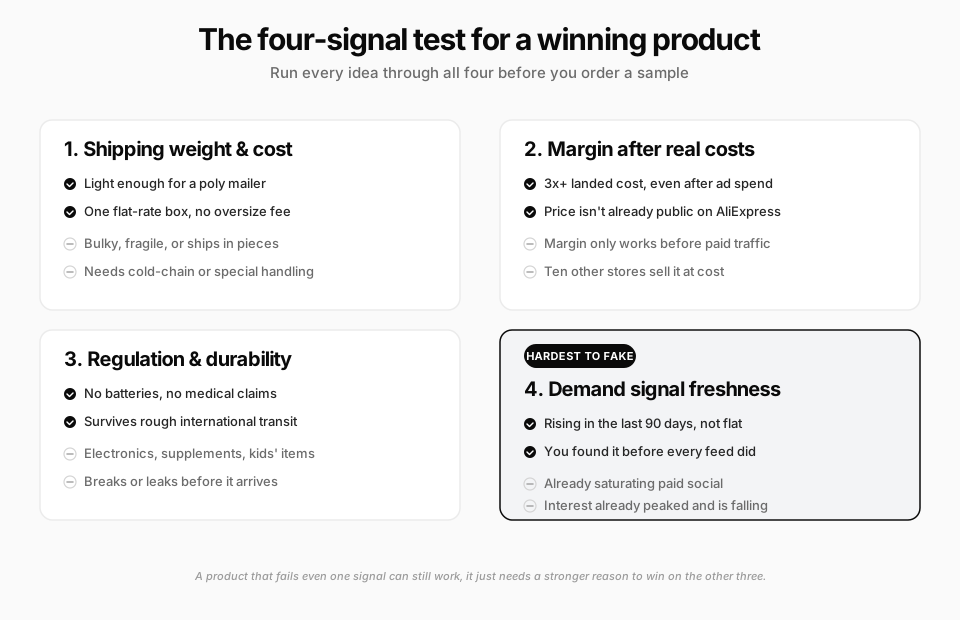
- Shipping weight and cost. Anything that fits a poly mailer and skips oversize fees protects your margin before a single ad runs. Bulky or fragile items eat that margin in return shipping alone.
- Margin after real costs, not list price. The product needs to clear roughly 3x landed cost after you account for ad spend, not just look good next to the supplier's wholesale price. If the retail price is already public on AliExpress, assume a customer will find it.
- Regulation and durability. Batteries, medical claims, and anything marketed for infants carry compliance risk that a solo dropshipper isn't set up to handle. Simple, sturdy items in low-regulation categories survive both customs and a rough shipping route.
- Demand signal freshness. This is the hardest one to fake and the one that matters most: is interest rising in the last 90 days, or did you find the product after it already flooded TikTok Shop and Instagram ads? A rising signal means you still have a window. A flat or falling one means you're competing on price against everyone who got there first.
25 best dropshipping products to sell in 2026
These 25 are grouped into five categories with real, durable demand behind them, not just a single viral moment. Treat this as a shortlist to validate with the tools in the next section, not a guarantee any single item will sell in your store.
Pet products
Pet spending keeps climbing regardless of the broader economy: the American Pet Products Association projects the U.S. pet industry will reach $165 billion in 2026, up from $158 billion in 2025, which makes this one of the most recession-resistant categories on the list.
- Self-cooling or self-warming pet mats: seasonal, lightweight, and a genuine problem-solver rather than a novelty.
- GPS or Bluetooth pet trackers: higher price point than most items here, which helps the margin math, but check the battery and regulation box before sourcing.
- Slow-feeder bowls and puzzle feeders: cheap to source, easy to photograph, and solve a real behavior problem for dog owners.
- Orthopedic pet beds: bulkier than most items on this list, but strong margins and low return rates once sized correctly.
- Matching pet-and-owner apparel: a proven impulse-buy angle for younger pet owners, and a natural fit for short-form video.
Sleep, recovery, and wellness
"Optimizing sleep" has become one of the more durable wellness trends heading into 2026, with search and social interest around sleep and recovery products holding up well past the initial spike.
- Weighted or cooling blankets: seasonal split (cooling in summer, weighted year-round) that lets you run two campaigns off one supplier relationship.
- Percussion massage guns: a mature category, so differentiate on a specific use case (travel-size, quiet motor) rather than competing head-on with the market leaders.
- Sunrise alarm clocks and blackout sleep masks: low-regulation, lightweight, and easy to bundle together for a higher average order value.
- Aromatherapy diffusers with auto-shutoff timers: check UL or equivalent certification before sourcing, since this is one of the few items here that plugs in.
- Compression recovery sleeves: popular with a fitness audience that already buys repeat orders, which helps customer lifetime value more than most items on this list.
Everyday-carry tech accessories
The most consistent tech-accessory trend heading into 2026 is MagSafe-era compatibility: cases, wallets, and mounts built around the magnetic ring that's now standard across recent phones.
- MagSafe-compatible wallets and card holders: high margin relative to weight, and a near-universal audience since the accessory works across brands, not just one phone model.
- Magnetic car mounts and stands: durable, cheap to ship, and a genuine convenience upgrade over suction-cup mounts.
- Foldable or privacy screen protectors: low cost, high perceived value, and a natural upsell at checkout.
- Card-style portable power banks: thin enough to ship flat, and solves a real problem for anyone tired of a bulky brick charger.
- Multi-port USB-C hubs and travel adapters: slightly higher return risk if compatibility isn't crystal clear in the listing, but strong margins for the weight.
Beauty and personal care
Beauty and personal care keep performing well in dropshipping specifically because the products are small, light, and don't require the customer to trust a brand name the way skincare with active ingredients often does.
- Gua sha and facial contouring tools: near-zero shipping cost, strong visual appeal for short-form video, and no ingredient regulation to navigate.
- Ice rollers: same profile as gua sha tools, easy to bundle for a higher cart value.
- Scalp massagers: cheap, durable, and one of the rare beauty items with genuinely broad appeal across age groups.
- Hydrocolloid acne patches: fast-moving, repeat-purchase item, though check labeling rules before making any skin-clearing claims.
- Heatless curling rod sets: rode a real viral moment, but demand has stayed elevated rather than collapsing, which is the signal that separates it from a one-week fad.
Baby, maternity, and outdoor gear
Two categories with different growth drivers land in the same bucket here because both reward the same thing: durable, non-electronic gear that solves a specific logistics problem for the buyer.
- Baby carriers and wraps: higher price point supports better margins, and the buying decision is research-heavy, which favors a store with good product content over the cheapest listing.
- Silicone baby feeding sets: lightweight, dishwasher-friendly, and a strong repeat-purchase or gift item.
- Portable folding wagons: bulkier to ship, but a genuinely underserved product for parents and outdoor events alike.
- Insulated hydration bottles: durable, low-regulation, and easy to differentiate through capacity or design rather than racing to the bottom on price.
- Compact travel diaper bags and organizers: solves a real packing problem, and the audience already buys multiple related items in one order.
How to find winning dropshipping products before they saturate
The list above is a starting point, not a shortcut around research. The stores that keep finding new winners run the same process on a loop:
- Google Trends for a directional read on whether interest in a product category is rising, flat, or already past its peak. A 90-day rising trend is the single strongest signal on this list.
- TikTok's trending content and hashtags for what's moving in short-form video right now, since that's usually where a dropshipping product's demand curve starts before it shows up anywhere else.
- Amazon's Best Sellers and Movers & Shakers lists as a sanity check on real purchase intent, not just attention. A product trending on video but absent from Amazon's fast-movers is often hype without conversion behind it.
- The supplier catalog itself (order volume and recent listing growth on your sourcing platform) tells you how many other sellers are already running the same product, which is the fastest way to catch a saturated idea before you launch it.
Cross-reference whatever you find against the four-signal test above. A product that's trending on TikTok but fails the margin and regulation checks isn't a winner, it's a liability with good production value.
Product research tools worth paying for
Once you've shortlisted a few candidates, a dedicated research and fulfillment tool speeds up sourcing, pricing, and order automation. None of these replace judgment on the four signals above, they just save the hours of manual AliExpress digging (if you're still deciding where to source, see how AliExpress compares with Temu).
| Tool | Best for | What it actually does |
|---|---|---|
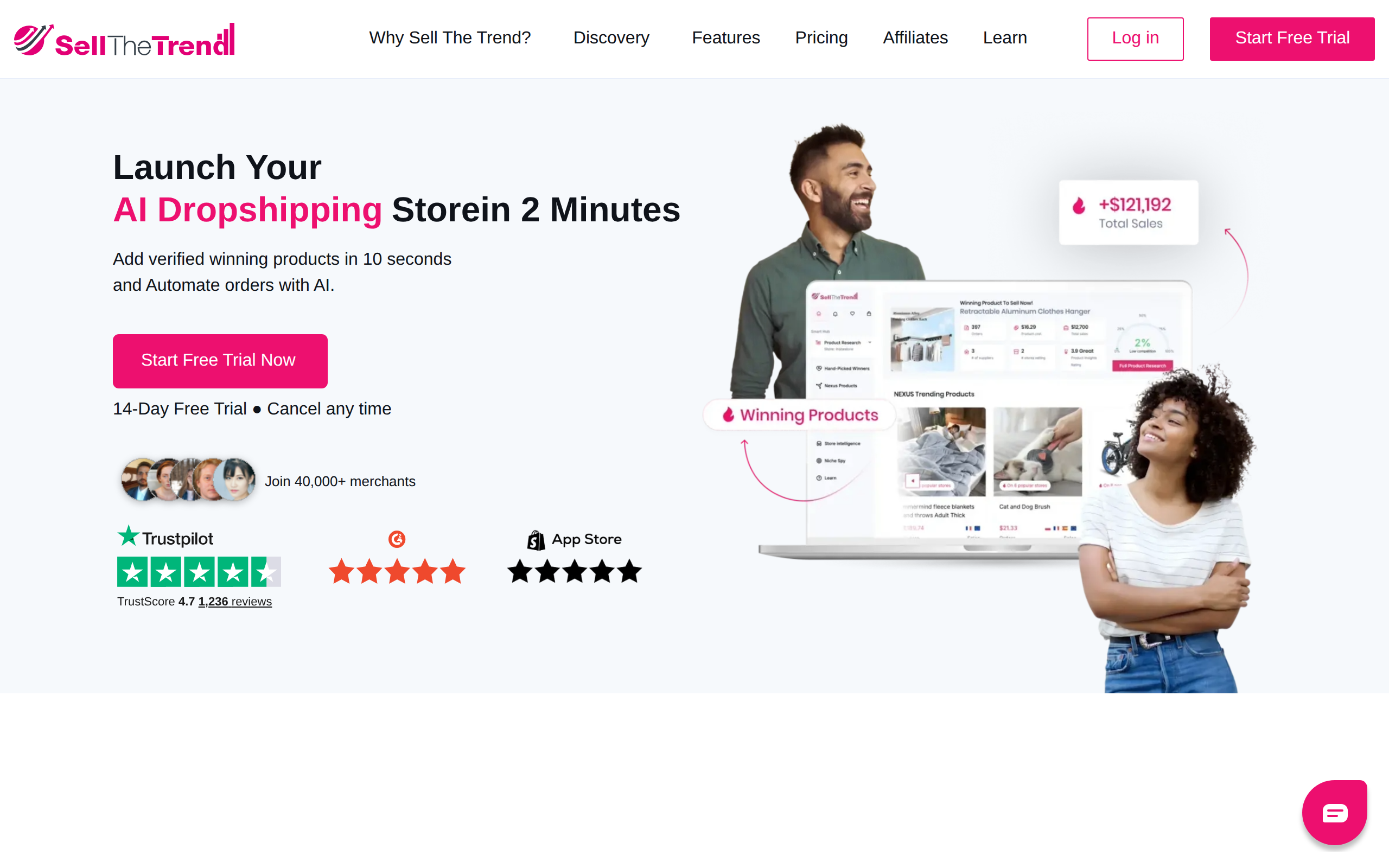
| Sell The Trend | Beginners who want one dashboard | Combines product research, supplier sourcing, and store automation with an AI layer that surfaces trending listings |
| AutoDS | Sellers running multiple stores or channels | End-to-end automation across importing, price and stock monitoring, and order fulfillment on Shopify, eBay, and Wix |
| Zendrop | Sellers prioritizing fast delivery | A supplier network with a meaningful share of listings shipping from US warehouses, which shortens delivery windows |
Pricing on all three is tiered by monthly subscription, and each has a free or trial tier, so test with the free plan before committing to a paid one. None of these are Crevio products or affiliated with Crevio; they're independent tools built specifically for physical-goods sourcing and fulfillment.
The margin problem nobody puts in the product list
Here's what most "best dropshipping products" roundups leave out: finding a good product is necessary, but it's not the part that determines whether the store is actually profitable.
Gross margins on dropshipping typically run 15 to 40 percent, meaningfully lower than print-on-demand or private label, largely because identical products from the same supplier catalogs often get listed by dozens of sellers at once, which turns into a price war within weeks of a product going viral. A product that looked like a 3x markup in your spreadsheet can become a 1.2x markup once five competitors are running the same ad creative against the same audience, bidding your cost-per-click up in the process.
The stores that hold margin longer than everyone else chasing the same trending list usually do one of two things: they source a genuinely differentiated version of the product (custom packaging, a bundle, a private-label variant once volume justifies it), or they build an audience and brand that doesn't have to win on price alone. Neither of those is a product-selection problem anymore, they're a business-model problem (we compare it with the lower-cost route in dropshipping vs affiliate marketing), which is where a lot of dropshipping stores plateau even after finding a real winner.
Where Crevio fits (and where it genuinely doesn't)
Crevio is an AI business builder: you describe what you want to sell and it builds and runs the storefront, payments, and customer management around it. It is honestly not built for the physical side of this list. Crevio doesn't handle inventory, shipping, or fulfillment, so for the actual dropshipping store, a platform like Shopify paired with one of the sourcing tools above is the right tool for that job, not a general-purpose AI business builder.
 Where Crevio genuinely fits is the layer most dropshipping guides skip entirely: the margin section above makes clear that a physical product alone, sourced from the same supplier catalog as everyone else, is a thin and shrinking moat. The stores that hold pricing power longer usually pair the physical product with something that can't be copy-pasted from the same AliExpress listing, a niche guide, a short course, or a paid community around the problem the product solves (training a dog, sleeping better, or building a skincare routine). That's a digital product, and it's the part of the business Crevio is actually built for.
Crevio's Starter plan is free with a 5% transaction fee, Pro is $20/month at 2.5%, and Business is $50/month at 1%, all Stripe-powered with no long-term contract. For a dropshipper looking to add a genuinely defensible layer on top of a physical-goods store, that's a lower-risk starting point than trying to force a fulfillment platform to also run a course or a community.
Common mistakes when picking dropshipping products
- Copying a "best products" list without checking current saturation. Every list, including this one, has a shelf life. Re-run the demand-freshness check before ordering a sample, not just before publishing the listing.
- Ignoring shipping weight until after the first order. A product that looks fine on paper can turn into a shipping-cost problem the moment a customer in a different region orders it.
- Treating margin as the wholesale price minus the retail price. Real margin only exists after ad spend, platform fees, and returns, which is usually 10 to 20 points lower than the spreadsheet version.
- Skipping the regulation check on anything with a battery or a health claim. A single customs hold or platform ad rejection can stall a launch for weeks.
- Assuming product-market fit means the business is done. As the margin section above covers, a good product without a differentiation plan is a temporary advantage, not a durable one. Our guide to validating a startup idea covers cheap ways to test demand before committing real inventory dollars, physical or digital.
The bottom line
None of the 25 products above are a business by themselves. They're a starting inventory list for a store that still has to win on the four signals, hold margin once five other sellers find the same supplier, and eventually build something a supplier catalog can't sell to your competitors: an audience, a brand, or a digital product layered on top. Pick the product first, but plan the second layer before the first one saturates, not after.
FAQ
There's no single answer, margin depends heavily on category and how saturated the specific supplier listing already is. Dropshipping gross margins typically run 15 to 40 percent across the board, with less-saturated categories like pet products and sleep and recovery gear generally holding margin longer than heavily-copied tech accessories, simply because fewer stores are competing on the exact same listing.
Track Google Trends and TikTok's trending content for early demand signals, cross-check against Amazon's Best Sellers and Movers & Shakers lists to confirm real purchase intent (not just attention), and run whatever you find through the four-signal test above: shipping weight, real margin after ad spend, regulation and durability, and whether the trend is still rising in the last 90 days.
No. Crevio doesn't handle physical inventory, shipping, or fulfillment, so it isn't built for the dropshipping store itself; a platform like Shopify paired with a sourcing tool such as Sell The Trend, AutoDS, or Zendrop is the right fit for that. Crevio does fit naturally alongside a dropshipping business for the digital layer: a niche guide, course, or paid community sold to the same audience, which is where a physical-goods business builds pricing power a supplier catalog alone can't offer.
Related Blog Posts
What will you sell today?
Describe what you want to sell — Crevio builds, launches, and grows it. Products, payments, and marketing, all on autopilot.
Start for free

