Your business,
on autopilot.
One platform for creating, running and growing your business, powered by AI.
How to Start a Subscription Business: A Step-by-Step Guide (2026)





The subscription economy was worth an estimated $557.7 billion in 2025 and is growing at a 16.3% annual clip, and the appeal is simple: instead of chasing a new sale every month, you close a customer once and get paid on repeat. That's a fundamentally different business than the one-and-done sale, and it rewards a different set of decisions from day one.
- Pick a model that matches your product: curation, replenishment, access, or hybrid, each with a different cost structure
- Price in tiers, not one flat fee: most subscription businesses leave money on the table with a single plan
- Choose a platform before you build anything: retrofitting recurring billing onto a one-time-sale setup is expensive
- Churn, not acquisition, decides whether this works: benchmark data from Recurly puts a healthy annual churn rate at 2-4%
This guide walks through the model options, real startup costs, a 5-step launch process, and how to pick a platform, so you can start a subscription business without the trial and error that sinks most first attempts.
What a Subscription Business Actually Is
A subscription business charges customers on a recurring basis (monthly, quarterly, or annually) instead of collecting one payment per transaction. That single shift changes the economics of everything: customer lifetime value goes up, revenue becomes predictable enough to plan against, and the business gets valued on recurring revenue instead of last quarter's sales.
It also changes what you're actually selling. A one-time sale ends the relationship at checkout. A subscription starts it there. The product has to keep earning the charge every billing cycle, which is why subscription businesses live or die on retention, not just acquisition.
The 4 Subscription Business Models
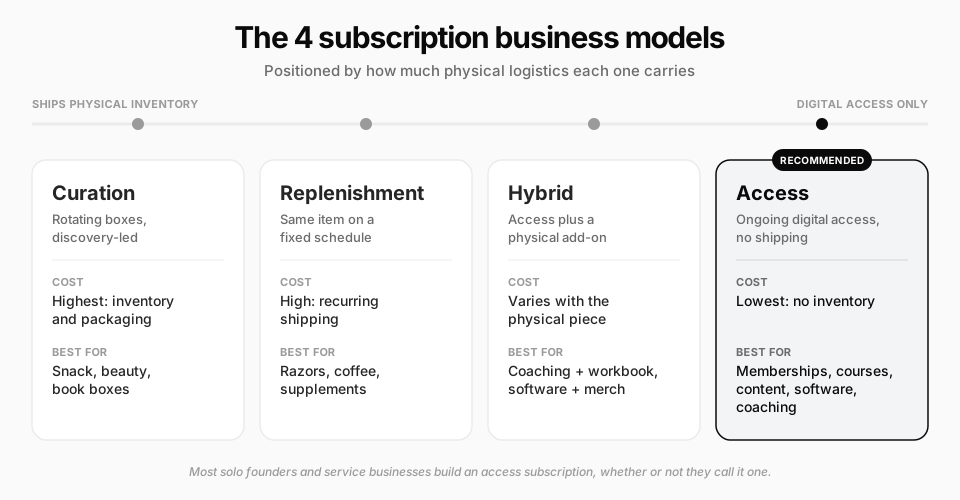
Most subscription businesses fall into one of four models. Picking the wrong one for your product is one of the most common reasons a subscription business fails to get past its first year, because the cost structure and the customer promise are built around the wrong thing.
Curation
You select and ship a rotating set of products, usually physical (a snack box, a beauty box, a book club pick). Customers subscribe for the discovery, not for a specific item. This model has the highest cost structure: inventory, packaging, and shipping on every cycle, but it also commands the highest perceived value if the curation is genuinely good.
Replenishment
You ship the same or similar product on a fixed schedule: razors, coffee, pet food, supplements. The value proposition is convenience, not discovery, so pricing has to beat or match buying the item a la carte. Margins are thinner than curation, but churn tends to be lower because the product is already part of the customer's routine.
Access Subscriptions
No physical product ships at all. Customers pay for ongoing access: a membership community, a content library, software, coaching, or a course with new material added over time. This is the lowest-overhead model by a wide margin, since there's no inventory or shipping cost eating into margin, and it's the model most digital creators and service businesses actually run, whether or not they call it "subscription."
Hybrid
A mix of the above: a coaching membership that also ships a physical workbook, a software subscription with an included physical add-on. Hybrid models can differentiate you from competitors, but they inherit the cost complexity of whichever physical component they include.
If you're not sure which model fits, ask three questions: Does your product need to physically ship, or is it access to something digital? Is demand for it proven, or are you guessing? And does the model match how your audience already buys, weekly convenience versus curated discovery versus ongoing access? For most solo founders, service providers, coaches, and digital creators, an access subscription is the right starting point: it's the cheapest to test, the fastest to launch, and the easiest to price in tiers.
How Much It Actually Costs to Start
Costs vary enormously by model, and most "start a subscription box for $500" guides are talking about a specific kind of curation or replenishment business, not the whole category.
| Cost category | Access/membership subscription | Physical subscription (curation/replenishment) |
|---|---|---|
| Product/inventory | $0-$200/mo (your time, or content tools) | $1,000-$5,000+ upfront for first inventory run |
| Platform/website | Free to $50/mo | Free to $50/mo, plus a fulfillment tool |
| Packaging & shipping | None | $2-$15+ per box, recurring every cycle |
| Payment processing | 1-5% transaction fee, typical of most platforms | Same, plus payment processor card fees |
| Marketing | $0-$500/mo to start (organic-first is realistic) | Often higher, physical products need paid discovery |
An access-based subscription business, a paid community, a content membership, a coaching program, can realistically launch for the cost of a platform subscription and the time it takes to build the first month of value. A physical subscription box needs real working capital before the first customer pays, because you're buying inventory before you've sold it.
How to Start a Subscription Business: 5 Steps
1. Validate Demand Before You Build Anything
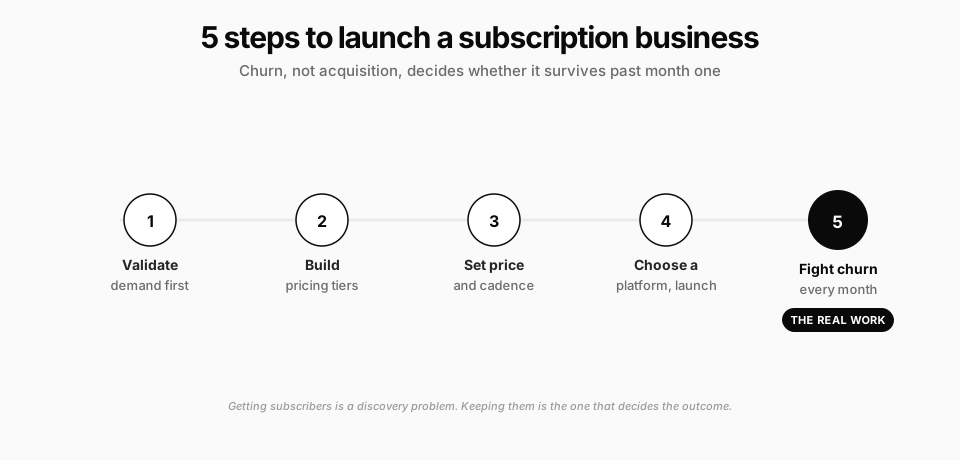
Talk to 20-50 people who match your target customer before you build a single asset. Ask what they currently pay for that's adjacent to your idea, what they've tried and abandoned, and whether they'd pay today, not "would you be interested." A waitlist with real email signups, or a handful of people who pay for a founding-member spot before the product fully exists, is worth more than a survey full of polite yeses.
2. Decide What's In Each Tier
Almost every subscription business underprices itself by shipping a single flat plan. Structure at least two tiers: a lower-priced entry tier that gets people in the door, and a higher tier with meaningfully more value, more content, more access, more support, not just a bigger number. Recurly's churn benchmark data shows education and ecommerce subscriptions running the highest churn (around 4-5% annually) of any vertical, which is a strong argument for building real tier differentiation rather than relying on a single price point to carry the whole business.
3. Set Your Price and Billing Cadence
Price against the value delivered, not against your costs plus a margin. See how to price your digital products for a deeper walkthrough of the pricing math. Offer monthly and annual billing, with the annual option discounted 15-20%, since annual subscribers churn less by definition (they've pre-committed) and give you cash flow up front. A free trial lowers the barrier to the first charge, but free trial and freemium aren't interchangeable: keep a trial short enough (7-14 days) that it filters for real intent rather than just delaying the decision.
4. Choose a Platform and Launch
Your platform needs to handle recurring billing, tiered pricing, and customer management from day one, because rebuilding this after you have paying subscribers is painful. The section below walks through what to look for.
5. Market It, Then Fight Churn Every Month
Getting the first 20-50 subscribers is a discovery problem: content, community, referrals, a founder-led launch. Keeping them is a different problem entirely, and it's the one that actually determines whether the business survives. Track your churn rate monthly from day one. If it's above 5-7% monthly for a low-cost consumer subscription, or above 3-4% annually for a higher-priced one, investigate before you scale spend on acquisition, because growing on top of a leaky base just means working harder to stand still.
Choosing a Platform to Run It On
| Feature | Whop | Patreon-style membership tools | Crevio |
|---|---|---|---|
| Best for | Digital creator communities, gaming, trading groups | Ongoing fan/creator support memberships | Founders building a full subscription business (site, payments, customers) |
| Setup cost | Free to start, commission on sales | Free to start, percentage fee on pledges | Free to start (Starter plan) |
| Recurring billing | Built in | Built in | Built in, Stripe-powered |
| Tiered pricing | Yes | Yes | Yes |
| Beyond payments | App ecosystem, Discord/Telegram integrations | Community/fan tools | AI builds the site, storefront, and customer records around the subscription |
If all you need is recurring billing bolted onto an existing Discord or Telegram community, a tool built specifically for that (like Whop) is a reasonable, fast option, and it's worth acknowledging that many communities run entirely on tools like it without ever needing anything more. Where it gets harder is once your subscription is the whole business: you also need a marketing site, a way to capture leads before they subscribe, and somewhere to see your customer list that isn't scattered across a payment dashboard and a Discord server.
That's what Crevio is built for. It's an AI business builder: you describe what you want to sell as a subscription, and it builds the storefront, sets up the recurring Stripe billing and tiers, captures leads, and manages your customer records, so the business around the subscription isn't a separate project from the subscription itself.
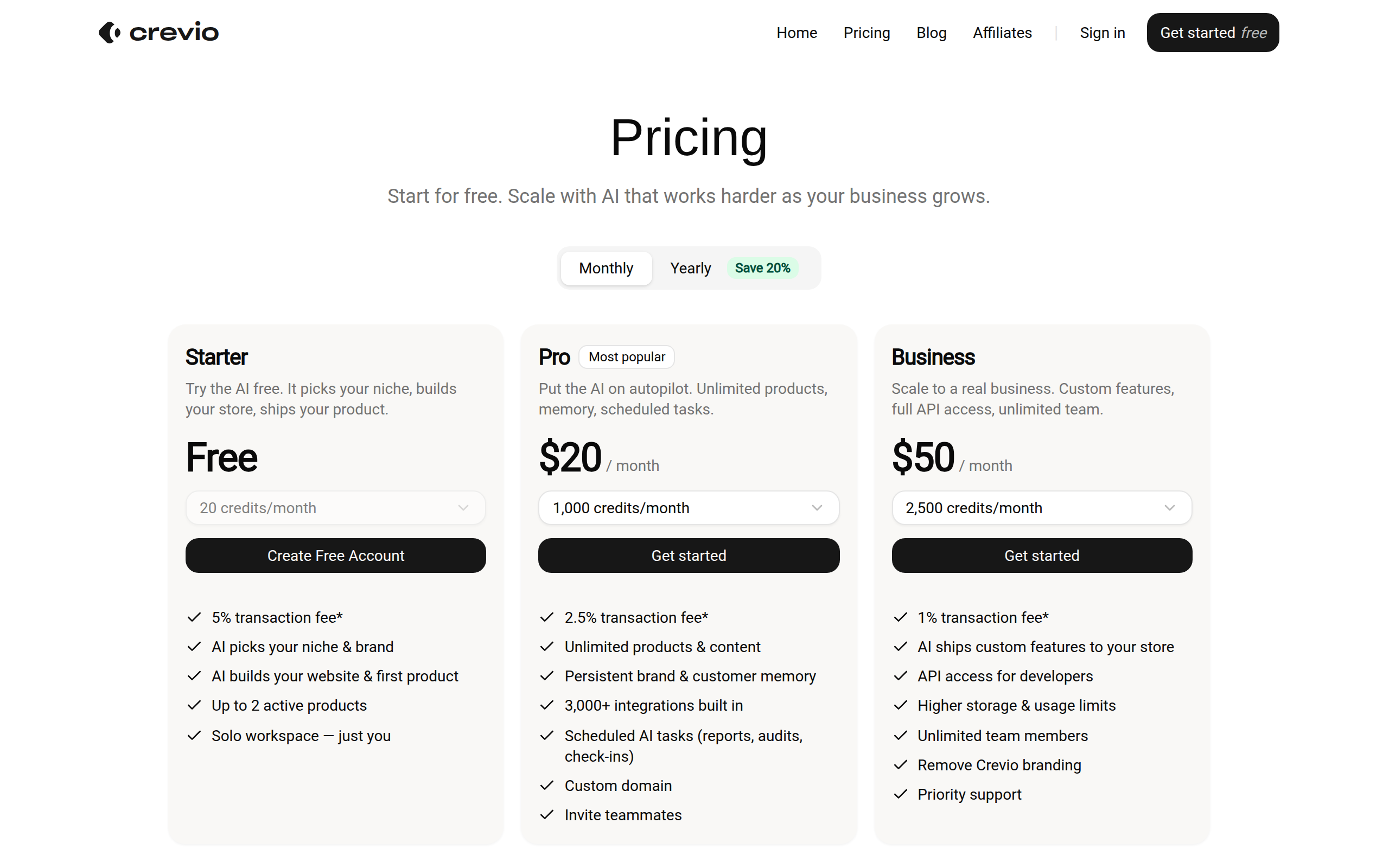
- Recurring billing with trial periods and multiple tiers, powered by Stripe, on courses, downloads, or ongoing membership access
- Transaction fees from 1-5% depending on plan, with no large revenue-share cut on top
- A storefront and checkout built from a description, not a template you have to assemble
- Customer and lead management in one place, so you can see who's subscribed and who's about to churn
- Start free on the Starter plan, and keep your data if you ever leave
To be direct about scope: Crevio isn't a fit if your subscription model is curation or replenishment and the core of the business is picking and shipping physical inventory. That's a different set of tools entirely. It's built for access and membership subscriptions: courses, downloads, communities, and ongoing content, which is what most solo founders and service businesses are actually building when they say "subscription business."
Mistakes That Kill Subscription Businesses
- Launching with one price and no tiers. You can't tell what price point converts best if there's only one to test against.
- Ignoring churn until it's a crisis. By the time monthly churn shows up as a shrinking revenue number, it's usually been building for months.
- Underestimating the cost of physical fulfillment. Curation and replenishment models look cheap on a spreadsheet until packaging and shipping eat the margin.
- Treating the platform as an afterthought. Migrating paying subscribers off a platform that can't scale with you is one of the most disruptive things you can do to a subscription business. It's far cheaper to pick a platform that can grow with you from the start.
- Not offering an annual plan. Annual billing improves cash flow and reduces churn simultaneously; leaving it off the pricing page is leaving retention on the table.
FAQ
It depends entirely on the model. An access or membership subscription, courses, communities, digital content, can start for the cost of a platform plan (often free to start) plus your time. A physical curation or replenishment box typically needs $1,000-$5,000+ in upfront inventory and packaging before the first subscriber pays, plus ongoing per-box shipping costs that scale with every customer you add.
In most places, yes, once you're taking recurring payments from customers you'll want a registered business entity (an LLC or equivalent) to separate personal and business liability, and to open a business bank account for the recurring deposits. Requirements vary by country and state, so check with a local accountant or business attorney before you launch rather than after you have paying subscribers.
Recurly's benchmark data puts the overall average at 3.6% annual churn across industries, with SaaS running lower (around 3.2%) and education and ecommerce subscriptions running higher (around 4-5%). Below 2% annual churn is considered strong performance in most categories; above 5-7% monthly churn for a consumer subscription is usually a sign to fix retention before spending more on acquisition.
The pricing page and the platform are the easy parts. The businesses that make it past year one are the ones that treated the first renewal, not the first sale, as the real test of the product.
Related Blog Posts
What will you sell today?
Describe what you want to sell — Crevio builds, launches, and grows it. Products, payments, and marketing, all on autopilot.
Start for free