Your business,
on autopilot.
One platform for creating, running and growing your business, powered by AI.
How Sneaker Drop Alert Communities Work (And How to Build One)




A hyped sneaker release rarely stays in stock for more than 90 seconds, and the people who consistently cop it aren't just fast, they're paying $30-75 a month for someone else to watch the release for them. That's the entire business behind a sneaker cop group: a paid Discord or Telegram community that sells real-time drop alerts, restock monitors, and checkout help for hyped releases, from Travis Scott's Nike collaborations to Jordan retros to limited streetwear collabs. If you're searching for a list of old release dates hoping to time a cop, here's the part most guides skip: the actual edge was never a date on a calendar. It's paying for (or building) a community that tells its members the second a link goes live.
- This is a real, evergreen business model: sneaker and streetwear drop-alert communities charge $20-150+/month and have been running as paid Discord and Telegram servers for years
- Members pay for speed, not information: restock monitors, auto-checkout help, and proxy access, not a static list of dates
- Building one is a legitimate paid-community business, structurally identical to any other paid membership, just applied to a hype-driven niche
Quick Comparison: What a Membership Tier Actually Buys
| Tier | Typical Price | What You Get | Best For |
|---|---|---|---|
| Public / Free | $0/mo | Delayed link reposts, general chatter | Casual fans deciding if the niche is worth paying into |
| Standard Cop Group | $30-40/mo | Real-time monitor alerts, release guides, proxy discounts | Regular resellers who want a consistent edge |
| Premium / Regional Pod | $75-150+/mo | Dedicated auto-checkout (ACO) staff, smaller pod, 1:1 help | Serious resellers treating it as a business input |
What Is a Sneaker Cop Group?
A "cop group" (also called a drop-alert community, a cook group, or a release-alert server) is a paid Discord or Telegram community built around one job: getting members to the checkout page of a hyped release before it sells out. The term "cop" is reselling slang for successfully buying a pair at retail, and "cook" refers to running the automated tools that make that possible.
Travis Scott's Nike collaborations have been a recurring hype-culture event since 2017, and they're a perfect example of why this niche exists at all. A single collab can sell out in under a minute at retail and immediately resell for two to five times its original price. That gap between retail price and resale value is the entire economic engine of the cop-group business, and it operates at real scale: the global sneaker resale market moved past $10 billion in gross merchandise value in 2025, which is what makes a recurring $30-75/month subscription an easy sell to anyone actually reselling for a living. Members pay a recurring fee for a better shot at capturing that gap themselves.
These communities aren't limited to Travis Scott releases. Jordan retros, Nike SNKRS exclusives, Supreme drops, and other limited streetwear collabs all support the same model, and most active groups cover several of these categories rather than tracking a single brand. One directory alone lists dozens of active paid sneaker Discord servers, which gives a sense of how established the space already is.
What Members Actually Pay For
The value isn't a calendar of dates, most of that information is public anyway. It's the tooling and speed wrapped around it.
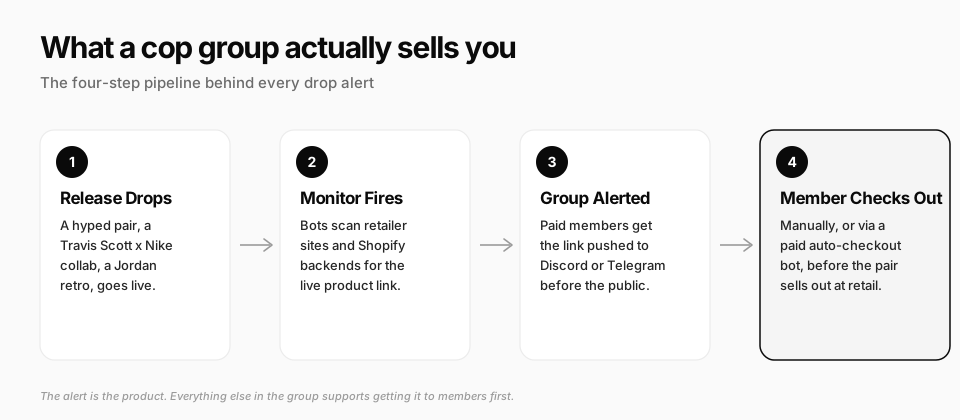
A functioning cop group typically bundles:
- Restock and release monitors: automated tools that scan retailer sites and Shopify-powered checkout pages continuously, firing the instant a product page goes live or a sold-out item restocks
- Auto-checkout (ACO) services: staff or bots that complete the purchase on a member's behalf during the actual drop window, when manual checkout is often too slow to beat bots and other resellers
- Release guides and calendars: curated breakdowns of upcoming drops, expected resale value, and which retailers historically have the best odds
- Proxy and bot discounts: negotiated group rates on residential or ISP proxies, since checkout bots need to appear as multiple distinct shoppers to avoid retailer rate limits
- A private, smaller pool of competition: the biggest hidden value in a paid group. A free public Discord with 50,000 members chasing the same pair is worse odds than a paid pod capped at 500
None of this requires inventing a fictional advantage. It's closer to a trading-signals subscription or a private research service: the underlying information (a release exists) is public, but speed and tooling around acting on it are what people pay for.
How Much Do Sneaker Drop-Alert Communities Charge?
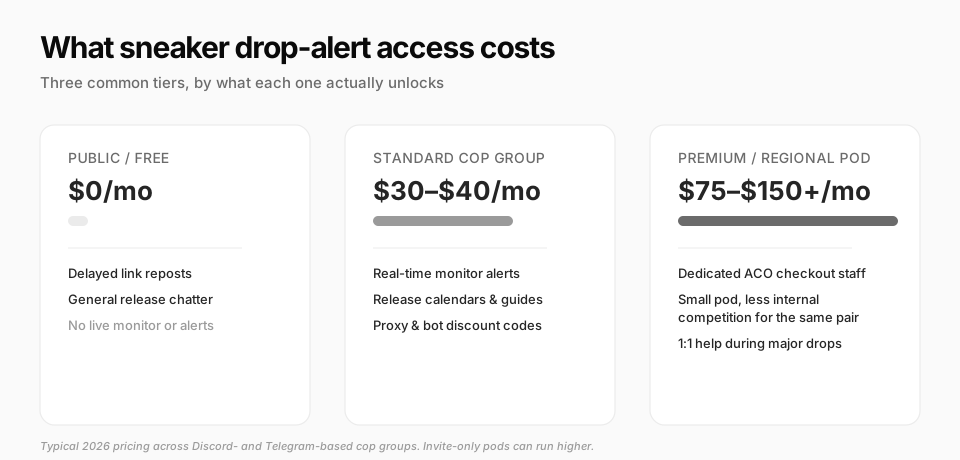
Pricing clusters into three rough bands. Budget-tier groups typically charge around $30/month, mid-range groups run $39-60/month, and premium tiers reach $70-75/month or higher for smaller, more exclusive pods, according to a breakdown of active cook groups. Some invite-only or regional groups price well above that range, up to $200-300/month, by deliberately capping membership to keep the pair-to-member ratio favorable.
Most groups run this as a straightforward recurring subscription rather than a one-time fee, which makes sense: the value resets every drop cycle, not once at signup. That's the same reasoning behind choosing a membership model over one-time sales in any recurring-value business. A number of groups also layer in tiered pricing, the way described above, rather than a single flat price, so a member deciding between "just the alerts" and "alerts plus ACO staff" can pick the tier that matches how seriously they're reselling.
Billing itself usually runs through a third-party platform bolted onto Discord or Telegram, most commonly Whop or LaunchPass, since neither chat app has a native storefront or subscription system built in. We cover how that layer works, including real fee comparisons, in our guide to Telegram monetization.
Is Running One Worth It? (Joining vs. Building)
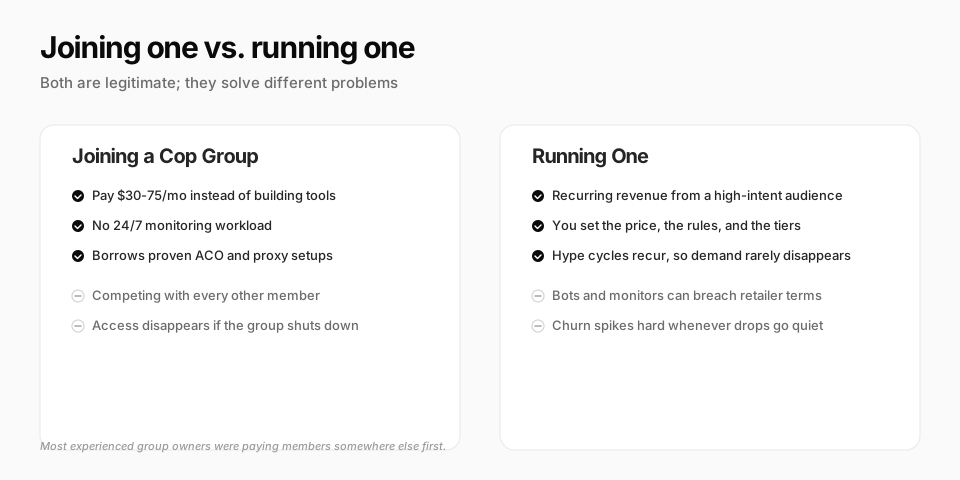
Joining an established group is the lower-effort path if reselling is a side activity: you're paying $30-75/month for tooling and a smaller competitive pool instead of building either yourself. The tradeoff is straightforward: your access disappears the moment the group shuts down or you stop paying, and you're still competing with every other paying member for the same handful of pairs.
Running one is a legitimate paid-membership business, not a gimmick. The audience already exists, is used to paying monthly for access, and the hype cycle behind streetwear and sneaker collabs is structurally recurring, brands keep releasing limited drops, so the demand doesn't disappear the way a one-off content trend would. What it demands in return is real operational work: monitors need constant maintenance as retailers change their sites, ACO staff need to be available during actual drop windows (which don't respect time zones or business hours), and churn spikes hard during any stretch where drops slow down.
There's also a genuine gray area worth naming plainly: automated checkout bots and monitors frequently violate individual retailers' terms of service, even where they aren't illegal. Anyone running or joining a group should go in with that understood, rather than discovering it after an account gets banned.
How to Build a Sneaker Drop-Alert Community From Scratch
- Pick a lane before you pick a price. "All sneakers" is a harder sell than a focused niche, Travis Scott and Jordan collabs specifically, or a regional focus (release patterns and retailer stock differ meaningfully by country).
- Build the free audience first. A Telegram channel or public Discord server posting genuinely useful release news establishes credibility before you ever ask anyone to pay. Groups that paywall on day one with no track record convert almost nobody.
- Decide what you're building vs. buying. Very few group owners write their own monitor software from scratch. Most license or resell access to existing monitor and ACO tooling, then wrap it in their own community, pricing, and support.
- Price in tiers, not one flat number. A cheaper tier covering alerts only, and a premium tier adding ACO help or a smaller pod, lets members self-select based on how seriously they resell, which is the same logic behind pricing digital products well in any niche.
- Launch small and prove the odds actually improve. A pod of 50-100 members that reliably helps people cop is worth more, and easier to grow through word of mouth, than a rushed 2,000-member group where nobody actually gets a pair.
- Pick your billing and access layer before drop day, not after. Discord and Telegram don't handle recurring payments or automatic member removal on their own, so this piece needs a platform underneath the chat app itself.
Where Crevio Fits
Crevio isn't a sneaker bot or a monitor service, and it won't pretend to be one. Cop groups still need dedicated release-monitoring tools built for that specific job.
What Crevio does instead is give the membership business wrapped around those tools somewhere real to live. It's an AI business builder: you describe what you're selling, in this case, tiered access to a paid Discord or Telegram community, and Crevio's AI builds the product page, sets up Stripe-powered recurring billing, and manages who's an active paying member. Telegram is one of Crevio's 3,000+ connected integrations, so a new member paying through your Crevio storefront can automatically get added to the right group or tier without you manually managing an access list.
Crevio's free Starter plan charges a 5% transaction fee, dropping to 2.5% on Pro ($20/month) and 1% on Business ($50/month), all with a real storefront you control rather than a paywall bolted onto someone else's chat app. It's a fair tradeoff to be direct about: a dedicated tool like Whop has deeper Discord-specific integrations built for exactly this niche. What Crevio adds is the option to grow past a single gated server, bundling drop-alert access with a course on reselling, a proxy affiliate link, or a second product entirely, on a storefront that's yours either way.
Common Mistakes to Avoid
- Promising specific outcomes you can't guarantee. "You will cop this pair" is a claim no group can back reliably; "you'll get the link before the public does" is honest and still valuable.
- Paywalling before you've built any trust. A brand-new server with no free track record converts poorly. Prove the value publicly first.
- Ignoring retailer terms of service entirely. Understand the real risk of automated checkout tools rather than assuming it doesn't apply to a small group.
- Running one flat price for everyone. Casual members and serious resellers value the same alert very differently; a single price leaves money on the table either direction.
- Treating a slow drop season as a sign to shut down. Streetwear and sneaker hype cycles are seasonal. Groups that survive plan content and pricing around the slow months instead of only the hot ones.
FAQ
Yes, selling access to release information, monitoring tools, and checkout assistance is legal. The gray area sits one level down: the automated bots and monitors many groups use can violate individual retailers' own terms of service, which is a contractual risk, not a criminal one. Reputable groups are upfront with members about that distinction rather than implying anything is guaranteed or risk-free.
Not always. Standard-tier groups typically just alert members to a live link, which you check out manually. Premium tiers that include auto-checkout (ACO) staff exist specifically for members who don't want to run their own bot, though owning one still improves your odds on the most competitive drops.
A free sneaker Discord is mostly a discussion and community space, release chatter, outfit checks, general hype talk. A cop group is a paid tier layered on top (or entirely separate) whose specific job is real-time monitoring and checkout assistance during an actual drop, which is a materially different product even when both live inside the same chat app.
Old release-date lists go stale the day after the drop. A community that gets someone to the checkout first doesn't, which is the entire reason this niche keeps printing money long after any single Travis Scott collab has sold out.
Related Blog Posts
What will you sell today?
Describe what you want to sell — Crevio builds, launches, and grows it. Products, payments, and marketing, all on autopilot.
Start for free