Your business,
on autopilot.
One platform for creating, running and growing your business, powered by AI.
What Is Whatnot? How the $20B Live Shopping App Works in 2026





Whatnot is now valued at $20 billion, and its sellers moved more inventory in the first half of 2026 than in all of 2025 combined. If you keep seeing a stranger auctioning off trading cards or sneakers on your phone at 11pm, that's Whatnot: a livestream shopping app where sellers run real-time video auctions and buyers bid, chat, and buy on the spot. Here's what it is, how it actually works, what it costs to sell, and where it fits next to eBay, Poshmark, and TikTok Shop.
- Whatnot is a live-auction marketplace, not a listing site: sellers go live on video, buyers bid or buy instantly, and the whole transaction happens inside one stream
- Selling costs a flat commission plus payment processing, roughly 8% + 2.9% + $0.30 in the US on most categories, with no listing fees and no monthly subscription
- It's built for physical goods, mainly collectibles, trading cards, sneakers, and fashion. There's no product type for digital downloads, courses, or memberships, so a seller building both needs a second platform for the digital half
Quick Overview
| Factor | Details |
|---|---|
| What it is | Live-auction and livestream shopping app |
| Founded | December 2019, Los Angeles |
| Founders | Grant LaFontaine (CEO) and Logan Head (CTO) |
| Valuation | $20 billion (August 2026 Series G) |
| 2025 live GMV | $8 billion+ |
| Standard commission | 8% (US), 6.67% + VAT (UK/EU) |
| Payment processing | 2.9% + $0.30 (US) |
| Listing fees | None |
| Best for | Selling physical collectibles, sneakers, and fashion live |
What Is Whatnot?
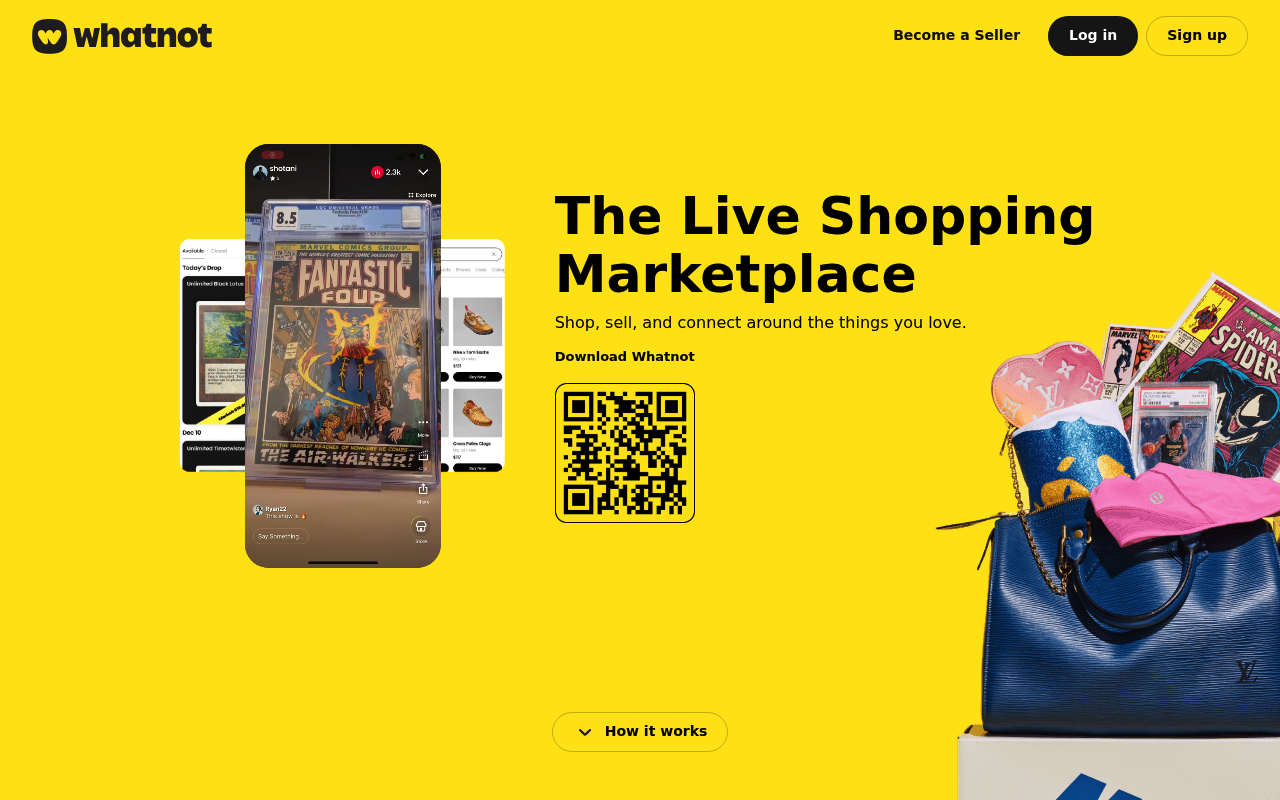
Whatnot is a livestream shopping app that turns selling into a real-time video event. A seller starts a "show," holds up an item on camera, and either runs a timed auction or lists it as a fixed-price "Buy It Now" item. Buyers watching the stream bid in the chat or tap to buy, and the whole exchange, from showing the product to closing the sale, happens live.
 It was founded in December 2019 by Grant LaFontaine and Logan Head, two collectibles enthusiasts (LaFontaine had run an eBay Pokémon card store since middle school, Head previously worked in product at the sneaker marketplace GOAT). Their first idea was a general "anything goes" marketplace; it didn't work, so they narrowed to a single category and tested it on themselves. Their first livestream sold their own Funko Pop collection and made $5,000 in a single evening, selling out in two and a half hours. That focus-then-expand playbook (prove one category, then open the next) is a big part of why the platform grew: community by community rather than all at once.
The growth since has been fast even by startup standards. Whatnot's live sellers generated more than $8 billion in gross merchandise value in 2025, more than double the $3 billion sold in 2024, and the company says sellers moved more product in the first half of 2026 than in all of 2025. In August 2026, Whatnot raised $545 million at a $20 billion valuation, up from roughly $5 billion in January 2025 and $11.5 billion that October, and now claims close to 60% share of the estimated $22 billion live shopping market across North America and Europe.
How Does Whatnot Work?
Every sale on Whatnot happens inside a live video stream, called a "show." Sellers host shows on a schedule, and buyers tune in, watch, and interact in real time. There are two ways items change hands:
Live auctions. The seller sets a starting bid and a bid increment, then holds the item up on camera while buyers bid in the live chat. Whoever has the highest bid when the timer runs out wins. Buyers can also submit "pre-bids" before a show starts if they can't watch live.
Buy It Now listings. For items the seller doesn't want to auction, they can post a fixed price on their storefront. Buyers browse the seller's page anytime, add items to a cart, and check out instantly, no live show required.
For Buyers
Buyers download the app, browse shows by category, and follow their favorite sellers to get notified when they go live. The appeal over a static listing site is the interaction: you can ask the seller to show a card's back corner, confirm an item's condition, or just chat while you shop. Regulars build real relationships with sellers they follow every week, which is closer to how a flea market or trading-card shop works than a typical ecommerce checkout.
Payment and shipping are handled inside the app. Whatnot processes checkout, and sellers ship the item, usually within a few business days, using labels bought through Whatnot's discounted shipping partners.
For Sellers
New sellers apply, get approved, and start with limited access that expands as they build a track record. From there, the actual selling loop repeats every week:
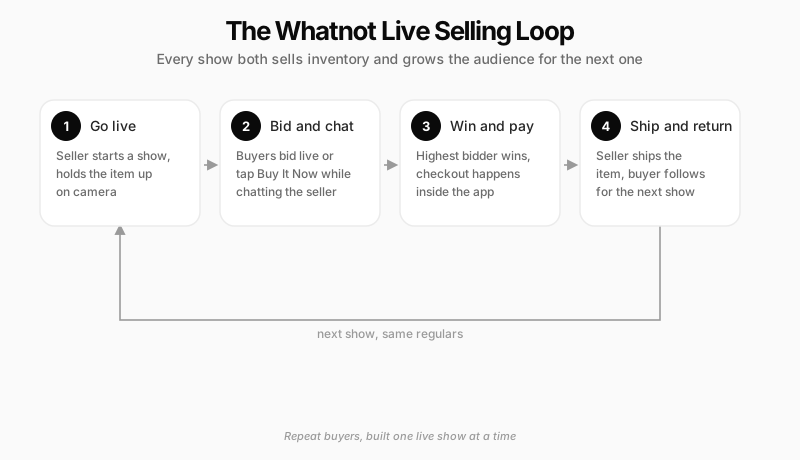
Each cycle both sells the current inventory and deepens the relationship with the audience that will show up for the next one. That repeat-buyer loop, more than any single auction, is what makes a Whatnot seller's business compound over time.
What Can You Sell on Whatnot?
Whatnot started with a single category, Funko Pops, and has since expanded to more than 250 product categories. The heaviest categories by volume are still collectibles-adjacent:
- Trading cards (sports, Pokémon, and other TCGs)
- Sneakers and streetwear
- Toys, vintage collectibles, and Funko Pop! figures
- Comics
- Fashion and accessories
- Coins and currency
- Beauty products
- Electronics
The common thread is that all of it is physical inventory, shipped after the sale. There's no equivalent category for downloadable files, online courses, or membership access. If your business is built on both, say, you sell graded trading cards live on Whatnot and also sell a paid guide on how to grade them, you'll need a second platform for the digital half.
How Much Does It Cost to Sell on Whatnot?
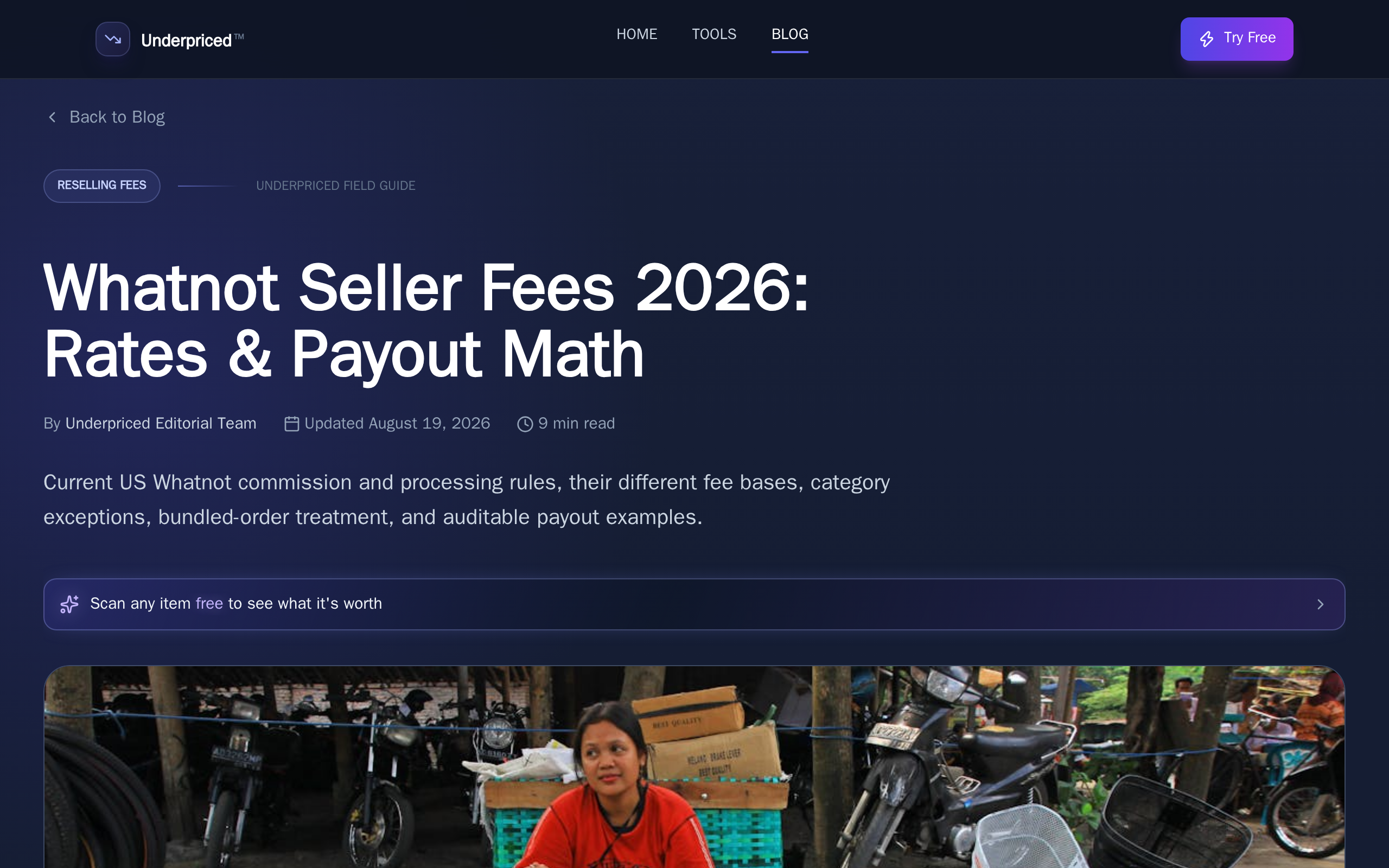
Whatnot charges no listing fees and no monthly subscription. You pay a commission plus a payment processing fee only when an item actually sells, and the rates differ slightly by category and region:
| Fee | US / Canada / Australia | UK / EU |
|---|---|---|
| Standard commission | 8% of item price | 6.67% + VAT |
| Coins and money | 4% | 4% + VAT |
| Electronics | 5% | 5% + VAT |
| High-value portion (over $1,500/£1,500/€1,500) | 0% on eligible categories | 0% on eligible categories |
| Payment processing | 2.9% + $0.30 on total order value | 2.42% + £0.25/€0.25 |
| Listing fee | None | None |
Commission is calculated on the item price alone, but payment processing runs on the total order value, meaning item price plus shipping and tax. For a $50 sale with no shipping, that's roughly $4 in commission and $1.75 in processing, about $5.75 total, close to 11.5% of the sale. The 0% commission on the portion of a sale above $1,500 (added in January 2026) meaningfully improves the math for anyone selling high-value cards or watches.
For context, that puts Whatnot below eBay's roughly 13.6% final value fee and well below Poshmark's flat 20%, while charging nothing to list an item in the first place.
How to Start Selling on Whatnot
- Apply for a seller account. You'll register with an email or social login and answer a short application, since Whatnot approves sellers rather than opening the platform to everyone at once.
- Set up your profile and storefront. Add a bio, profile photo, and your first Buy It Now listings so buyers who find you outside a live show have something to browse.
- Schedule and run your first show. Pick a category, set a time, and promote it to whatever following you already have (Instagram, TikTok, an existing customer list). Early shows are mostly about learning your camera setup and pacing.
- Fulfill orders and ship promptly. Whatnot connects you to discounted shipping labels; buyers expect items to ship within a few business days of a show.
- Show up on a schedule. Whatnot rewards consistency. Sellers who go live at a predictable time each week build the regulars who make later shows sell faster.
The mistake most new sellers make: leaning on Buy It Now listings because going live feels intimidating. But the bidding war is where Whatnot actually beats a static listing site, buyers competing in real time routinely push a price past what the same item would fetch sitting in a fixed-price storefront. Skipping live shows to stay comfortable behind the camera is the fastest way to end up with eBay's fee structure and none of Whatnot's upside.
How Much Can You Actually Earn Selling on Whatnot?
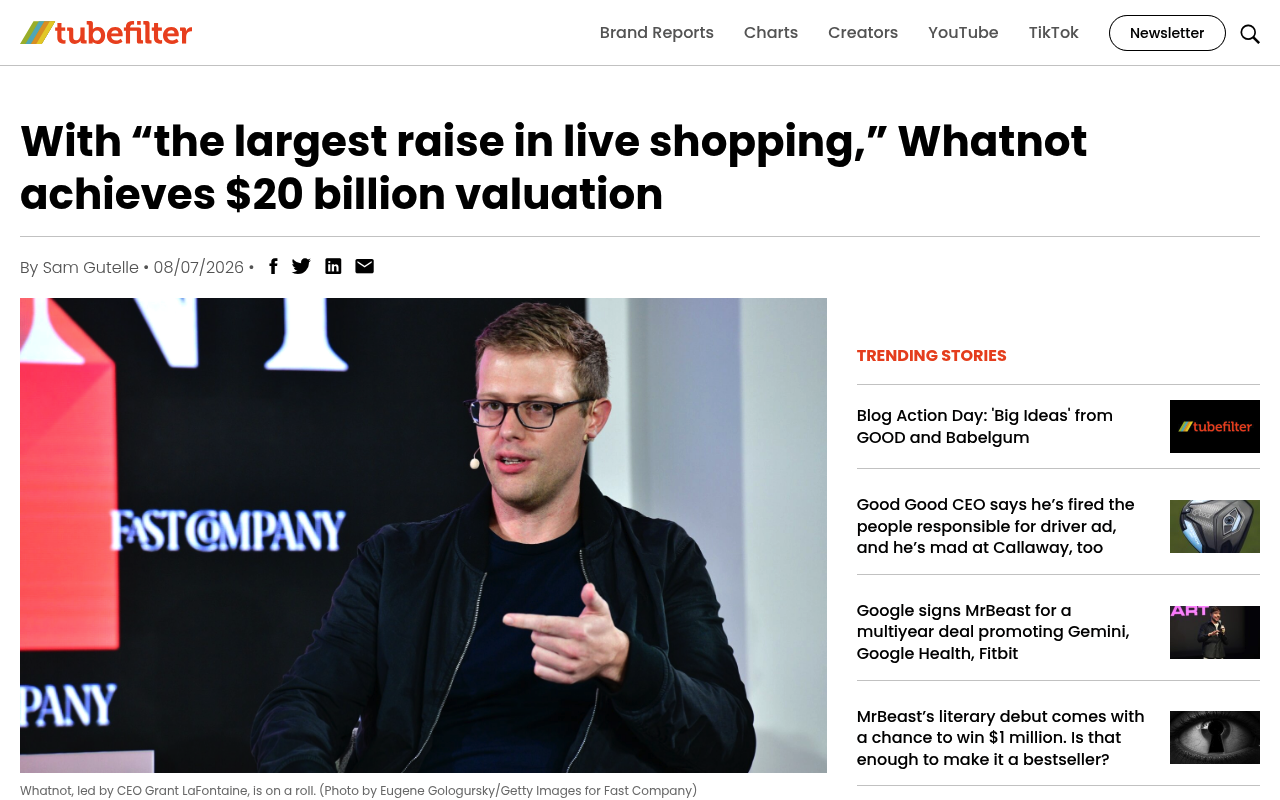
The honest answer is that it depends entirely on how consistently you show up, but the platform-wide numbers give a useful benchmark. Whatnot reported that over the past year, the number of sellers who have passed $1 million in lifetime sales has more than doubled, and the share of sellers earning a full-time living on the platform grew by 25%. That's a platform-level trend, not a promise, and it says more about Whatnot's growth than about what a new seller should expect in month one.
What actually separates a full-time Whatnot seller from a hobbyist is closer to what separates any small business from a side project: sourcing inventory reliably, showing up on a predictable schedule so regulars know when to tune in, and reinvesting early sales into better inventory rather than cashing out every show. The auction format rewards consistency more than any single viral stream.
Whatnot Pros and Cons
Pros:
- No listing fees or subscription, you only pay when something sells
- Live interaction drives real bidding wars, often above what a static listing would fetch
- A genuine, engaged community forms around regular sellers
- Integrated payments and discounted shipping remove a lot of back-office work
- Fast-growing buyer base: the company reports roughly 650,000 new users joining every week
Cons:
- Selling well requires being on camera and comfortable hosting, which isn't for everyone
- New sellers start with limited privileges and have to build trust before scaling up
- Commission plus processing runs close to 11-12% on a typical sale, higher than a flat listing fee model
- Regional fee differences (UK/EU VAT handling) add complexity for international sellers
- No support for digital products, courses, or subscriptions. Physical inventory only
Whatnot vs. eBay, Poshmark, and TikTok Shop
| Platform | Format | Typical Seller Fees | Best For |
|---|---|---|---|
| Whatnot | Live auction + Buy It Now | ~8% + 2.9% + $0.30 | Collectibles, sneakers, community-driven selling |
| eBay | Fixed listings + auctions | ~13.6% final value fee + $0.40 | Broad inventory, buyers who search rather than browse |
| Poshmark | Fixed listings, some live shows | 20% (under $15 flat $2.95) | Fashion resale, casual sellers |
| TikTok Shop | Livestream + in-feed shopping | 6-10%, all-in | Sellers with an existing TikTok following |
Whatnot's edge is the auction format itself: live bidding tends to push prices higher than a fixed listing, and the community that forms around a seller's regular shows creates repeat buyers that a static storefront rarely gets. eBay still wins on sheer search volume and buyer intent for people who know exactly what they want (we cover the setup and fees in how to sell on eBay). Poshmark's flat 20% is steeper but the audience skews toward casual fashion resale. TikTok Shop is the closest format match, live selling with in-feed discovery, but it leans on an existing following more than Whatnot's built-in community browsing.
Is Whatnot Legit and Safe?
Yes. Whatnot is a real, well-funded company with a public founding team, buyer protection on purchases, and a seller-approval process designed to filter out bad actors. At a $20 billion valuation backed by investors including a16z, Y Combinator, and ICONIQ, it's not a fly-by-night app. That said, as with any peer-to-peer marketplace, do the basics: check a seller's ratings and show history before bidding on anything expensive, and use only the app's built-in checkout rather than any request to pay outside the platform.
What Whatnot Doesn't Do: Selling Beyond Live Auctions
Whatnot solves one problem extremely well: selling physical inventory to a live audience. It doesn't solve a different, increasingly common one: a seller who also wants to package what they know, not just what they own.
A lot of Whatnot sellers build real expertise along the way, how to grade a card, which sneakers hold value, how to source inventory cheaply, and some of that knowledge is worth selling on its own, as a guide, a paid community, or a course. That's outside Whatnot's scope entirely; there's no product type for a downloadable file or a subscription that isn't tied to a live show.
That's the gap Crevio fills. It's an AI business builder: describe what you want to sell, a downloadable pricing guide, an online course, a paid community for other resellers, and Crevio's AI builds the storefront, sets up payments through Stripe, and helps launch it. There's a free Starter plan to begin with (5% transaction fee), a Pro plan at $20/month (2.5%), and a Business plan at $50/month (1%, plus a custom domain and no Crevio branding). None of that replaces Whatnot for moving physical inventory, Crevio doesn't do shipping or fulfillment, but for the knowledge-based product sitting next to your Whatnot business, it's built for exactly that.
If your growth plan is "sell more live shows," you don't need this. If it's "turn what I've learned running those shows into a second income stream," a digital product is usually the fastest way to start. Whatnot sells what's in your inventory. Crevio sells what's in your head, and unlike inventory, that never runs out.
FAQ
Yes, it's free to list. Whatnot only charges when an item sells: a commission (8% on most categories in the US, less for coins and electronics) plus a 2.9% + $0.30 payment processing fee. There's no monthly subscription or per-listing charge.
Whatnot is built for physical goods, mainly trading cards, sneakers, toys, fashion, comics, coins, and electronics, across more than 250 categories. It has no category for digital products like ebooks, courses, templates, or paid memberships; those need a separate platform.
Whatnot makes money the same way most marketplaces do: it takes a commission on each completed sale (roughly 8% in the US, lower for a few categories) plus a cut of payment processing. It doesn't charge sellers to list items or to use the app.
Related Blog Posts
What will you sell today?
Describe what you want to sell — Crevio builds, launches, and grows it. Products, payments, and marketing, all on autopilot.
Start for free