Your business,
on autopilot.
One platform for creating, running and growing your business, powered by AI.
Discord Community Churn: 11 Retention Strategies That Actually Work in 2026





Every paid Discord community loses members every month. The ones that survive are the ones that lose fewer of them than they add. Churn is the quiet killer of subscription communities: it doesn't show up as a dramatic exodus, just a slow drip of cancellations that eats into revenue you already spent time and ad budget acquiring. This guide covers exactly where paid Discord communities leak members, the 11 tactics that actually move the needle, and the metrics and tools worth using to track it.
- Churn compounds quietly. A community losing 8% of members a month needs to replace nearly all of them every year just to stand still
- Most churn happens in two places: the first week (nobody activates) and the renewal moment (nobody notices the value, or the card just fails)
- Involuntary churn is the easiest fix on this list. Failed payments account for a meaningful share of cancellations, and most of it is recoverable with automatic retries
- Retention math is asymmetric. Bain & Company research cited by Harvard Business Review found that a 5% improvement in customer retention can increase profits by 25% to 95%, because retained members cost nothing more to keep and tend to spend more over time
What Counts as Churn in a Paid Discord Community
Churn is the percentage of paying members who cancel in a given period. If you started the month with 200 paying members and 16 canceled, your monthly churn rate is 8%. The inverse, retention rate, is 92%.
Two categories matter, and they need different fixes:
- Voluntary churn: a member actively decides the community isn't worth the price anymore and cancels
- Involuntary churn: a subscription lapses because a card expired, a bank declined the charge, or a payment method failed, with no active decision to leave at all
Paddle's research on subscription billing puts involuntary churn at 20% to 40% of total churn across subscription businesses. That's not a small footnote. A meaningful chunk of the members you think "decided to leave" never made that decision at all; their card just failed silently.
Why Discord Communities Churn Differently Than Other Subscriptions
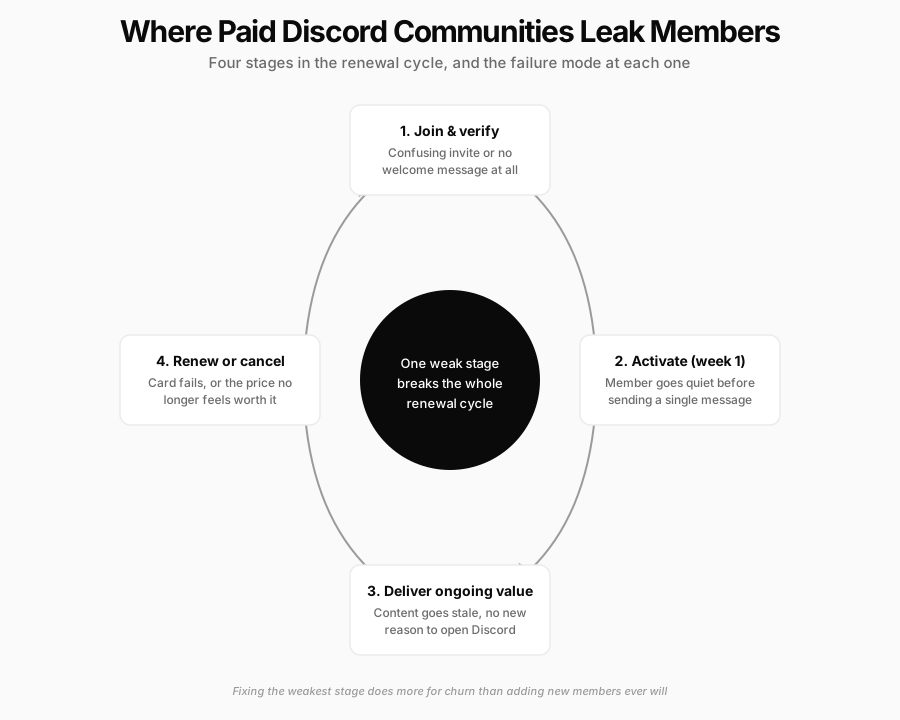
A SaaS product has a login screen that nags you when you haven't used it. Discord doesn't. Members can forget your server exists for weeks without a single reminder, unless you build one yourself. For context on where a well-run subscription business typically sits, Recurly's 2026 State of Subscriptions report, based on data from 2,200 merchants and 76 million subscribers, puts overall subscription churn at roughly 3.2% monthly for well-run businesses, split between voluntary and involuntary causes. Community-driven memberships tend to run hotter than that average, because the product isn't a tool with a task to finish. It's a feed you have to choose to check.
That same report found 52% of consumers canceled at least one subscription in the past year specifically because they stopped using it. For a Discord community, "stopped using it" almost always traces back to one of two moments: the member never got activated in the first place, or the ongoing value stopped feeling worth the recurring charge.
The Real Reasons Members Cancel
Before jumping into tactics, it's worth being honest about what actually drives cancellations, because the fixes only work if they're aimed at the right cause:
- They never activated. They joined, saw an unread wall of channels, and never sent a message or claimed a role
- The value went stale. The same handful of channels, the same weekly recap, nothing new to open the app for
- The price stopped matching the perceived value, often after an initial burst of excitement wore off
- Their card failed, and nobody followed up before Discord silently pulled their paid role
- A competitor or a free alternative started meeting the same need for less money or less commitment
11 Retention Strategies for Paid Discord Communities
1. Fix the First Seven Days, Not the First Message
The first week is where most voluntary churn is decided, long before a renewal date ever comes up. A member who never takes a first action inside your server rarely takes a second one. Keep the entry sequence to a handful of channels (#start-here, #rules, #roles, #introduce-yourself) and use a role-menu or verification bot so claiming access is itself the first action a new member takes, right after they clear the join and verification steps Discord puts in front of every new member. Every extra click between "joined" and "did something" is a place for someone to quietly disappear. Writing that #rules channel from a template built for exactly this rather than a hasty "be nice, no spam" list saves you from rewriting it after your first moderation dispute.
2. Give Members a Reason to Open Discord Every Week
A community with no live component is a community members forget exists. A weekly AMA, an office hours block, a themed challenge, or a scheduled drop of new resources gives people a specific reason to check in on a specific day, instead of relying on them to remember your server exists between renewals. These are the same engagement features that show up in any well-built premium chat community, not just a churn fix bolted on after the fact.
3. Track Engagement, Not Just Member Count
Growth hides churn. A server that added 40 members and lost 35 still shows "up 5" on the surface, while the underlying problem goes unaddressed. Discord's own Server Insights becomes available once a server crosses 500 members and tracks visitor activity, invite sources, and engagement trends natively. Below that threshold, or for more granular per-member activity, community bots and analytics tools fill the gap. Either way, the metric that predicts churn isn't total members; it's the share of paying members who post, react, or show up to something in a given week.
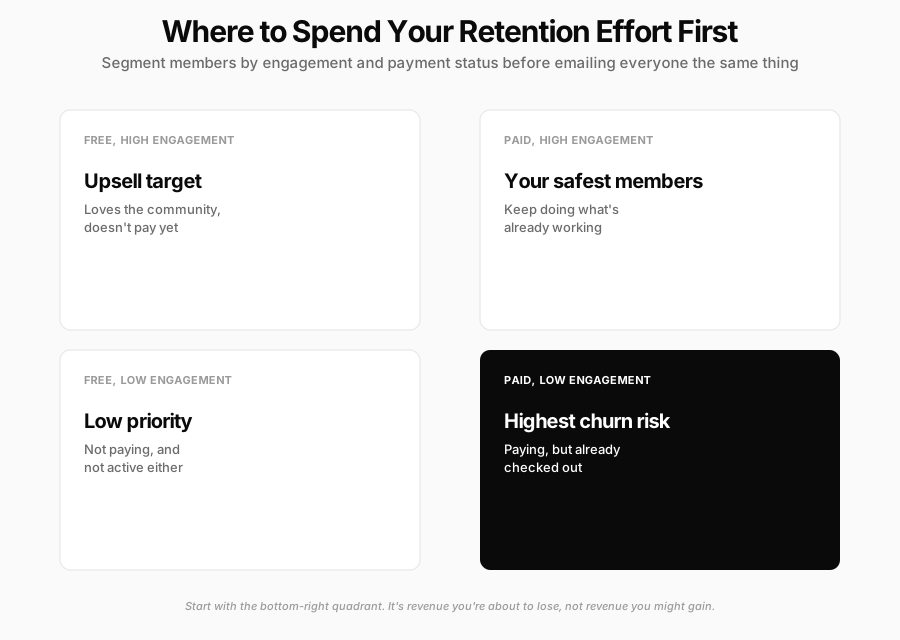
Not every member needs the same attention. Cross engagement against payment status and a clear priority order falls out: a paying member who's gone quiet is the one about to cost you revenue, while a highly engaged free member is your best upgrade candidate, not a churn risk at all.
4. Fix Involuntary Churn Before Anything Else
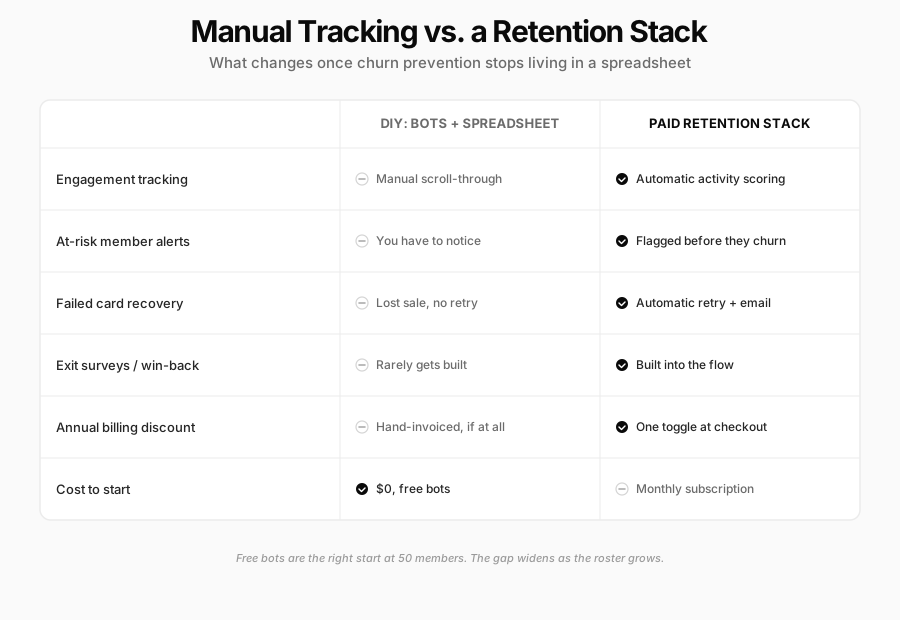
This is the cheapest win on the list because it isn't really a retention problem. It's a billing problem. Automatic payment retries and a dunning email sequence recover a meaningful share of "cancellations" that were never a decision at all, just an expired card nobody noticed. If your paywall tool doesn't retry failed charges automatically, that's worth fixing before you touch content strategy.
5. Make Cancellation Honest, Not Sneaky
It's tempting to bury the cancel button to squeeze out one more renewal. It backfires: a member who has to fight to leave writes an angry review or a public post about it, which does more damage to future signups than the one retained renewal was worth. A clear, one-click cancellation with a short "before you go" survey collects more useful churn data than a maze ever will, and preserves the relationship for a possible win-back later.
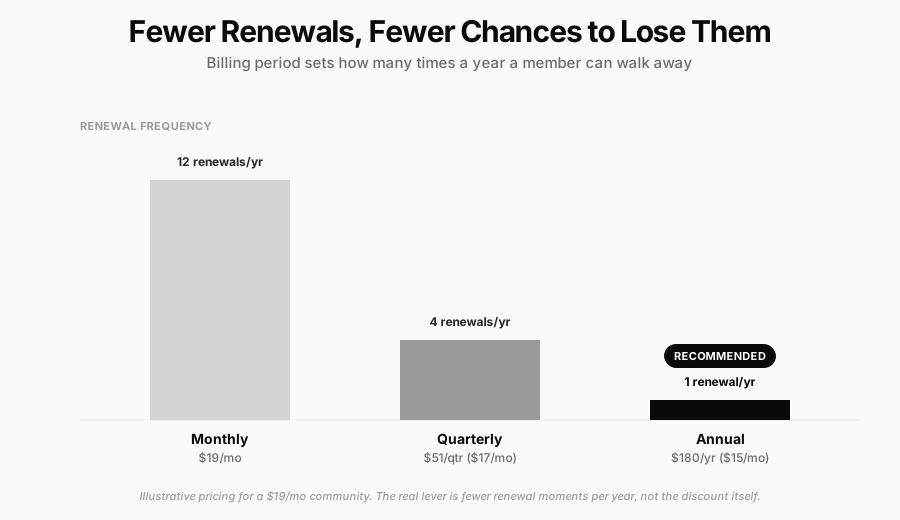
6. Offer an Annual Option
Every renewal date is a fresh chance for a member to reconsider. Fewer renewal dates means fewer chances to lose them. Paddle's data shows that switching to annual-default billing with a 15% to 20% discount typically cuts churn by 40% to 60%, because it collapses twelve decision points into one.
7. Segment Free and Paid So the Upgrade Path Stays Visible
If free members can see everything paid members get, there's no reason to convert or stay converted. A visible line between "what's free" and "what you're paying for" keeps the value of the paid role legible every time a member logs in, which matters just as much at renewal as it does at signup.
8. Run an Exit Survey and an Actual Win-Back Sequence
Most communities skip this entirely, which is exactly why it works when you do it. A one-question exit survey ("what made you leave?") turns anonymous churn into a pattern you can act on. Pair it with a single win-back email 30 to 60 days later, ideally with something new to point to since they left, rather than a generic discount.
9. Protect the Culture, Not Just the Content
Members don't just pay for information; they pay to be around people worth talking to. A server that lets low-effort spam or off-topic noise pile up loses its best, highest-value members first, because they're the ones with the most alternatives. Active moderation is a retention lever, not just a housekeeping task.
10. Compare Your Fee Stack and Value Honestly Against Alternatives
Members occasionally check whether a cheaper or free alternative now does what you do. Do that audit yourself first. If a free Discord server, a Reddit community, or a competing paid community now covers 80% of your value at a fraction of the cost, that's information worth acting on before a renewal reminds your members of the same math.
11. Don't Make Discord Carry Your Whole Business
The community and the business behind it don't have to live on the same platform. Plenty of creators run the chat layer on Discord and the storefront, checkout, and customer records somewhere purpose-built for selling, so a Discord outage or a policy change never puts the whole revenue line at risk. A picks or signals community that runs entirely as one paid Discord server concentrates that same risk further, since chat, payments, and reputation all sit on the same single platform. It also means the tools actually built for billing (automatic retries, annual plans, churn-relevant analytics) are handling billing, while Discord handles what it's actually good at: the conversation.
Metrics Worth Tracking Every Month
| Metric | Formula | What it tells you |
|---|---|---|
| Churn rate | Canceled members ÷ starting members | How fast you're losing paying members |
| Retention rate | (Ending members − new members) ÷ starting members | The inverse view; easier to compare against benchmarks |
| Net revenue retention | Revenue from existing members this period ÷ same period last month | Whether upgrades offset downgrades and cancellations |
| Week-1 activation rate | Members who take a first action ÷ new members | The single best early predictor of who renews |
Recurly's benchmark data puts a healthy annual churn range for well-run subscription businesses at roughly 2% to 4% monthly. Community-driven memberships commonly run higher than that because engagement, not usage, is what drives renewal. Treat these as a comparison point, not a target you're failing to hit on day one.
Tools That Help
- Discord bots like Carl-bot or MEE6 handle role automation, welcome sequences, and basic activity tracking for free, and they're the right starting point for a server under a few hundred members
- Discord's native Server Insights covers growth and engagement trends once you cross the 500-member threshold
- Paywall tools like Whop connect a Discord role to a subscription and handle the payment side, which is worth evaluating on its own fee structure and marketplace fit if you're starting a subscription business and choosing a paywall layer from scratch
- A separate storefront and payment platform is worth adding once billing recovery, annual plans, and churn analytics start to matter more than what a free bot can automate
How Crevio Fits Into a Discord Retention Strategy
Crevio doesn't replace Discord, and it isn't trying to: it has no native chat or forum, so the conversation still happens where your members already are. What it handles is everything around the conversation. You describe the membership you're selling, and Crevio's AI business builder sets up the storefront, checkout, and customer records, while Stripe-powered subscriptions handle the billing mechanics that drive a real share of involuntary churn: automatic retries on failed cards, annual and monthly plan options, and a customer list you can actually see and export.
That matters because most of what actually reduces churn in this guide (fixing failed payments, offering annual billing, knowing which members are at risk) is a billing and data problem as much as it's a community problem. Crevio starts free (Starter plan, 5% transaction fee), with Pro at $20/month (2.5% fee) and Business at $50/month (1% fee) for communities further along. It's a fit for creators who want the Discord server to stay exactly what it is, a place to talk, while the subscription, the customer data, and the retention tooling live somewhere built for exactly that job.
What Nobody Tells You
Lessons that don't make it into most churn checklists:
- Your most active members churn too, just later. A power user who posts daily for eight months can still cancel the month a life event eats their free time. Don't mistake current engagement for a permanent renewal guarantee; keep the win-back sequence ready even for your best members.
- A "we miss you" email works better than a discount email. Members who lapsed from inattention respond to being reminded what they're missing; members who lapsed over price respond to a discount. Sending the wrong one to the wrong group trains people to wait for a coupon.
- Raising the price rarely causes the churn spike you're afraid of. The spike usually comes from a bad launch of the price change (no notice, no grandfathering) rather than the new number itself. Existing members leave over how a change was communicated more often than over the number itself.
- Discord's own notification fatigue works against you. A member who muted your server months ago for a noisy channel is functionally already churned, even though their card is still being charged. Involuntary-churn fixes don't catch this one; only an engagement check does.
FAQ
There's no single agreed benchmark specific to Discord communities, but Recurly's cross-industry subscription data puts well-run subscription businesses at roughly 2% to 4% monthly churn, and community-driven memberships commonly run somewhat higher because renewal depends on ongoing engagement rather than habitual product use. Track your own trend over time rather than chasing an exact external number.
Make sure your paywall or billing tool retries failed charges automatically and sends a payment-update email before revoking access, rather than dropping the member's role the moment a single charge fails. Industry-wide, involuntary churn from failed payments accounts for 20% to 40% of total subscription churn, so this single fix recovers members who never actually decided to leave.
Only after you understand why they're leaving. A discount fixes a price objection, but it does nothing for someone who stopped getting value or never activated in the first place, and it trains remaining members to threaten cancellation for a deal. Use the exit survey first; discount as a targeted response, not a default one.
A community doesn't churn because people stop liking it. It churns because nobody built a reason to remember it exists between one renewal and the next. Fix that, and the rest of this list is maintenance.
Related Blog Posts
What will you sell today?
Describe what you want to sell — Crevio builds, launches, and grows it. Products, payments, and marketing, all on autopilot.
Start for free