Your business,
on autopilot.
One platform for creating, running and growing your business, powered by AI.
Pinterest Affiliate Marketing: The Complete Guide for 2026



Pinterest users are in active buying mode 75% of the time they're on the app, versus 41% on Instagram and 28% on Facebook, according to Sprout Social's Pinterest statistics roundup. That single number explains why Pinterest affiliate marketing keeps showing up in "best platforms for affiliate income" lists: it is less a social feed and more a visual search engine where people arrive already looking to buy something.
This guide covers how Pinterest affiliate marketing actually works in 2026: the setup, the pin design and SEO tactics that move the needle, the compliance rules that can get an account suspended if you skip them, and the honest income range so you start with realistic expectations instead of screenshots of someone else's best month.
- Pinterest behaves like a search engine, not a social feed. A well-made pin can keep driving clicks for months, which is the main structural advantage over Instagram or TikTok affiliate content.
- Compliance is non-negotiable. The FTC and Pinterest both require clear disclosure on affiliate links, and Pinterest blocks known link-shortener domains outright.
- The income range is wide and skews low early on. Most people who stick with affiliate marketing land in the low thousands per month after building real traffic, not the six-figure outlier stories the genre tends to lead with.
What Makes Pinterest Different for Affiliate Marketing
Most affiliate marketing advice assumes you are competing for attention in a fast-moving feed, where a post's reach dies within hours. Pinterest works on a different mechanic. Pinterest itself and independent researchers both describe it as a visual discovery and search engine: people type queries ("small bathroom storage ideas," "gifts for coffee lovers") much the way they would on Google, and pins that match well keep surfacing in search and related-pins feeds long after they were published.
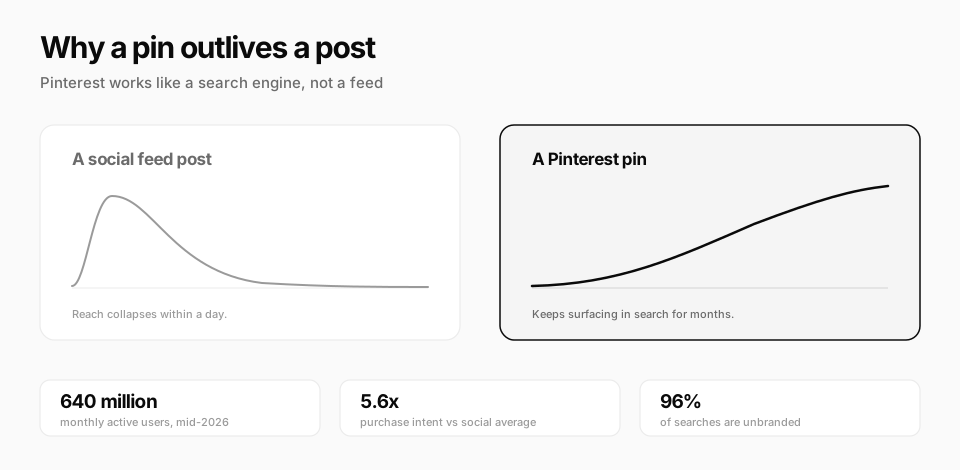 That has two direct consequences for affiliate marketing on Pinterest. First, a single well-optimized pin genuinely can compound: it is not unusual for older pins to keep generating clicks and sales for months, unlike a tweet or Instagram post that is functionally dead within a day. Second, because people search Pinterest with an existing purchase intent rather than passively scrolling, the traffic that does arrive tends to convert better than traffic from platforms built around entertainment first. Pinterest's own reporting puts its purchase-intent index at 5.6 times the social platform average, and 96% of Pinterest searches are unbranded, meaning people are looking for a solution, not already sold on a specific product or brand.
None of that makes Pinterest affiliate marketing easy or fast. It makes it a slower-burn, more durable channel than most social platforms, which changes the strategy: you are building a library of evergreen pins, not chasing daily virality.
Is Pinterest Affiliate Marketing Actually Worth It?
The platform's scale and demographics make the "worth it" case straightforward, but it is worth checking your niche fits before you commit real time.
Pinterest reported roughly 640 million monthly active users as of mid-2026, according to Pinterest's investor filings summarized by Demand Sage. The user base skews toward home, fashion, food, beauty, wedding, and lifestyle categories, and skews female and younger than a lot of marketers assume: Sprout Social reports the audience is majority female with a meaningful and growing Gen Z segment. If your niche lives in one of those categories (home goods, personal finance tools, beauty, parenting, fitness, digital templates and planners), Pinterest is very likely worth the setup time. If your niche is B2B software, enterprise services, or something with no visual hook at all, the fit is weaker and your time is probably better spent elsewhere.
The honest caveat: none of this is passive from day one. Pinterest's own search-engine mechanic means new pins take weeks to start ranking, and building a library large enough to produce consistent traffic is a real time investment before the first meaningful commission arrives.
The Rules You Can't Skip: FTC and Pinterest Compliance
This section gets skipped in a lot of "how to" guides, and it is the part most likely to end an account.
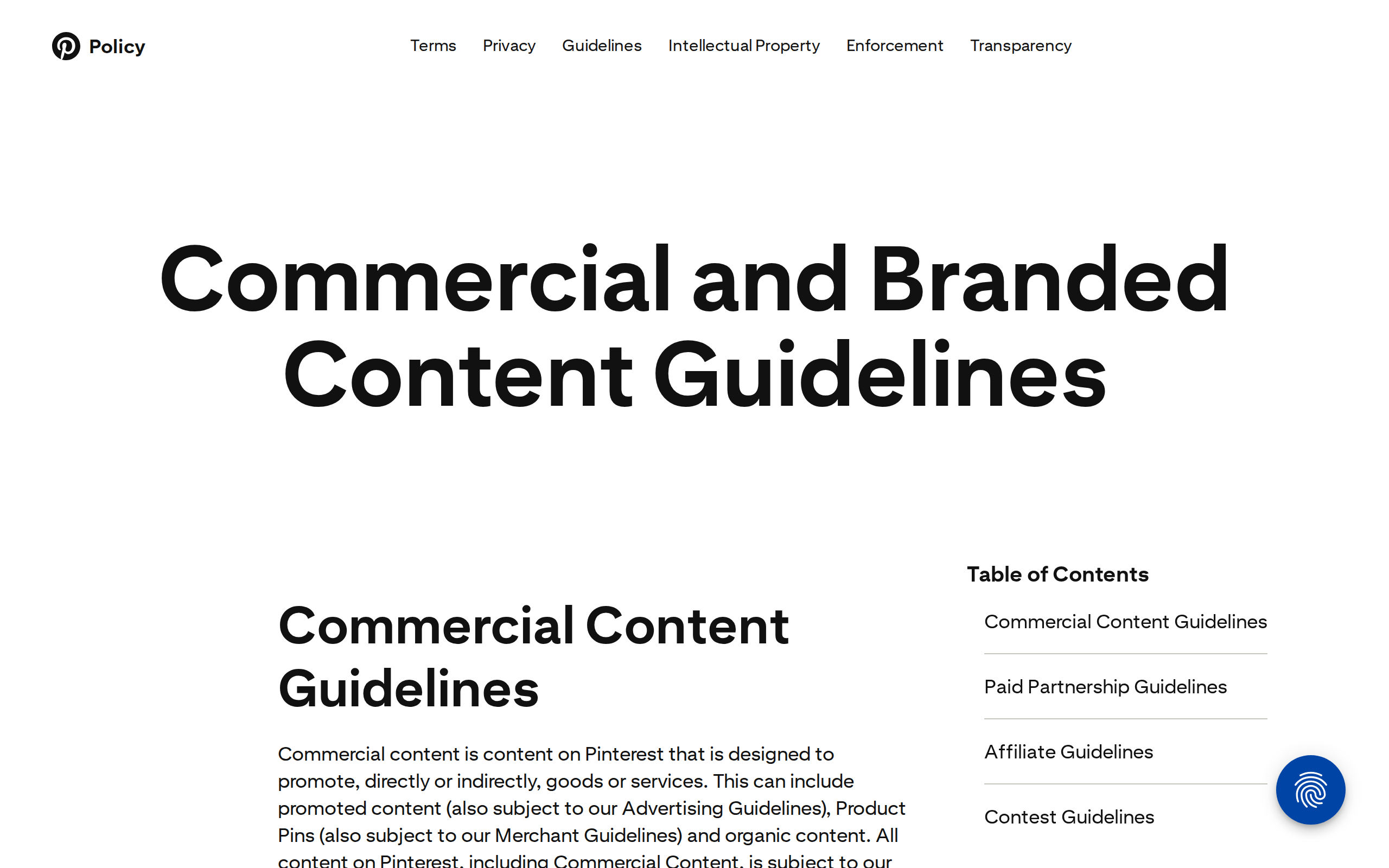 FTC disclosure is legally required, not optional. The FTC's endorsement guides require you to clearly and conspicuously disclose any financial relationship, including affiliate commissions, and this applies regardless of platform, audience size, or how small the promotion is. In practice on Pinterest, that means disclosure text in the pin description itself (something explicit like "contains affiliate links," not a vague hashtag buried after twenty others), not just on a landing page the pin links to.
Pinterest has its own transparency requirement on top of that. Pinterest's commercial content guidelines require you to "be transparent about the commercial nature of your content and about your links and their behavior," and the policy separately prohibits fake accounts promoting affiliate links, coordinated save-exchanges, and posting the same affiliate content in high repetitive volume. Pinterest also blocks a number of link-shortener domains outright, so a cloaked or shortened affiliate link can simply fail to publish, or get your pin flagged. Use the full, direct affiliate URL your program gives you rather than routing it through a generic shortener.
Neither rule is unique to Pinterest or unusually strict. They mirror the same disclosure standard every other platform enforces; Pinterest is just specific about where that disclosure has to live.
How to Set Up Pinterest for Affiliate Marketing
Switch to a Business Account
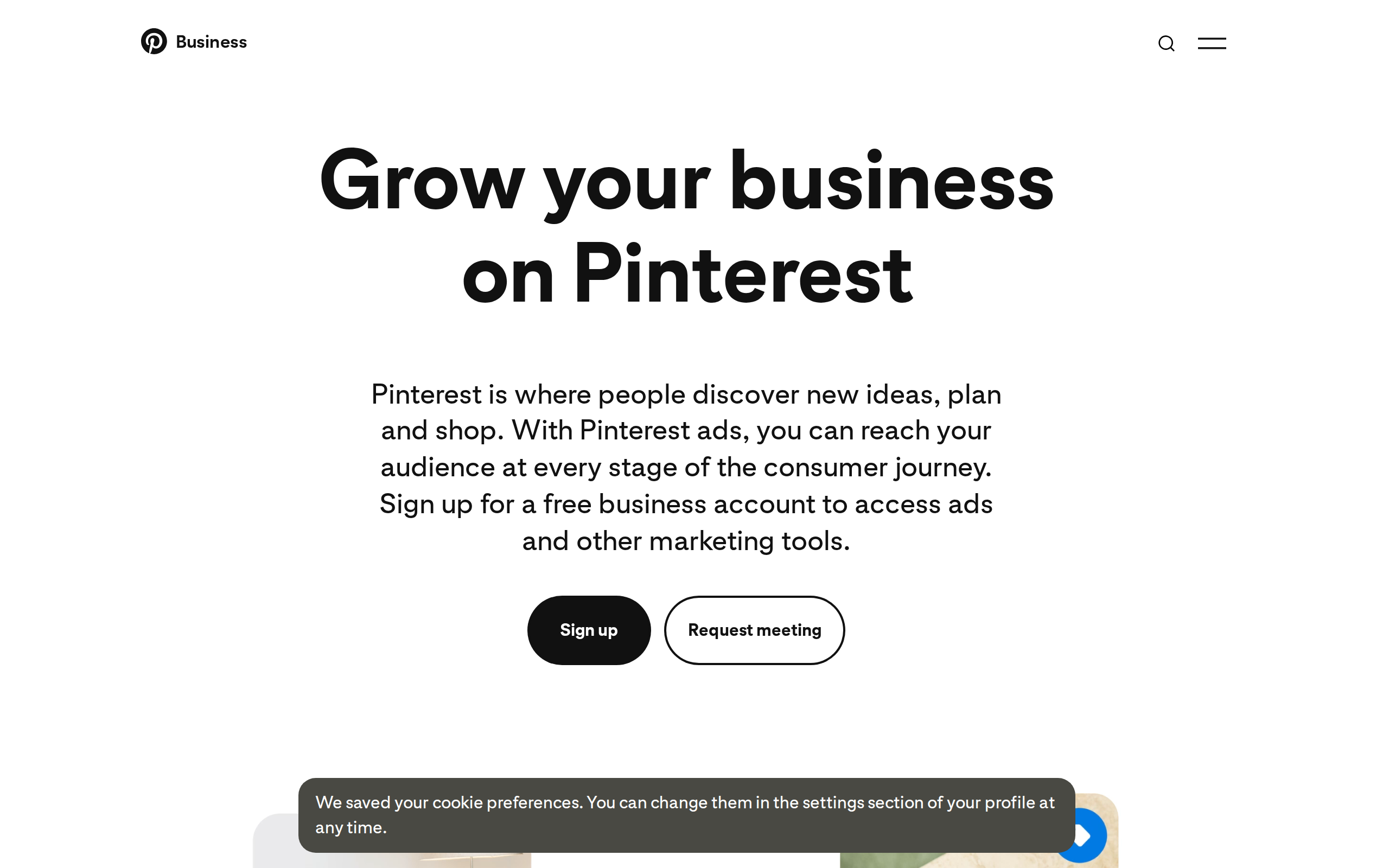
Commercial activity, including affiliate marketing, requires a Pinterest business account rather than a personal one. It is free, takes a couple of minutes to convert from an existing account, and unlocks Pinterest Analytics and Pinterest Trends, both of which you will use later for keyword research and performance tracking.
Choose a Niche You Can Sustain
Pick a niche you can realistically produce content in for months, not one that only looks profitable on paper. The categories that perform best on Pinterest (home, food, fashion, wellness, personal finance, digital planners and templates) are also the most crowded, so the honest advantage goes to whoever can be specific: not "home decor" but "small-space apartment storage," not "budgeting" but "budgeting for freelancers with irregular income." A narrower niche is easier to rank in and easier to sound like a real recommendation rather than a generic affiliate account.
Choose Your Affiliate Programs
Different programs fit different niches, and it is worth comparing more than one before committing your pin library to a single network.
Quick Comparison
| Program | Typical commission | Best fit |
|---|---|---|
| Amazon Associates | Roughly 1%–10% depending on category, up to 20% on Amazon's own digital purchases | Physical products across almost any niche; easiest approval |
| ShareASale / Impact | Varies by merchant, commonly 5%–30% | Niche brands in home, fashion, DIY with better per-sale payouts than Amazon |
| Whop | Up to 30% ongoing on qualifying referrals | Software, digital products, and paid communities |
| Direct brand programs (e.g. Wayfair-style retailers) | Often around 5%–8% | Category-specific stores where the brand runs its own program |
None of these is a universal best choice. Amazon Associates is the easiest starting point because approval is fast and nearly every physical product fits somewhere in its catalog, at the cost of lower per-sale commissions since Amazon has trimmed several category rates in 2026. Networks like ShareASale and Impact generally pay better per sale but require applying to individual merchant programs. Software and digital-product affiliate programs, Whop's among them, tend to pay the highest percentages because there is no physical cost of goods to protect.
How to Create Pins That Convert
A pin has to do two jobs at once: rank in Pinterest search and make someone want to click before they have even read anything.
Use the right size. Pinterest's own guidance favors a 2:3 vertical ratio (1000×1500px is the common standard); pins that don't fit this ratio get cropped awkwardly in feed and lose clicks before anyone reads the text.
Lead with a clear text overlay. Pinterest is a visual medium, but the overlay text is what turns a scroll into a click: a specific benefit or number ("7 Storage Ideas Under $30") consistently outperforms a vague label ("My Favorite Finds").
Design for mobile first. The large majority of Pinterest usage happens on mobile, so text needs to be legible at thumbnail size, not just on a full-screen preview.
Keep visual branding consistent. A recognizable font and color palette across your pins helps repeat visitors recognize your content in a crowded feed, the same logic that makes any publisher's visual identity worth maintaining.
Match the pin to the landing experience. If a pin promises "the best budget planners," the linked page needs to actually be about budget planners, not a general roundup. Pinterest's transparency requirement covers this directly: what the pin promises and what the link delivers should match.
Growing Reach: Pinterest SEO and Distribution
Pinterest ranks pins in search results much like a search engine ranks web pages, so the growth tactics here look more like SEO than social media growth.
Do keyword research before you design anything. Pinterest's own search bar and Pinterest Trends surface what people are actually typing, and general keyword tools like Google Trends work as a secondary check. Put the primary keyword in the pin title, the board title, and the first line of the description; Pinterest's search algorithm weighs these fields more heavily than the rest of the description.
Build boards around specific sub-topics, not one catch-all board. Five to ten boards, each with a keyword-rich title and description, give Pinterest's algorithm more surface area to match your content to relevant searches than a single generic board would.
Publish consistently rather than in bursts. A steady cadence of a handful of new pins most days tends to outperform an occasional large batch, since Pinterest's algorithm appears to reward accounts that are active over time. Scheduling tools built for Pinterest can queue pins in advance so this doesn't require being online every day.
Join relevant group boards where your niche is already active. Group boards expose your pins to an existing audience with the same interests, though quality has become uneven as some boards have gone stale; check that a board is still active before requesting to join.
Capture emails where you can. An affiliate program can end its partnership or change terms with no notice, so an email list gives you a channel that survives any single program's decisions, the same reasoning that makes an email list valuable for course creators building any kind of online business.
Tracking What's Actually Working
Pinterest Analytics, available free on business accounts, shows impressions, saves, and outbound clicks per pin, which is enough to see which topics and formats are working. For revenue attribution specifically, most affiliate programs provide their own dashboard (clicks, conversions, and earnings per link), and pairing that with UTM parameters on your Pinterest links lets you confirm which pins are actually driving sales rather than just clicks. The two numbers that matter most early on are outbound click rate (are people leaving Pinterest for your link) and, from the affiliate dashboard, conversion rate on that traffic. A pin with strong impressions but a weak click rate usually has a visual or headline problem; a pin with strong clicks but weak conversions usually has a mismatch between the pin's promise and the linked page.
What Nobody Tells You About Pinterest Affiliate Income
The realistic income range for affiliate marketing in general is wide and skews lower than the genre implies. Industry income breakdowns put more than half of affiliate marketers under $10,000 a year in total, while people who build a real audience and stick with it for a year or more commonly land in the low thousands per month. Pinterest-specific income isn't tracked separately in any dataset worth citing, so treat that broader affiliate-marketing range as your realistic anchor rather than any single platform's highlight reel.
A few things rarely make it into the beginner guides:
Ranking takes weeks, not days. New pins do not show up in search meaningfully until Pinterest has had time to index and test them against related searches, so the first month or two of a new account will look quiet even if you are doing everything right.
Saturated niches are genuinely harder now than they were a few years ago. Home decor, budgeting, and recipe niches all have thousands of established accounts with years of pin libraries already ranking. A narrow, specific angle within a crowded niche is far more realistic than trying to out-produce accounts with a multi-year head start.
Commission cuts happen with no warning. Affiliate networks and individual programs adjust rates unilaterally, sometimes mid-year, the way Amazon did across several categories in 2026. Diversifying across two or three programs in your niche protects you from a single rate change wiping out a chunk of your income overnight.
The best pins are genuinely useful, not just well-designed. The overlay design and SEO tactics above get a pin seen. What gets it clicked and, more importantly, gets the click to convert is the same thing that works in affiliate marketing everywhere: a real, specific recommendation from someone who has used the thing, not a generic "top 10" wrapper around an affiliate link.
Once You Have an Audience, Here's the Part That Gets Easier
Pinterest affiliate marketing is a legitimate way to earn from an audience without ever building a product of your own, and plenty of people run it exactly that way indefinitely. It's also worth naming honestly where this path tends to lead for people who stick with it: once you have pins that consistently rank and an audience that trusts your recommendations, that audience is often worth more selling something you made yourself than splitting revenue on someone else's product. A niche guide, a planner template, a small course based on the exact topic your pins already rank for: the audience-building work is identical, and the margin is entirely yours instead of a commission cut.
 That's a different problem than Pinterest affiliate marketing solves, and it's the kind of problem Crevio is built for. Crevio is an AI business builder: you describe what you want to sell, and its AI sets up the storefront, product pages, and checkout, then helps you launch and grow it, so you aren't learning payment infrastructure and product-page design from scratch on top of everything you already learned building a Pinterest audience. The Starter plan is free with a 5% transaction fee, so there's no cost to test whether your audience will buy something of your own. Paid plans at $20 and $50 a month drop the fee to 2.5% and 1% as revenue grows, and it handles the kind of digital products (downloads, courses, memberships) that a Pinterest-built audience most often wants to sell. It won't build the audience or design the pins that get you there. That part is the same work this guide just walked through.
If you're not at that point yet, that's completely fine. A commission is still money, and Pinterest is still one of the more durable ways to earn one. Nothing above requires you to eventually sell your own product; it's just worth knowing the audience would carry you there too, whenever you're ready. For the fuller picture of what else does and doesn't require building a product first, our guide to making money online without selling anything covers the other methods in the same category as Pinterest affiliate marketing.
FAQ
No. Pinterest allows direct affiliate links in pin descriptions for most programs, so a website is not required to get started. That said, a simple landing page or blog post gives you a place to add more context, comparisons, and disclosure than a pin description allows, and it protects you if a specific affiliate program changes its Pinterest-linking policy. Many successful Pinterest affiliates start link-only and add a simple site once a niche is proven.
Plan on weeks before pins start ranking meaningfully in search, and commonly months before income becomes consistent rather than occasional. This isn't unique to Pinterest: most audience-based income methods share the same slow start, because you're building a library of content before the traffic and trust compound. Treat the first two to three months as setup and testing, not a fair trial of whether the niche works.
Yes, if you skip disclosure, use blocked link-shorteners, or post the same affiliate content repetitively at high volume, all of which Pinterest's commercial content guidelines explicitly prohibit. Straightforward compliance (a business account, clear disclosure text on affiliate pins, direct un-shortened links, and original content rather than mass-reposted pins) avoids essentially all of the risk.
Related Blog Posts
What will you sell today?
Describe what you want to sell — Crevio builds, launches, and grows it. Products, payments, and marketing, all on autopilot.
Start for free