Your business,
on autopilot.
One platform for creating, running and growing your business, powered by AI.
How to Start a Clothing Brand in 2026: A Realistic Step-by-Step Guide




The global apparel market is on track to hit roughly $1.9 trillion in 2026, and it has never been cheaper to claim a sliver of it. You can launch a real clothing brand today for the price of a domain and a print-on-demand account, or for $50,000 with your own factory-made line. The gap between those two numbers is the whole game: almost everyone who fails picked the wrong side of it for where they actually are.
This guide is the version that tells you which side to pick, in what order, and what it costs in real numbers, not the "follow your passion" version.
- Choose your production model before you design a single piece. Print-on-demand, private label, cut-and-sew, and handmade all lead to a completely different business, not just a different price tag.
- Validate the design before you validate the brand. A logo and a Shopify theme don't sell clothes. A product 20 strangers would pay for does.
- Budget for the real number, not the Instagram number. A tested, bootstrapped launch runs $1,500 to $5,000. A first cut-and-sew collection runs $10,000 to $50,000.
- Your first collection is a test, not a legacy. Small batches, real sell-through data, then reorder what worked.
- The brand is easy. The operations are the business. Fulfillment, quality control, and returns quietly decide who survives past year two.
The real state of the clothing market in 2026
Three numbers matter more than the trend pieces about "the future of fashion."
The market is enormous and still growing. Multiple industry forecasts, including Grand View Research and Global Market Insights, put the global apparel market at roughly $1.9 trillion in 2026, with mid-single-digit annual growth projected through the early 2030s. There is no shortage of demand. There's a shortage of brands that solve a specific problem for a specific person instead of trying to be everything.
Shopping moved online and stayed there. Consumer research consistently shows a strong majority of shoppers now prefer buying clothing online over in a physical store, and social platforms have become a real point of purchase, not just discovery. If your brand doesn't have a functioning storefront and a presence on the platform where your buyer already scrolls, you're invisible before you've launched.
The barrier to entry collapsed, which raised the bar for everyone else. Print-on-demand and low-MOQ private label manufacturing mean anyone can list a product today. Your real competition isn't the big legacy brands, it's the other 500 people who launched a similar hoodie line on the same TikTok trend this month. Differentiation now happens at the design and niche level, not at the "we have a website" level.
None of that makes starting a clothing brand easy. It just replaces "should I even try" with a better question: which production model actually fits your budget and your patience.
Pick your production model before you design anything
This is the single decision that determines your startup cost, your margins, and how much of your week goes to logistics instead of design. Most first-time founders skip it and pick whatever a YouTube ad told them to use.
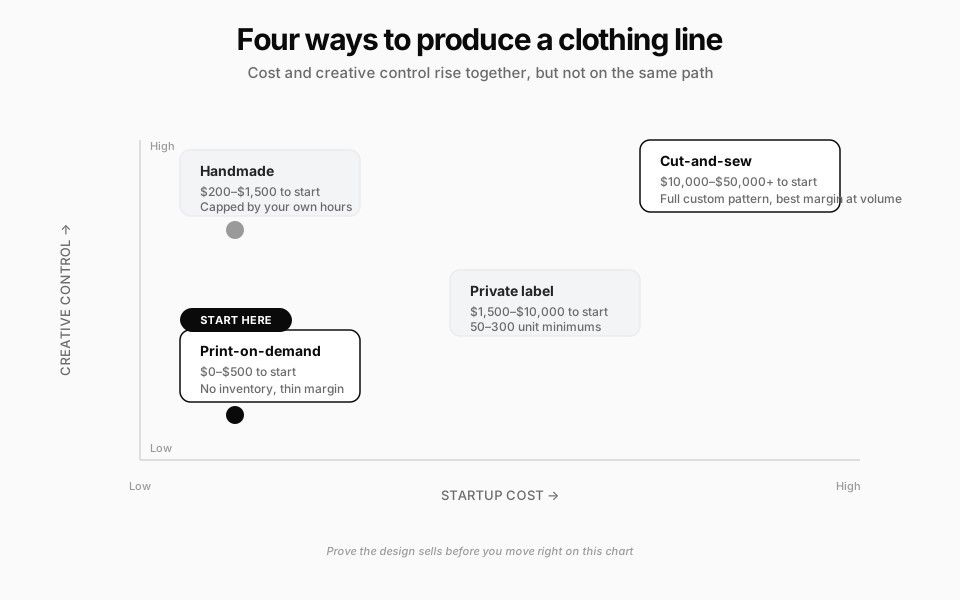
| Model | Startup cost | Per-unit margin | Minimum order | Best for |
|---|---|---|---|---|
| Handmade / made-to-order | $200–$1,500 | High, but capped by your hours | 1 unit | Designers selling a small, high-touch line |
| Print-on-demand | $0–$500 | Low ($5–$12/unit) | 1 unit, no inventory | Testing designs before committing money |
| Private label | $1,500–$10,000 | Moderate ($10–$18/unit) | 50–300 units per style | Brands that know their bestseller and want their own labels |
| Cut-and-sew (custom manufacturing) | $10,000–$50,000+ | High once at volume (60–75% gross) | 100–500+ units per style | Brands with capital, a proven design, and a real supply chain plan |
The tradeoff is consistent across every credible source on this: print-on-demand has close to zero upfront risk but the thinnest margins, because you're paying someone else to produce and fulfill one unit at a time. Cut-and-sew is the opposite: real capital risk upfront, in exchange for margins that only make sense once you're ordering in bulk. Private label sits in the middle, working with a factory that already makes a base garment and putting your label, print, or embroidery on it.
The mistake almost everyone makes: jumping straight to cut-and-sew because it "looks like a real brand." A real brand is one with paying customers, not one with a factory relationship. Prove the design sells with print-on-demand or a small private-label run first. Move to cut-and-sew once you have sell-through data that justifies the minimum order. (Print-on-demand is a cousin of the model behind the best dropshipping products: you never touch inventory, someone else produces per order, and you're paid to find the design or niche that sells.)
The 7 steps to start a clothing brand
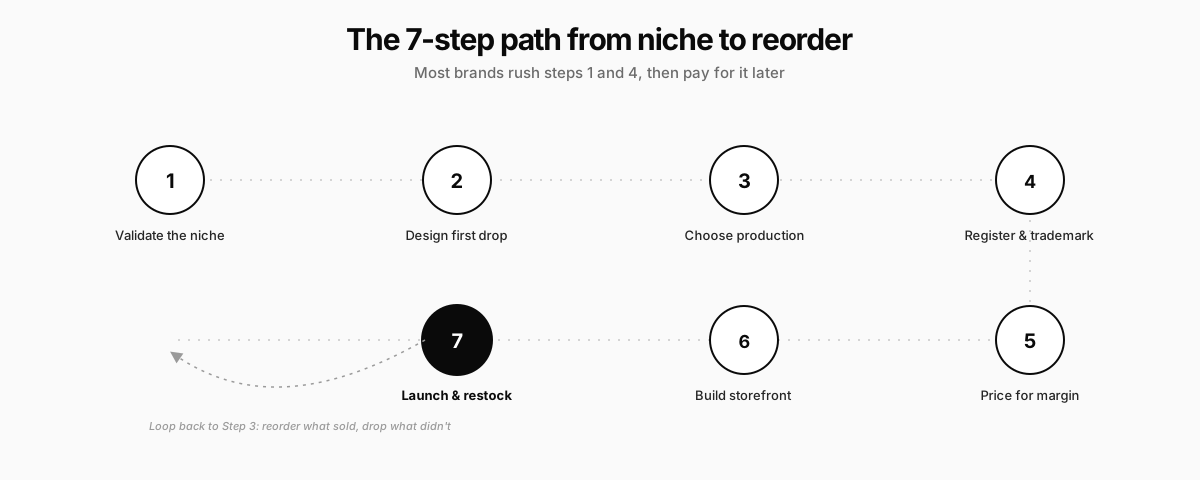
Step 1: Nail your niche and validate before you spend
"Clothing brand" is not a niche. "Compression layers for CrossFit athletes who hate the smell of synthetic fabric" is a niche. The narrower the starting point, the easier every decision after it becomes, from fabric choice to who you send a free sample to.
Validate before you commit real money:
- Post the concept, not the product. A mockup on Instagram or TikTok with "would you buy this" tells you more in 48 hours than a week of second-guessing.
- Pre-sell a small run. Fifteen people paying a deposit for a design that doesn't exist yet is the strongest signal you'll get before launch.
- Talk to the exact person you're designing for. Ten real conversations with people in your niche beats a hundred likes from people who were never going to buy.
If nobody will put money down before it exists, the market told you something. Listen to it before you order fabric. Our full walkthrough on how to validate a startup idea covers the same three tactics in more depth if this is the step you're tempted to skip.
Step 2: Design your first drop, not a full line
Ten SKUs on day one is a common way to run out of cash before you learn anything. Launch with three to five pieces you'd be proud to wear yourself, built around one strong hero item. A hero item does the work of the whole line: it's the thing you photograph, the thing influencers wear in the free samples you send out, and the thing that shows up in someone's "what I'm wearing" post.
Get a physical sample before you commit to a production run, no exceptions. Photos and renders lie about fit, fabric weight, and stitching quality in ways that cost real money to find out the hard way after 200 units have already shipped.
Step 3: Choose your production method and vet a partner
Match the method from the table above to your budget and your risk tolerance, then vet whoever produces it like you're hiring an employee, because you effectively are.
For print-on-demand, Printful is one of the largest options and connects directly to most storefront platforms, handling printing, packing, and shipping per order with no inventory on your end.
For private label or cut-and-sew, order a paid sample before a production run, check reviews and references independently (not just the ones the factory sends you), confirm their minimum order quantity in writing, and get a real lead time, not an optimistic one. Private label minimum order quantities in the U.S. typically run 50 to 300 units per style per colorway, while overseas cut-and-sew factories often require 100 to 500 units before they'll run your pattern at all.
Step 4: Register your business and lock your trademark
This step is boring and it's the one people skip until a bigger brand's lawyer sends a letter about the name. Do it in this order:
- Register a business entity. A single-member LLC (or your country's equivalent, such as a UK sole trader registration or a French micro-entreprise) is enough for almost every first-time clothing brand. It separates your personal assets from anything that goes wrong with the business.
- Search the trademark before you fall in love with the name. A five-minute search on your country's trademark database (USPTO TESS in the US, EUIPO in Europe) saves you from rebranding six months in.
- File the trademark once you're committed. You don't need to do this before your first sale, but do it before you spend real money on branding, packaging, and ads tied to that name.
Step 5: Price for margin, then work backward
Most first-time founders price by copying a competitor's sticker price, then wonder why there's nothing left after fees, shipping, and returns. Work the math in the other direction instead.
A workable formula: landed cost per unit, multiplied by 3 to 4, equals your retail price. Landed cost includes the garment, printing or embroidery, packaging, and inbound shipping, not just the blank. If a hoodie costs you $14 landed, price it $42 to $56, not $30. If the math doesn't leave room for a healthy margin at a price your customer will actually pay, the product or the production method is wrong, not the pricing.
Build in room for the costs beginners forget: payment processing fees (roughly 2.9% + $0.30 per transaction on most platforms), returns (5 to 15% of orders in apparel, higher than most other ecommerce categories), and the discount codes you'll inevitably run in month two.
Step 6: Build your storefront and brand presence
You need three things live before launch day: a storefront that can actually process a payment, a way to capture emails from people who aren't ready to buy yet, and a presence on the one platform your buyer already uses. Skip the temptation to be on five platforms at once before you've sold a single unit. If you're weighing which ecommerce platform to build on, we compared the best ecommerce websites for exactly this decision.
For the storefront itself, Shopify remains the standard for independent apparel brands because of how directly it integrates with Printful, private label suppliers, and most shipping tools.
Step 7: Launch small, restock what sells
Order or list a small batch, not your full projected run. Announce the drop to the list you built in Step 1 using a real product drop strategy instead of a plain restock email, ship it, and pay close attention to which sizes and colors sell out first. That data is worth more than any trend report: it tells you exactly what to reorder and what to quietly drop from the line before you've sunk more money into it.
What it actually costs to start a clothing brand
The number that gets thrown around most ("$5,000 to $50,000") is technically true and mostly useless, because it spans two completely different businesses. Here's what each path actually costs.
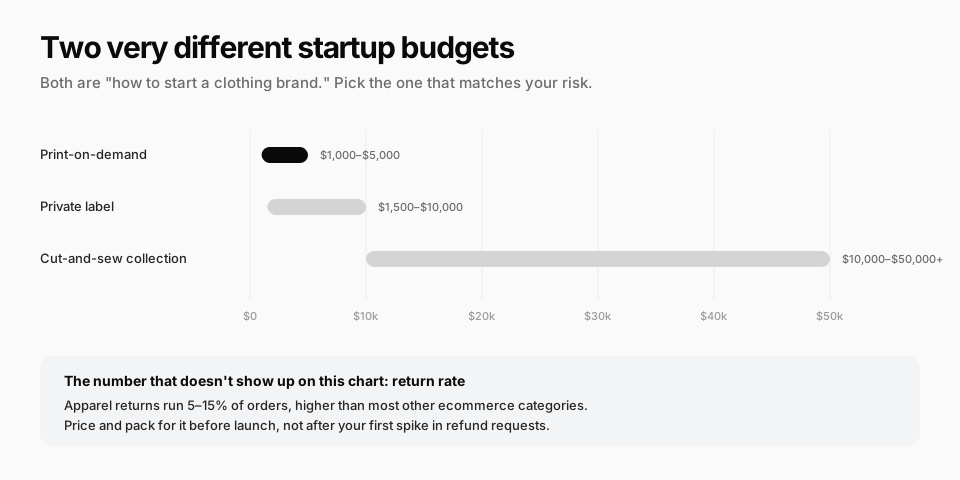
A bootstrapped print-on-demand launch runs $1,000 to $5,000 all in: a storefront subscription, a domain, sample orders for yourself, and a small initial ad or influencer-seeding budget. Per-unit costs run higher ($15 to $30 for a printed tee), which caps your margin, but you're never holding inventory you can't sell.
A first cut-and-sew collection runs $10,000 to $50,000+ once you account for tech pack development, sampling rounds, a minimum production run, packaging, a proper storefront build, and launch marketing. Per-unit costs drop to $4 to $18 depending on the garment, and gross margins of 60 to 75% become realistic once you're ordering at volume. The tradeoff is real capital at risk before you've sold a single piece, and 100 to 500+ units sitting in a warehouse if the design doesn't move.
Neither path is objectively better. Print-on-demand is the right first move if you're not certain a design will sell or you're bootstrapping with under $2,000. Cut-and-sew makes sense once you have proof (from a print-on-demand test, a pre-sale, or a previous drop) that the demand is real and the margins of a printed tee won't fund the business you actually want to build.
Where Crevio fits, and where it doesn't
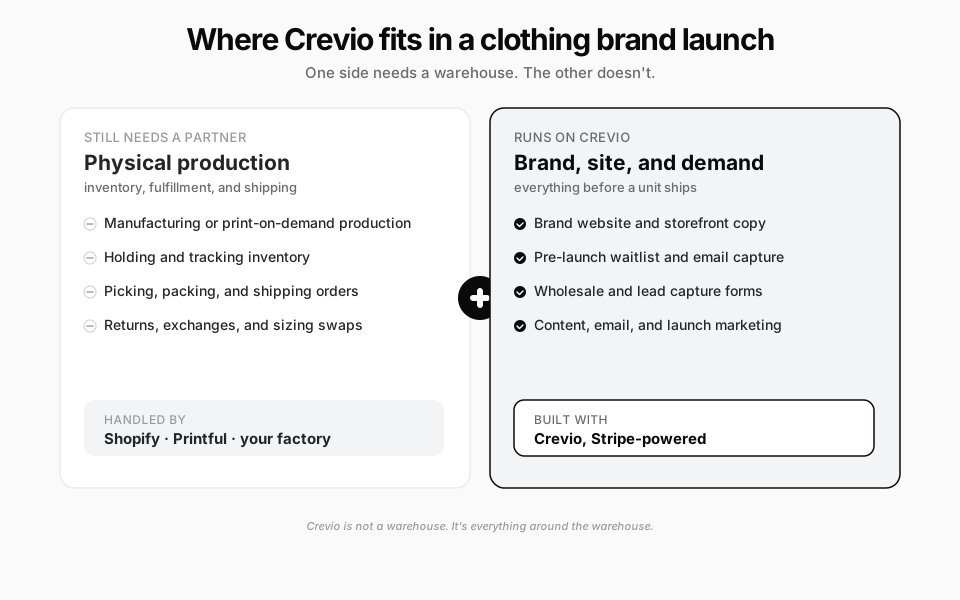
Be honest about this one, because a lot of "AI business builder" content pretends otherwise: Crevio is not a warehouse, and it doesn't pick, pack, or ship a hoodie. If you're running physical inventory and fulfillment, that side of the business still runs on Shopify, Printful, or a similar tool built for it.
Where Crevio does the heavy lifting is the surface area around the product: the brand website, the pre-launch waitlist that captures your first 200 emails before a single unit ships, the lead capture form for a wholesale inquiry, and the content and marketing work that normally eats a founder's entire week. You describe what you're building. The AI writes the copy, builds the site, and sets up the storefront and payment flow in minutes instead of the days it usually takes to piece together a landing page builder, an email tool, and a checkout.
That matters more than it sounds like for a clothing brand specifically. The steps in this guide that most founders stall on (Step 1's validation page, Step 6's storefront and email capture) are exactly the ones Crevio collapses into one workflow, while Step 3's manufacturing and Step 7's physical fulfillment stay with the partners built for that job.
The economics: a free Starter plan with a 5% transaction fee, Pro at $20/month with 2.5%, and Business at $50/month with 1%, all Stripe-powered. If your clothing brand also sells anything digital (a lookbook, a styling guide, early access passes, a members-only drop list), that side runs natively on the same account.
Mistakes that kill clothing brands in year one
- Ordering the full projected run before a single real sale. The confidence to order 500 units should come from data, not from how good the mockup looks.
- Skipping the physical sample. A render always looks better than the fabric feels. Every founder who skips this step learns why the hard way, once.
- Pricing off a competitor's sticker price instead of your own cost stack. Their landed cost, their fee structure, and their margin target are not yours.
- Launching on five platforms at once. One functioning channel with real attention beats five neglected ones.
- Ignoring returns until they're a crisis. Apparel return rates of 5 to 15% are normal, higher for fit-sensitive categories. Build the policy and the cost into your pricing before launch, not after your first spike in refund requests.
- Treating the logo and the packaging as more important than the product. A beautifully unboxed hoodie that doesn't fit well still gets returned.
What nobody tells you about running a clothing brand
Sizing is your biggest invisible cost. Every "this ran small" return and every size-chart revision quietly eats margin in a way no pitch deck line item captures. Budget for at least one full sizing revision after your first hundred sales.
Your bestseller is rarely the piece you were most excited about. The statement jacket or loud print you designed the whole line around usually sells slower than the simple, wearable basic you almost cut.
Influencer seeding is a numbers game at first, not a relationship game. Fifty free pieces to creators with 5,000 to 20,000 niche followers usually outperforms one expensive placement with a million-follower creator who has no real connection to your product.
Cash flow, not sales, is what actually kills a clothing brand. A brand can be "successful" on paper (real sales, real customers) and still run out of cash if too much capital is tied up in unsold inventory from a run that was too large. Small batches protect you from this more than any spreadsheet will.
The brand identity you launch with will change. Almost every clothing brand that lasts past year two has revised its logo, its color palette, or its whole visual identity at least once. That's not failure. That's the market telling you what actually resonated.
Three founders who actually did this
Joe Kudla, Vuori. His first two clothing brands failed. He launched Vuori's men's activewear line in 2015 with a $400,000 convertible note, an unusually disciplined amount for an apparel company, and kept spending tight from an accounting background. Vuori crossed $1M in revenue by 2016, hit profitability by 2017, and reached $28M in sales by 2018, before later funding rounds valued the company at $4 billion and then $5.5 billion. The lesson: disciplined spending on a small, focused product line beats a big launch budget spread across too many SKUs.
Matthew and Melissa Parvis, Fresh Clean Tees. A husband-and-wife team who started a men's t-shirt subscription from home in 2015. They built the business to $500,000 in revenue by 2017, and grew to $20 million by 2020 while staying profitable and bootstrapped before taking any outside investment. The lesson: one simple, well-executed hero product (a basic tee, done well) can carry a brand for years before you need to expand the line.
Steven Borrelli, Cuts Clothing. Launched Cuts through a Kickstarter campaign that raised $44,000, then closed its first year at $180,000 in revenue. Within about eighteen months, the founding team of four had scaled the brand to $10 million in revenue with no full-time employees and no office, reinvesting every dollar instead of raising outside capital. Cuts has since grown into what local press describes as a nine-figure clothing brand worn by NFL quarterbacks Patrick Mahomes and Joe Burrow. The lesson: a small, disciplined founding team funded by pre-sales can outgrow brands with far more starting capital.
None of the three launched their full vision on day one. All three started with a narrow product, a small budget relative to where they ended up, and real customer feedback before they scaled production.
The one-paragraph version
Pick a production model that matches your actual budget, not your ambition. Prove one design sells before you order 500 units of it. Price from your real cost stack, not a competitor's sticker price. Everything else, the logo, the name, the perfect brand story, can change after the first sale. Almost nothing about a first collection survives contact with real customers unchanged, and that's the point of shipping it small.
FAQ
For a print-on-demand or handmade launch, $500 to $2,000 covers a storefront subscription, sample orders, and a small marketing budget. A private label run with your own designs typically needs $1,500 to $10,000. A cut-and-sew first collection with custom patterns and fabric usually starts at $10,000 and can run past $50,000 once packaging, sampling, and marketing are included.
It's a real business model, not just a starter kit. Several clothing brands have scaled well past six figures on print-on-demand before moving any of their line to private label or cut-and-sew. The ceiling is lower than manufacturing at scale because per-unit margins are thinner, but the floor (what it costs to get started, and how fast you can test a new design) is dramatically lower too.
A print-on-demand brand can go from idea to first sale in one to two weeks. A private label brand with a vetted supplier typically takes four to eight weeks for sampling and a first production run. A cut-and-sew collection with custom patterns realistically takes three to six months from first sketch to shipped product, mostly due to sampling rounds and factory lead times.
Not before your first sale, but don't wait long after it. Search the trademark database before you fall in love with a name, and file once you're confident enough in the brand to start spending real money on branding, packaging, and ads tied to it.
Related Blog Posts
What will you sell today?
Describe what you want to sell — Crevio builds, launches, and grows it. Products, payments, and marketing, all on autopilot.
Start for free

