Your business,
on autopilot.
One platform for creating, running and growing your business, powered by AI.
How to Maximize Digital Product Sales: A Conversion Playbook




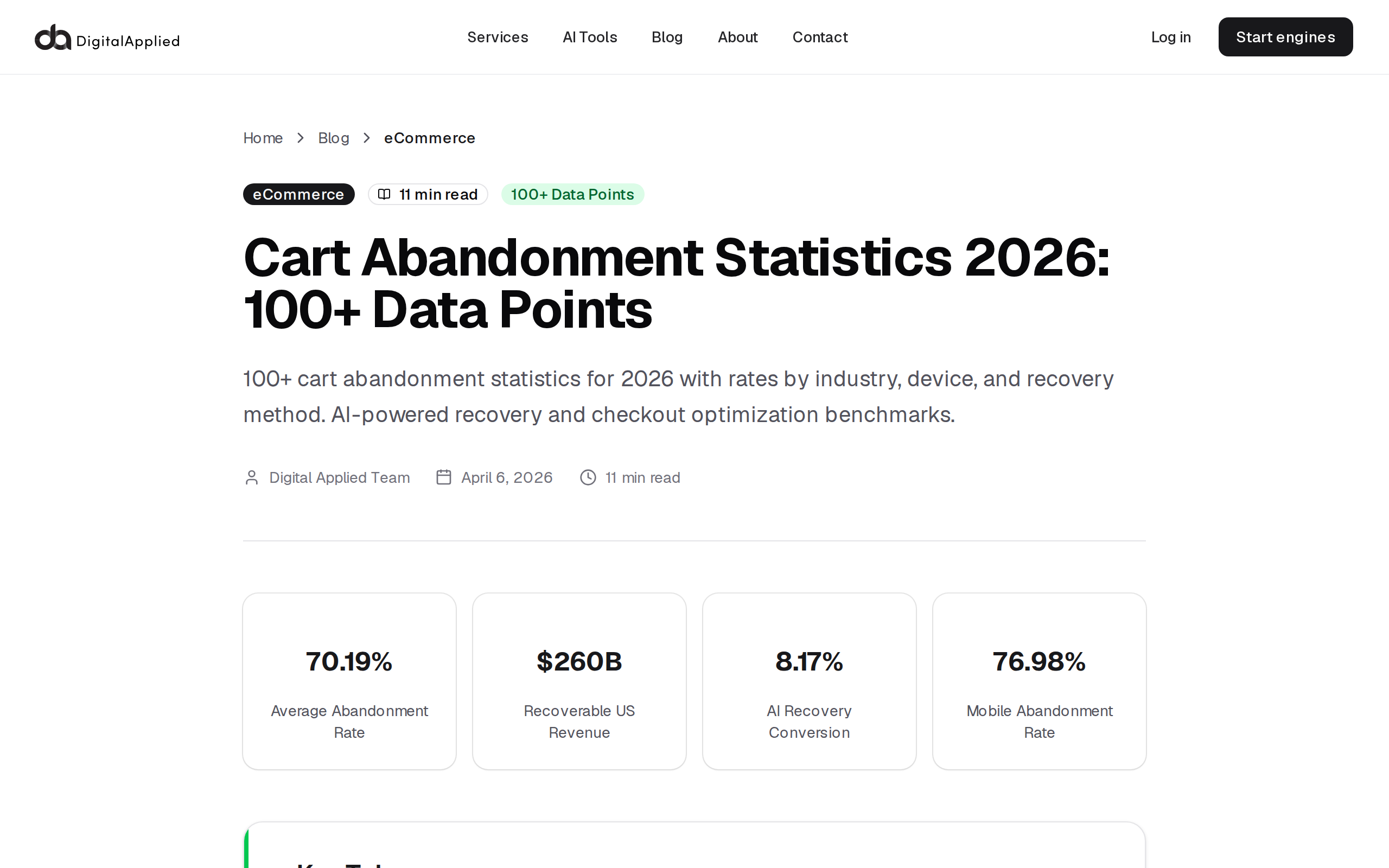
A digital product with a traffic problem is rare. A digital product with a leak is common. The average online cart is abandoned 70.19% of the time, which means for every 10 people who click "buy," roughly 7 walk away before paying, and most creators respond by buying more ads instead of asking why. Maximizing digital product sales isn't mainly a marketing problem. It's a funnel problem: get more of the people who already showed up to actually buy, come back, and bring a friend.
This guide skips the pricing and bundling deep dives (we've covered those separately) and focuses on the parts of the sales process most "how to sell more" advice skips entirely:
- Checkout: the single highest-leverage fix, and the one almost nobody audits
- Social proof and ethical urgency: what actually moves a hesitant buyer, and where the line is
- Recovery and retention: retargeting, email nurture, and turning one sale into three
- Affiliates and automation: how to add a sales channel that runs without you
Where the Money Actually Leaks
| Funnel Stage | Typical Loss | Highest-Leverage Fix |
|---|---|---|
| Checkout | 70.19% cart abandonment on average (digitalapplied.com) | Fewer fields, upfront pricing, no surprise fees |
| First visit | Most buyers don't purchase on visit one | Email capture + a real nurture sequence |
| One sale | Most creators sell once and stop | Post-purchase upsell or order bump |
| After the sale | No plan to bring buyers back | Retargeting + a referral incentive |
Why "Get More Traffic" Is the Wrong First Move
It's tempting to treat sales as a top-of-funnel problem: more visitors, more sales. But if your checkout converts at 2% and industry-comparable checkouts convert at 4%, doubling your traffic just doubles the number of people you're losing. Fixing the leak is cheaper than filling the bucket faster, and the improvement compounds: every channel you already use (organic, paid, affiliate, email) gets more efficient the moment the page at the end of it converts better.
 That's the order this guide follows. Checkout first, then the demand-generation and retention layers around it. If you haven't nailed down your actual price yet, our guide to pricing your digital products is the better starting point; this one assumes you have a price and focuses on getting more of the people who see it to pay it.
The Digital Product Sales Funnel
Most "increase your sales" content is really a list of tactics with no structure connecting them. Here's the structure: six stages, each one feeding the next, with retention and referrals looping back to refill the top.
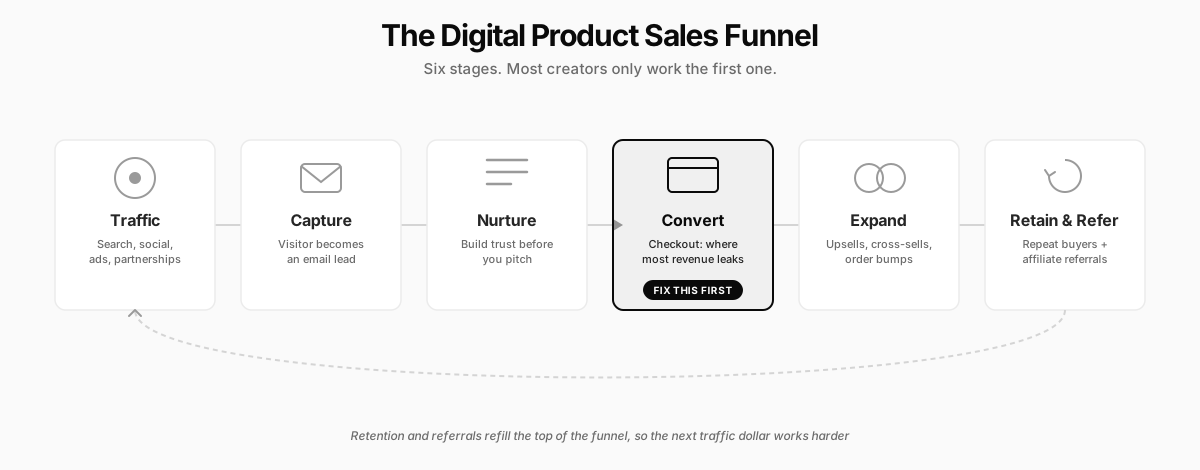
- Traffic: search, social, ads, partnerships, anywhere a stranger first encounters you
- Capture: turning an anonymous visitor into an email address before they decide
- Nurture: earning trust with value before you ask for the sale
- Convert: the actual checkout, where most revenue is lost for reasons that have nothing to do with your offer
- Expand: the upsell, cross-sell, or order bump that turns one sale into a bigger one
- Retain & Refer: keeping buyers and turning them into a referral channel
Most creators only ever optimize stage one. The rest of this guide works through stages three to six, because that's where the compounding gains live.
Fix Checkout First: Where Most Revenue Actually Leaks
Before you spend another dollar on traffic, look at your checkout the way a stranger would. Unexpected costs at the final step drive a huge share of abandonment, and mobile buyers abandon at meaningfully higher rates than desktop, so a checkout that "works fine" on your laptop can be quietly losing sales on the device most of your traffic actually uses.
 A few checkout fixes consistently move the needle more than anything upstream of them:
- Show the real total early. Don't reveal fees, taxes, or currency conversion only at the last screen. Surprise costs are one of the top reasons buyers abandon at checkout.
- Cut every field that isn't required. Every extra form field is a place someone can hesitate and leave. Name, email, and payment. That's it for a digital good.
- Keep the buyer on your page. A checkout that redirects to a third-party domain adds friction and a moment of doubt ("did that just work?"). An embedded checkout that never leaves your storefront removes both.
- Offer the payment methods your audience actually uses. Card is the default, but wallets like Apple Pay and Google Pay cut the mobile checkout down to one tap, which matters given how much abandonment skews mobile.
- Recover the ones who still leave. AI-optimized cart recovery emails convert at roughly 8.17%, against 4.1% for a generic template, because they time the send and tailor the message instead of blasting the same reminder to everyone. That's not a nice-to-have; it's close to double the recovered revenue for the same abandoned-cart list.
None of this requires a new product or a lower price. It requires treating checkout as a page you test and improve, the same way you'd test a landing page.
Nurture Before You Sell
Most visitors won't buy on the first visit, no matter how good your checkout is. The businesses that convert them anyway aren't the ones with the loudest pitch. They're the ones that captured an email address and kept showing up with something useful before asking for the sale.
The gap between a real sequence and a single promotional blast is larger than most people expect. Automated email flows convert at roughly 13x the placed-order rate of one-off campaigns (2.11% versus 0.16%, across Klaviyo's 2026 benchmark of 183,000+ brands), because a sequence meets someone where they are (just signed up, just abandoned a cart, just finished the free lesson) instead of broadcasting the same message to a cold list.
A nurture sequence that earns the sale usually has three parts:
- A welcome series that delivers on the reason they signed up, fast, before any pitch
- Educational content that solves a real, narrow problem your product also solves
- A launch or sales sequence with a clear, singular call to action, not five competing offers
If you're building this for a course specifically, our email marketing guide for course creators breaks down sequencing and timing in more depth. The principle that matters here: nurture is where trust gets built, and trust is what makes stage four (checkout) an easy yes instead of a hard sell.
Make Social Proof Do the Selling For You
By the time someone reaches your checkout, they've usually already decided they want what you're selling. What they're deciding at that exact moment is whether to trust you enough to hand over a card number. Social proof is what tips that decision, and it's cheap to add compared to almost everything else on this list.
The numbers back this up: 95% of consumers read reviews before buying, and 79% trust online reviews as much as a personal recommendation from a friend, rising to 91% among buyers under 35. Sales pages that include testimonials convert 34% better than pages without them.
Where to put it, in order of impact:
- Directly next to the CTA button, not buried in a testimonials section further down the page
- With a name, photo, and specific result, not a generic quote ("changed my life") that could belong to any product
- As video where you can get it. Video testimonials consistently outperform text on trust and watch-through, even when they're rougher production quality
- As a live count if it's real. "312 people bought this course" only works if it's true and updates automatically. A fake or frozen counter is worse than none.
Use Urgency and Scarcity Without Burning Trust
Urgency works. Countdown timers lift conversions by 8-32%, and genuine limited-time offers convert roughly 3x better than an evergreen, always-available offer. That's exactly why it gets abused, and why abusing it is a bad trade.
The rule that keeps this ethical is simple: urgency has to be true. If your cart page says "sale ends tonight" and it's still running next week, you haven't created urgency, you've taught your audience your deadlines are decorative. The next countdown timer they see from you gets ignored, and so does the next one after that.
Practical ways to do this without lying to anyone:
- Tie deadlines to something real. A cohort start date, a price increase that actually happens on that date, a bonus that's genuinely removed after launch week.
- Show real inventory, not manufactured scarcity. If you cap a cohort at 50 seats, show the real remaining count. If a digital product has no supply constraint, don't pretend it does; use time-based urgency (a bonus window) instead of fake stock counts.
- Let timers expire. A countdown that resets when the buyer revisits the page is the single fastest way to convince a careful shopper you can't be trusted, and 2026 shoppers are unusually quick to notice and say so publicly.
- Use urgency for the deal, not the product. "This bonus goes away Friday" is honest and effective. "Only 2 left" on an infinitely downloadable file is not.
Done this way, urgency doesn't cost you anything with repeat buyers, because it never lied to them the first time.
Turn Every Sale Into a Bigger One
Getting a stranger to become a buyer is the expensive part. Once someone's already decided to trust you with a payment, adding to that order is dramatically easier than acquiring a new customer to sell to separately, which is why upsells and order bumps punch so far above their build effort.
 Two mechanics do most of the work:
- Order bumps (a small add-on offered before checkout completes, like "add the workbook for $12") convert well because they add zero friction: the buyer is already entering payment details. Sellers who add one consistently see average order value climb 30% or more.
- Post-purchase upsells (a bigger offer shown right after payment succeeds) work because the buyer just proved intent with real money. One-click post-purchase upsells have been shown to lift average order value by roughly 68% among sellers who implement them well.
Keep the offer genuinely complementary, not just "more stuff." A templates pack that pairs with the course someone just bought earns its place; a random unrelated product doesn't, and un-targeted upsells train buyers to skip past your offers entirely. If you sell multiple products that naturally go together, building that pairing into a permanent bundle instead of a one-time upsell often converts even better; our guide to how bundling boosts digital product sales covers the difference between a bundle and a bump and when to use each.
Win Back the People Who Didn't Buy the First Time
Most of your traffic won't convert on the first visit, and that's normal, not a failure. What separates businesses that maximize sales from ones that don't is whether they have a system to bring those people back, instead of treating every visit as a one-shot chance.
Retargeting is the most direct tool for this. Visitors who are shown a retargeted ad are 43% more likely to convert than a cold visitor, and well-run retargeting campaigns can lift conversions by up to 150% against a cold-audience baseline, because you're spending money on people who already know what you sell instead of introducing yourself to strangers.
A basic recovery stack, roughly in order of setup effort:
- Abandoned-cart email, sent within an hour, showing exactly what they left behind
- Retargeting ads on the platforms your buyers already use, showing the specific product they viewed rather than a generic brand ad
- A win-back email to past buyers who haven't purchased again in a while, with something genuinely new to offer, not just a repeat of the same pitch
None of this requires a big budget. It requires remembering that "didn't buy today" isn't the same as "will never buy," and building one system that follows up automatically instead of relying on someone happening to come back on their own.
Launch Like an Event, Not a Trickle
If you're launching something new (a course, a template pack, a membership tier), how you release it changes how much of your existing audience actually buys. A product that quietly appears on your site gets a fraction of the attention of one launched as a real event, because scarcity of time (not fake stock) genuinely concentrates decision-making.
The mechanics that work:
- A waitlist before the cart opens. It builds a list of pre-qualified buyers and gives you a real number to hit on day one, which itself becomes social proof for the next wave.
- A defined open-and-close window, not a cart that's always open. An always-open cart removes the one piece of urgency that's completely honest: this window will actually end.
- A pre-launch nurture sequence that delivers real value (see the nurture section above) so the launch emails land with an audience that already trusts you, instead of cold-pitching a list that's never heard from you.
If you're specifically building and launching a course for the first time, our online course launch checklist walks through the planning and content side in more detail; this section is about the sales mechanics of the launch window itself.
Build an Affiliate or Referral Engine
Every sales channel covered so far depends on your own traffic and your own list. Affiliates and referrals are the one channel where other people bring you the customer, and you only pay when it works.
This channel has grown quickly: 71% of influencers now say affiliate commissions are their fastest-growing income stream, and 42% of influencers worldwide monetize through affiliate links in addition to sponsorships. On the business side, the economics are hard to ignore: businesses report an average return of $6.50 for every $1 spent on affiliate programs, and about 65% of retailers say affiliate marketing already contributes up to 20% of annual revenue.
To make one work for a digital product business:
- Pay a commission that's actually worth someone's time. Digital products have no cost of goods, so you can afford to pay 30-50% on a course or template and still come out ahead, far higher than a physical-goods affiliate rate.
- Give affiliates real assets, not just a link: swipe copy, a demo video, an honest breakdown of who the product is (and isn't) for. Affiliates who understand the product sell it better than ones who don't.
- Start with your own buyers. The easiest affiliate to recruit is someone who already paid for and liked the product. A simple "refer a friend, both of you get $X" is often higher-converting than a cold affiliate recruitment push, because the recommendation is coming from a real customer, not a stranger with a link.
Automate the Repetitive Parts With AI
A lot of what's in this guide (cart recovery timing, retargeting audience refresh, personalizing the next email in a sequence) used to require either a dedicated ops person or hours of manual work every week. That's changed. AI-driven cart recovery, as covered earlier, roughly doubles the conversion rate of a template email by adjusting timing and content per recipient instead of sending the same message to everyone. The same pattern applies across the rest of the funnel: personalizing which upsell shows to which buyer, flagging which nurture email is underperforming, and drafting the next email in a sequence based on what actually converted last time.
The honest caveat: automation makes an already-good funnel more efficient. It doesn't fix a broken checkout or a product nobody wants. Do the fundamentals in this guide first, then automate the parts that are genuinely repetitive.
Where Crevio Fits Into This
Most of this guide is platform-agnostic on purpose, because the fundamentals (checkout friction, social proof, honest urgency, retention) apply no matter what you sell on. But the tooling behind your funnel matters, because it determines how much of this you have to build by hand versus how much comes working out of the box.
Crevio is an AI business builder: you describe what you want to sell, and it builds the storefront, checkout, and the systems around it. For the funnel in this guide specifically, that means:
- Checkout built in, not bolted on. Products, payments (Stripe-powered), and your storefront live in one system, so there's no third-party redirect at the moment of highest intent.
- Customer and lead data in one place. Every buyer and every captured email lands in the same customer list, so nurture sequences and win-back campaigns don't require stitching together a separate CRM.
- AI agents that handle the repetitive layer. Crevio's AI credits (250/month on the free Starter plan, up to 2,500/month on Business) power the kind of automation covered in the section above, drafting follow-ups and helping run marketing tasks with less manual input.
- Low, transparent fees instead of a big revenue cut. Crevio charges a transaction fee that drops as you grow: 5% on the free Starter plan, 2.5% on Pro ($20/month), and 1% on Business ($50/month). No hidden platform tax on top.
An honest note on scope: Crevio isn't a dedicated split-testing suite or an enterprise attribution platform, and if you need deep multi-touch attribution modeling, a specialized analytics tool will still do more. What it's built for is removing the plumbing (checkout, customer records, payments, basic automation) so you can spend your time on the parts of this guide that actually require judgment: what to say in the nurture email, which upsell genuinely fits, where the honest urgency is.
The Bottom Line
More traffic doesn't fix a leaking funnel. It just runs more people through the same hole. Before you spend another dollar getting strangers to your page, spend an afternoon fixing what happens after they arrive: a checkout with no surprises, proof that you're worth trusting, urgency that's actually true, and a system that follows up with the people who didn't buy yet. Do that, and the traffic you already have starts converting like traffic you haven't earned yet.
FAQ
It varies widely by traffic source and price point, but a useful anchor: if your checkout abandonment rate is meaningfully above the roughly 70% industry average, the fix is almost always friction (unexpected costs, too many form fields, a redirect at checkout) rather than your offer or price. Fix checkout before assuming you need a lower price or more traffic. For device and industry-level benchmarks to compare against, see our guide to ecommerce conversion rate benchmarks.
One well-timed recovery email, sent within an hour and showing exactly what was left behind, outperforms repeated generic reminders. AI-optimized recovery emails convert at roughly double the rate of a static template because they adjust timing and content instead of blasting the same message to everyone on the list.
Not if it's true. A real deadline, a real capacity limit, or a bonus that's genuinely removed after a set date is honest and effective. What damages trust is fabricated scarcity: a countdown that resets, a "3 left" message on an unlimited digital file. The tactic isn't the problem; lying with it is.
Related Blog Posts
What will you sell today?
Describe what you want to sell — Crevio builds, launches, and grows it. Products, payments, and marketing, all on autopilot.
Start for free