Your business,
on autopilot.
One platform for creating, running and growing your business, powered by AI.
How to Set a Price on an NFT: A 5-Step Pricing Guide for 2026





There is no official price for an NFT, which means the number you type into the listing box is a bet about what a stranger will pay. Set it too high and nothing sells. Set it too low and you leave money behind, and a low first sale is hard to walk back.
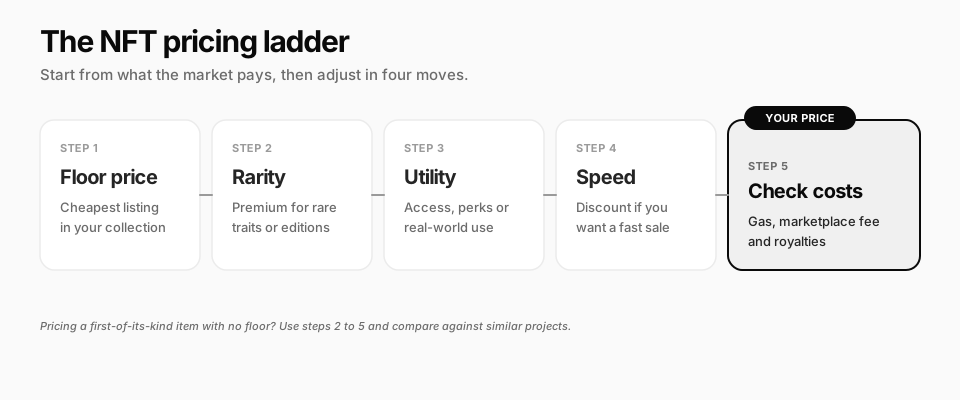
This guide shows how to set a price on an NFT without guessing, using the same four inputs buyers use to judge your listing: what similar tokens sell for, how rare yours is, what it lets the owner do, and how fast you need to sell.
- Start from the floor price: the cheapest comparable listing is your anchor, not your ceiling
- Adjust for rarity and utility: traits, edition size, and real perks justify a premium
- Subtract your real costs: gas, marketplace fees, and mint fees change what you take home
- Pick the right listing format: fixed price, Dutch auction, or English auction depending on how sure you are
- Treat the first price as data: sell, watch, and adjust
Why Pricing an NFT Is Harder Than Pricing a Normal Digital Product
When you price a digital product, you can lean on costs, competitors, and what your audience already pays for similar downloads. An NFT has all of those problems plus a few more.
- The market is thinner than it was: trading volume has fallen sharply since the 2021 peak, so fewer buyers are chasing each listing
- Value is mostly social: a token is worth what a community believes it is worth, and that belief moves fast
- Prices are public and permanent: every sale of your collection is on-chain, so buyers can see exactly what the last person paid
- Fees are layered: gas, marketplace fees, and creator earnings all sit between the sticker price and your payout
None of this makes pricing impossible. It makes it a research task instead of a gut call. Cointelegraph's pricing guide makes the same point: creators have full control over price, and the risk runs both ways, since a price that is too high means no sales and one that is too low is hard to raise later.
Step 1: Start With the Floor Price
The floor price is the lowest price at which anything in a collection is currently listed. It is the single most useful number for anyone learning how to set a price on an NFT, because it tells you what buyers will actually accept today, not what sellers hope for.
If you already have a collection
Open your collection on the marketplace and read three numbers: the current floor, the last ten sale prices, and how many items sold in the past week. A floor of 0.10 ETH with ten sales this week is a healthy anchor. A floor of 0.10 ETH with no sales in a month is a number nobody is paying.
If you are launching something new
Without a floor of your own, borrow one. Find three to five projects with similar art style, supply, and audience, and note what their cheaper tokens sell for. Your launch price should sit inside that range unless you have a specific reason to go above it, such as a larger existing audience.
One method from the pricing guides is worth stealing: take the floor, add a rarity premium for the specific token, then apply a liquidity discount based on how quickly you want it to sell. The next three steps are exactly those adjustments.
Step 2: Adjust for Rarity
Rarity is supply. Limited editions are priced higher than open editions, and within a collection, tokens with rarer traits sell for more than common ones.
| Situation | Pricing move |
|---|---|
| 1 of 1 piece | Price above any edition, and expect a longer wait for the right buyer |
| Small edition (5 to 50) | Moderate premium over open editions |
| Open edition | Price near the floor, volume does the work |
| Common trait in a large collection | At or just above the floor |
| Rare trait or visibly standout piece | Premium over the floor, justified by comparable rare sales |
Do not invent a premium. Look at what rare tokens in comparable collections actually sold for. If the rarest tokens trade at 2x the floor, a 5x ask needs a reason.
Step 3: Add Value Through Utility
Utility is anything the owner can do with the token beyond looking at it: unlock a private community, download exclusive files, attend an event, get discounts, or access a course. Tokens with real utility are easier to defend at a higher price, because the buyer can compare the price to something concrete.
The honest warning: utility only counts if you deliver it. A promised perk that never ships lowers the price of every later token you release. List only what you can maintain.
If the utility is digital, such as a members area, a download vault, or a course, you can run the delivery side from a regular business platform. Crevio is an AI business builder for digital products, storefronts, and payments. It does not mint NFTs, but you can use it to sell and deliver the courses, downloads, and memberships that sit behind a token. For a deeper look at this setup, see our guide to what an NFT storefront is.
Step 4: Decide How Fast You Need to Sell
Speed is the liquidity discount. A price at the floor sells quickly. A price 30% above the floor can sit for weeks, and that is a legitimate strategy if you are patient and the piece is genuinely rare.
Ask yourself one question: what happens if this token does not sell for 60 days? If the answer is "nothing," price higher and wait. If the answer is "I miss a launch window" or "I need the cash," price at or slightly below the floor.
Step 5: Subtract Your Costs Before You Commit
A listing price is not your income. Before you finalize, work out what you take home.
Marketplace fees
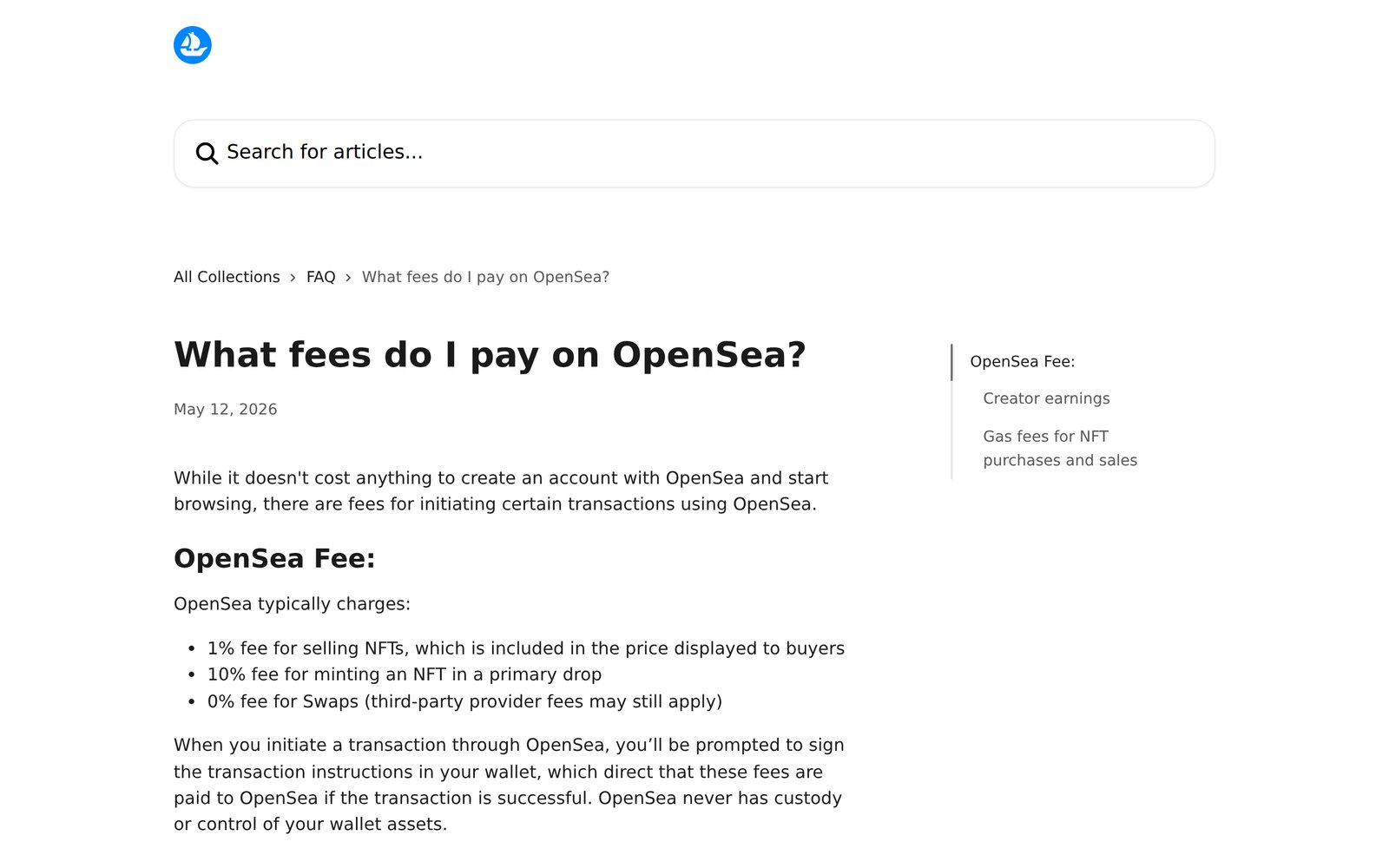
OpenSea's help center says it typically charges a 1% fee for selling NFTs and 10% for minting in a primary drop. Fees differ by marketplace and change over time, so check the current page for whichever platform you use.
Gas and listing costs
Gas is the network fee for on-chain actions. Minting and some listing actions require it, and the amount depends on the chain and how busy it is. Compare it to your expected sale price. A 0.01 ETH item can lose a painful share of its value to costs on a congested network.
Creator royalties
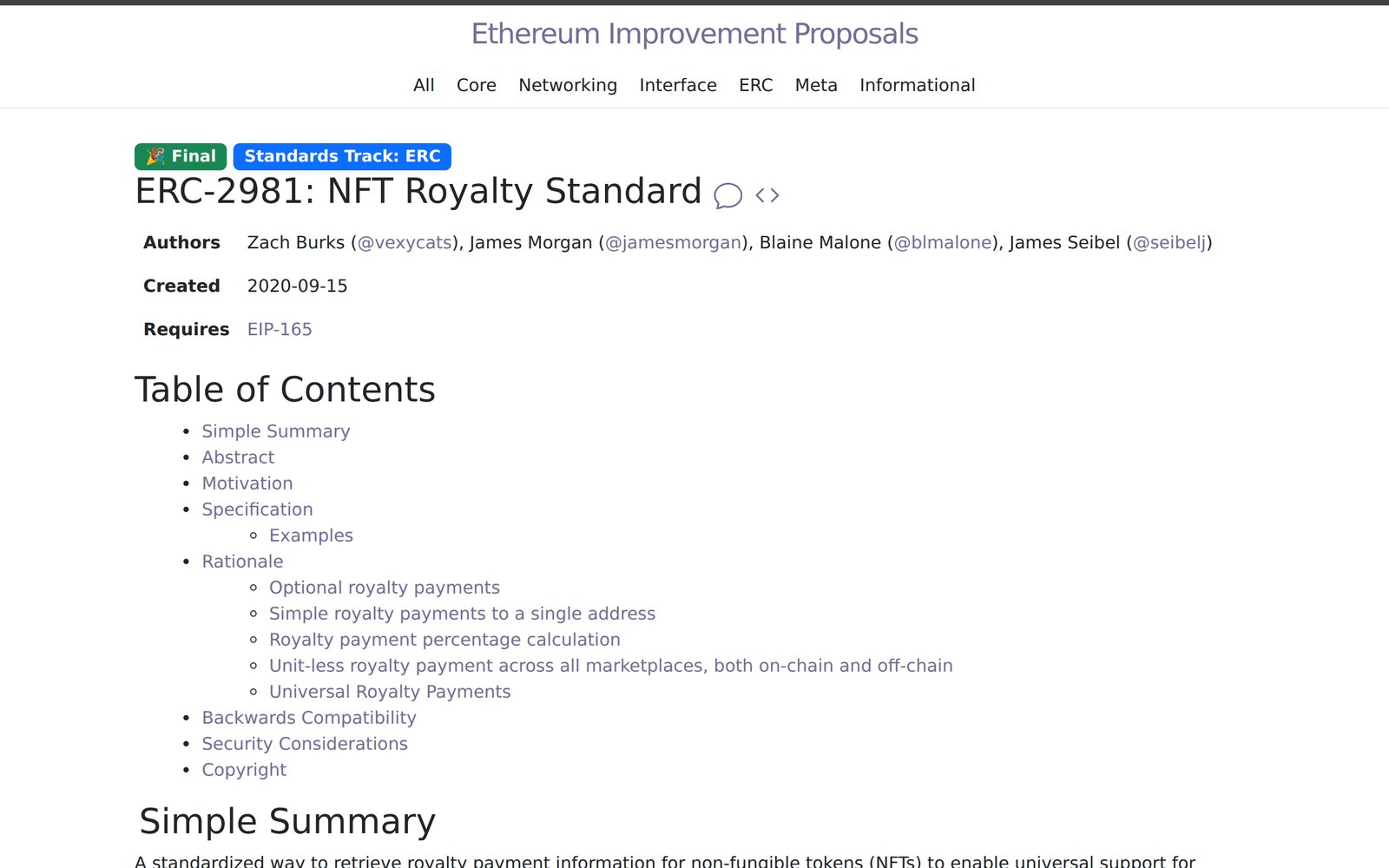
Royalties pay you a percentage when your NFT is resold. The ERC-2981 standard lets a contract signal the royalty recipient and amount, but whether a marketplace honors it is up to the marketplace. Nansen data reported by The Block showed royalty earnings hitting a two-year low after some marketplaces made them optional. Treat royalties as a bonus, never as the way your project breaks even.
A Worked Example: Pricing One NFT From Start to Finish
Say you are selling a small-edition piece from a 500-item collection. These numbers are illustrative.
| Input | Value |
|---|---|
| Collection floor | 0.10 ETH |
| Rarity premium (rare trait that sold at 1.4x floor recently) | +30% |
| Utility (access to a members-only download vault) | included in premium |
| Speed (no deadline) | no discount |
| Listing price | 0.13 ETH |
| OpenSea sale fee at 1% | 0.0013 ETH |
| Net before gas | about 0.1287 ETH |
You list at 0.13 ETH rather than 0.15. The 0.13 is supported by recent comparable sales, while 0.15 would need a story you cannot yet prove.
Now check the plan against reality after a week. If three comparable tokens sold and yours did not, the market is telling you the premium is too high. Drop toward 0.115 ETH and relist. If yours sold within hours, you priced too low, and the next token can go up.
Choose the Right Listing Format
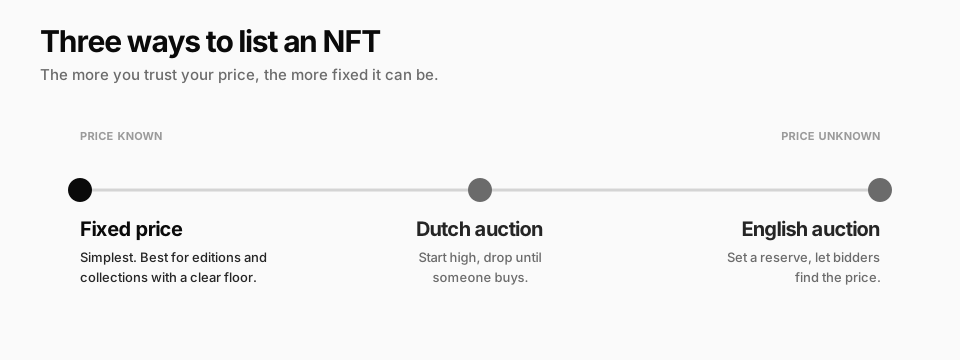
Fixed price
The most common method and the best default when you have a clear floor and comparable sales. It is easy for buyers to understand and easy for you to adjust.
Dutch auction
The price starts high and falls on a schedule until someone buys. Use it when you suspect demand but do not know the number, such as a new collection with an existing audience. The first buyer sets the price, so everyone can see what the market chose.
English auction
Bidders raise the price against each other from a reserve. It suits genuinely unique, 1 of 1 pieces. Set the reserve at the lowest price you would be happy with, because a thin auction can end close to it.
Mistakes That Quietly Cost Sellers Money
- Pricing from the best sale you saw: one outlier is not a market
- Ignoring gas: a cheap token on an expensive network can lose most of its value to costs
- Discounting in public too early: repeated price cuts teach buyers to wait
- Promising utility you cannot deliver: it damages trust in every later release
- Counting on royalties: they are optional on some marketplaces
- Pricing in a vacuum: no community, no demand, whatever the number
Raise Demand, Not Just the Price
Price only works when people can see the listing and trust the seller. The pricing guides stress a visible presence on social channels and a clear creator background, and they are right: a buyer comparing two similar tokens usually pays more for the one with a real person and a real community behind it.
Practical ways to support your price:
- Show your work and background on a simple branded page so buyers can verify you
- Build an email list so you can tell your audience before a drop, not after
- Offer one concrete, deliverable perk and describe it precisely
- Sell a few tokens early to establish a floor that others can see
If you want a place to host that page, collect emails, and deliver the digital perks behind the token, Crevio's free Starter plan covers a link-in-bio store with two published products, and paid plans lower the transaction fee to 2.5% on Pro and 1% on Business.
FAQ
Check whether comparable tokens are selling and yours is not. If similar items at similar prices sold this week and yours has had no offers, the price is too high or the listing is not being seen. Lower it modestly once, then watch for a week.
Price in the currency of the chain, usually ETH, because that is what the marketplace and buyers use. Check the dollar value when you decide, since ETH moves against the dollar, and your costs may be in dollars.
Yes. Most marketplaces let you cancel and relist at a new price, or edit the listing. Cancelling and relisting can cost gas on some chains, so avoid constant tweaking.
Look at five comparable projects, take the lower half of their sale range, and add a premium only for rare tokens. A Dutch auction is a good option if you want the market to discover the number for you.
The Short Version
Start from the floor, add a premium you can prove, subtract your real costs, and treat the first price as the first data point. The best NFT price is the one the market confirms, not the one you hoped for.
Related Blog Posts
What will you sell today?
Describe what you want to sell — Crevio builds, launches, and grows it. Products, payments, and marketing, all on autopilot.
Start for free