Your business,
on autopilot.
One platform for creating, running and growing your business, powered by AI.
How to Create and Sell an Affiliate Marketing Course in 2026





Global affiliate spend hit an estimated $19.4 billion in 2026, up from $17.1 billion the year before, according to DigitalApplied's affiliate marketing statistics roundup, a 13.5% year-over-year jump. That growth is exactly why "affiliate marketing course" is such a crowded search term: plenty of people want to learn the skill, and plenty more want to sell them the lesson.
Most guides for that keyword are written from the buyer's side: which course to purchase. This one is written from the other side of the transaction. If you already know how to drive affiliate income (through TikTok Shop, Pinterest, Amazon, or SaaS referral programs) and want to package that knowledge into something you sell, here is how to build it, price it, and decide whether it's worth running your own affiliate program on top of it.
- The market is real but crowded. Steady double-digit growth in affiliate spend means genuine demand, but it also means dozens of similar courses at every price point.
- Pricing is a positioning decision, not a guess. A $49 mini-course and a $997 course-plus-coaching offer are different products serving different buyers, not the same content at different price tags.
- An affiliate program is optional, not automatic. Adding affiliates to promote your course only pays off once the course already converts on its own.
Quick Comparison
| Platform | Course hosting | Native affiliate tooling | Fees |
|---|---|---|---|
| Whop | Yes, plus its own marketplace | Yes, referral and affiliate layer built in | Percentage-based, can stack with a marketplace referral cut |
| Teachable / Thinkific | Yes | Affiliate features on select higher-tier plans | Monthly subscription plus payment processing |
| Dedicated affiliate software (Rewardful, FirstPromoter) | No, pairs with an existing store | Yes, that's the entire product | Separate monthly fee on top of whatever hosts your course |
| Crevio | Yes, AI-built storefront and course delivery | Not built in yet; use a personalized discount code per partner and track manually | Free plan available, 1%–5% transaction fee, no separate affiliate software bill |
What "Affiliate Marketing Course" Actually Means Here
Search that phrase and you get two very different intents mixed together. One is commercial: "which affiliate marketing course should I buy." The other is what brought you here: "how do I build and sell one." Whop's own roundup of affiliate marketing courses is a good example of the first, listing 15 courses on its marketplace ranging from $6.50 to $3,997. That price spread alone tells you something useful: there is no single "correct" format for this kind of course. A tight, cheap tactical guide and an expensive cohort-style program can both work, as long as the depth matches the price.
An affiliate marketing course, sold as a digital product, is really a packaged version of a repeatable process: pick a niche, join the right programs, produce content that converts, track what's working, and scale it. The course itself is a teaching product. What you're deciding next is whether you also want an affiliate program wrapped around that teaching product, so other people can sell it for you on commission. Those are two separate decisions, and conflating them is the most common reason first-time creators overbuild before they've validated anything.
Is There Still Room for a New Affiliate Marketing Course in 2026?
The growth numbers say yes, with a caveat. DigitalApplied's data puts affiliate marketing third in performance marketing spend behind paid search and paid social, and still growing faster than either. That growth means more brands are actively recruiting affiliates, which means more demand for people who know how to do it well, and more curiosity about how to get started.
The caveat is that "affiliate marketing" as a course topic has been taught for over a decade, so the bar for a good one keeps rising. A generic "how affiliate links work" course competes against thousands of free YouTube videos and blog posts covering the same basics. What still sells is specificity: a course built around one channel, one niche, and real, current results, not a recycled overview of a business model everyone has already heard of.
Step 1: Pick a Specific Angle You Can Prove
The single biggest quality gap between forgettable affiliate marketing courses and ones people actually finish and recommend is proof. Screenshots of real (even modest) earnings, a documented case study, or a track record in one specific channel does more for credibility than any amount of polished slides.
Pick one lane rather than trying to teach "affiliate marketing" broadly:
- Social-native affiliate selling (TikTok Shop, Instagram, Pinterest). We covered the mechanics, compliance rules, and realistic income range for one of these channels in our Pinterest affiliate marketing guide, which is a useful reference for how specific this kind of course needs to get.
- Amazon Associates and retail affiliate programs. Lower per-sale commissions (often single digits) but broad, easy-to-join catalogs.
- SaaS and software referral programs. Fewer sales but meaningfully higher per-sale or recurring payouts, which suits an audience that already has some traffic.
- Email and content-driven affiliate marketing. Building an audience first, then monetizing it with affiliate offers over time rather than chasing single-post virality.
Whichever lane you pick, be honest in the course itself about how long results take. The genre has a reputation for six-figure screenshots and thin explanations of how many months of unpaid work sat behind them. Naming that timeline upfront builds more trust than hiding it.
Step 2: Structure the Curriculum
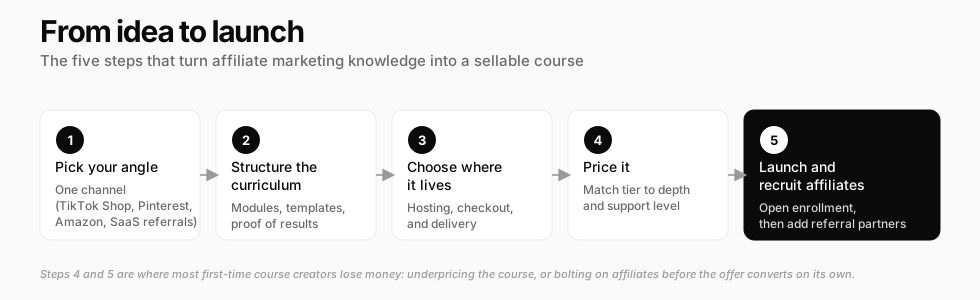
A curriculum that holds up tends to follow the same shape regardless of the channel you teach:
- Foundations and compliance. What affiliate marketing is, how disclosure rules work, and how to avoid the mistakes that get accounts suspended.
- Channel setup. The specific platform mechanics for your chosen lane (business account setup, program applications, tooling).
- Content and traffic engine. The repeatable system for producing content or campaigns, not a one-off example.
- Tracking and optimization. How to read the data your affiliate programs give you and act on it.
- Scaling. Templates, batching, or outsourcing once the process is proven.
Our general online course launch checklist covers the planning and validation steps that apply regardless of topic; this structure is the topic-specific layer on top of that.
Keep modules short and outcome-focused. A student should be able to point to something they did (an application submitted, a pin published, a tracking link set up) after each module, not just information they absorbed.
Step 3: Choose Where It Lives
You have three real options: a marketplace like Whop that bundles discovery with hosting, a dedicated course platform, or an AI-built storefront like Crevio that combines course hosting with the rest of your business (payments, customer management, and your site) in one place.
The right choice depends on what you're optimizing for. A marketplace trades a cut of revenue for built-in discovery, which matters most if you have no existing audience. A platform you fully control costs more in setup time but keeps more of the relationship, and the margin, with you. Neither choice is wrong; it depends on whether you're starting from an audience of zero or already have people to sell to. The comparison table earlier in this guide lines up against exactly this decision: discovery and built-in affiliate tooling on one side, lower fees and full control on the other.
Step 4: Price It Like a Course, Not a Guru Launch
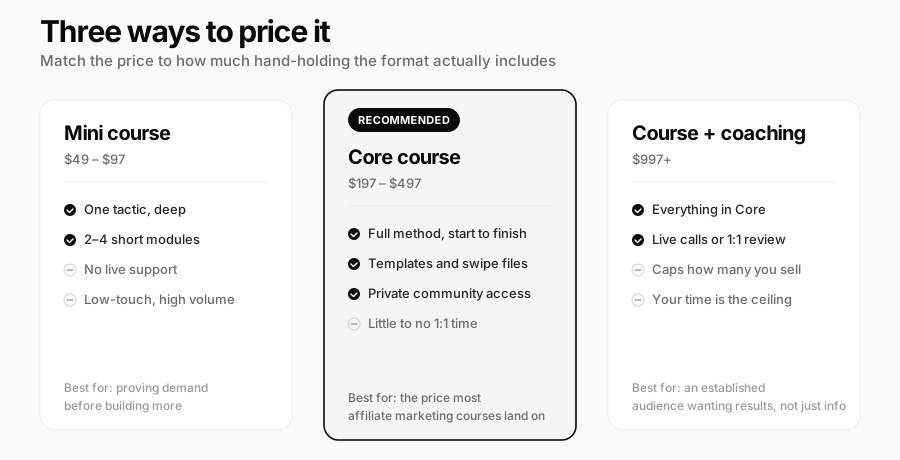
Whop's own listing of 15 affiliate marketing courses spans $6.50 to $3,997, which is a wide enough range to be useless as a single benchmark. What matters is matching the price to the format:
- $49–$97: a narrow, single-tactic mini-course. Works well as a low-commitment entry point or lead magnet into a bigger offer later.
- $197–$497: where most complete, standalone affiliate marketing courses land. Enough depth to cover a full method, templates included, usually with some form of community access.
- $997+: justified only when coaching, live calls, or direct feedback is genuinely part of the offer. Charging four figures for pre-recorded video with no support invites refund requests and bad reviews.
Our guide to pricing digital products covers the underlying framework (cost of delivery, perceived value, and competitor anchoring) in more depth than a single-post rundown can. The short version for this specific topic: price the support and access level, not just the video runtime.
Step 5: Decide Whether to Add Your Own Affiliate Program
This is the part unique to teaching affiliate marketing specifically: it's almost too on-the-nose not to let other people promote your course for a commission. It can genuinely work, but only after the course already sells without help.
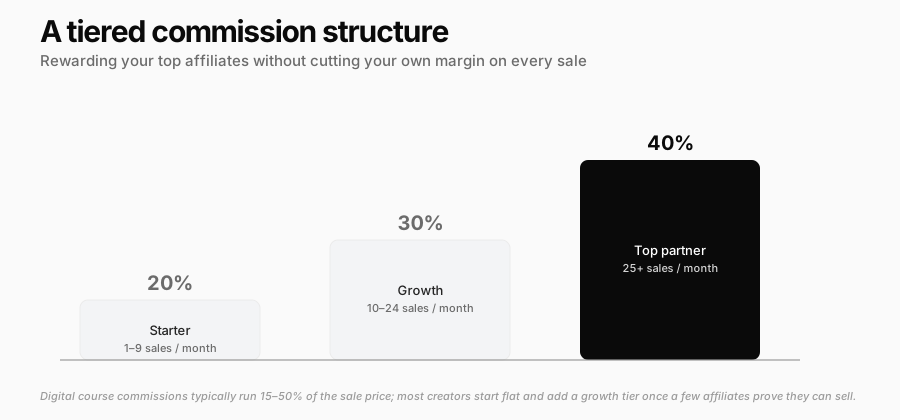
Typical commission structure for digital courses runs 15%–50% of the sale price, with a median around 20% and an average closer to 23%, according to LinkJolt's analysis of real commission-rate data. A few practical decisions matter more than the exact percentage you pick:
- Flat versus tiered. A flat 20–30% is simplest to run. A tiered structure (say, 20% for casual affiliates, 30% after 10 sales in a month, 40% for your top handful) rewards your best partners without giving away margin on every sale from day one.
- One-time versus recurring. If your course has any recurring component (a membership, ongoing updates, a paid community), decide whether affiliates get paid once or for the life of the customer. Recurring payouts attract better affiliates but cost more over time.
- Disclosure is not optional for your affiliates either. The same FTC endorsement guidelines that apply to the affiliate marketing you're teaching apply to anyone promoting your course for a commission. Make disclosure a condition of joining your program, not an afterthought.
The honest tradeoff: running an affiliate program well takes real operational work (recruiting, approving, tracking, paying out) that is separate from making the course itself good. If you don't yet have organic sales to point to, recruiting affiliates first tends to attract people chasing a hot new offer rather than partners who believe in it, which shows up fast in refund rates.
Where a Platform Like Crevio Fits
If you're building the course itself, Crevio is built for exactly this kind of product: describe what you're selling, and its AI helps build the course structure, storefront, and checkout, on a free plan to start, with a 1%–5% transaction fee depending on your plan instead of a separate monthly software bill.
Worth being upfront about a gap: Crevio does not yet have a native affiliate-recruitment or commission-payout system for your own course, the way a marketplace like Whop bakes referral mechanics into its platform. What you can do today is give individual partners a personalized discount code and track redemptions manually, which works fine for a handful of partners but doesn't automate payouts at scale. If a full-featured affiliate program is the priority feature rather than course hosting itself, pair Crevio (or any course platform) with dedicated affiliate software, or start with a marketplace model like Whop that has affiliate tooling built into the same product.
What Nobody Tells You
- Affiliate-driven traffic converts differently than your own audience. An affiliate's followers didn't come looking for your specific course; expect a lower conversion rate and budget refund handling accordingly.
- Compliance mistakes compound. A course that teaches disclosure rules but whose own affiliate program skips them undermines the course's credibility the moment a student notices.
Refund clustering is a real signal. If refunds spike right after an affiliate promotion, that specific partner's audience is probably a mismatch, not proof the course itself is weak. Track refunds by referral source, not just in aggregate.
- The channel you teach will change under you. Platform algorithms and program terms (commission rates, cookie windows, banned tactics) shift regularly. Plan to update modules at least twice a year or the course goes stale fast.
- Community access ages the fastest part of the offer. A private community is often the most-cited reason people join a $200+ course, but it's also the first thing that goes quiet if you stop showing up in it.
FAQ
Production cost is usually the smallest line item: screen-recording software, basic editing, and a course platform can all be had for under $50/month combined, and platforms with a free tier (including Crevio) remove even that. The real cost is time: researching a specific, defensible angle and recording enough proof of results to make the course credible.
Most digital course affiliate programs pay 20%–40% of the sale price, with 15%–50% as the broader observed range. Start flat around 20–30% and add a tiered bonus for your top-performing affiliates once you have enough sales history to see who they are.
No. A course hosting platform or marketplace (Whop, Teachable, Crevio, and similar tools) gives you a checkout page and delivery without a separate website. A website helps most once you're driving your own traffic through content or paid ads and want more control over the buying experience than a hosted product page provides.
The course, the price, and the affiliate program are three separate decisions. Get the first one right on its own merits before you ask anyone else to sell it for you.
Related Blog Posts
What will you sell today?
Describe what you want to sell — Crevio builds, launches, and grows it. Products, payments, and marketing, all on autopilot.
Start for free