Your business,
on autopilot.
One platform for creating, running and growing your business, powered by AI.
How to Get Podcast Sponsors in 2026: Rates, Pitches, and Where to Look




US podcast advertising hit $2.86 billion in 2025, up 17.6% year over year, according to IAB and PwC's Internet Advertising Revenue Report. Sponsors are spending more on podcasts than ever, and a meaningful slice of that money goes to shows with a few thousand downloads, not just the chart-toppers.
- You don't need six figures of downloads: ad networks want 10,000+, but direct and affiliate deals happen with shows in the low hundreds
- Placement changes your rate more than almost anything else: host-read mid-roll ads pay close to double what a produced pre-roll pays
- The pitch, not the download count, is usually what kills the deal: most rejected pitches never had numbers attached to them
How Podcast Sponsorships Actually Work
A podcast sponsorship is simple in structure even when it feels complicated to land: a brand pays you to mention or advertise their product to your audience, usually priced against how many people actually hear the ad. That's the whole transaction. Everything else, the networks, the marketplaces, the media kits, exists to make that transaction easier to find and price fairly.
Two pricing models cover almost every deal you'll see:
- CPM (cost per mille): a flat rate per 1,000 downloads or listens, paid whether or not anyone acts on the ad. This is the standard for most sponsorships.
- CPA (cost per acquisition): payment tied to results, a signup, a purchase, a promo code redeemed. Rarer for established shows, common for affiliate-style deals with newer ones.
Most shows start with CPA-style affiliate deals (a unique promo code, a small flat fee plus commission) before graduating to CPM sponsorships once they have enough downloads to make CPM math attractive to a brand. That order matters: chasing a CPM sponsor before you have the download count to justify it usually gets you a form-letter rejection instead of a counteroffer.
How Many Downloads Do You Actually Need?
This is the question that stops most podcasters before they send a single pitch, and the honest answer is more encouraging than the number everyone quotes.
Traditional ad networks and marketplaces do set a real floor: most look for 10,000 to 20,000 downloads per episode before they'll onboard a show, because that's the volume where CPM math produces a fee worth their overhead. If you're waiting for a network to come to you, that's the number to hit.
But that floor doesn't apply to direct deals. Shows with a few hundred downloads per episode sign sponsors regularly when they go direct to a brand with a flat-rate or affiliate offer instead of waiting to qualify for CPM. A niche audience of 500 people who all care deeply about, say, home coffee roasting is worth more to a coffee-gear brand than 500 random downloads, and a lot of small brands know that. The trade-off: you do the finding and the pitching yourself instead of a network doing it for you.
The practical takeaway: don't gate your outreach on hitting a download number. Gate it on having something specific to say about your audience.
Podcast Sponsorship Rates in 2026 (CPM Guide)
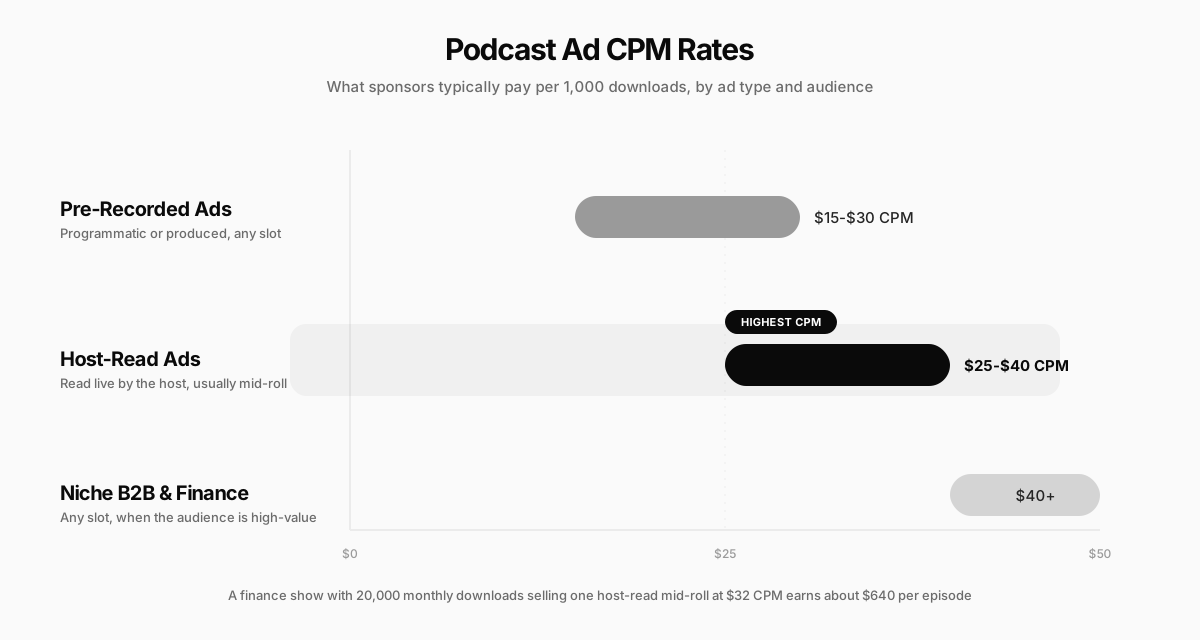
Rates vary by placement and by audience, and the range is wide enough that quoting a single number is close to useless. Here's what sponsors are actually paying, per Acast's advertiser pricing guide:
| Ad type | Typical CPM | Why |
|---|---|---|
| Pre-recorded / programmatic | $15-$30 | Produced once, dropped into any slot, less trust transfer from the host |
| Host-read (usually mid-roll) | $25-$40 | The host's own voice and endorsement, placed where listener drop-off is lowest |
| Niche B2B, finance, or health | $40+ | Advertisers pay a premium for an audience with high buying power or a specific professional need |
To turn a CPM into a dollar figure: divide your downloads by 1,000, then multiply by the rate. A finance show with 20,000 monthly downloads selling one host-read mid-roll at $32 CPM earns about $640 for that single ad, per episode, from one sponsor. Stack two or three ad slots across pre-roll, mid-roll, and post-roll, and that episode's sponsorship revenue climbs accordingly, though most hosts cap it at one to two sponsors per episode so the show doesn't start to feel like an ad break with a podcast attached.
Types of Sponsorship Deals
Not every sponsorship is a straight ad read. Knowing the format options gives you more to offer when you pitch:
- Spot ad: a short, scripted or semi-scripted read, 15 to 60 seconds, placed pre-roll, mid-roll, or post-roll
- Host-read ad: the same spot, but written and delivered in your own voice and words instead of a brand's script, commands the CPM premium above
- Sponsored segment: a longer, dedicated portion of the episode built around the sponsor's product, often 3 to 5 minutes
- Branded episode: an entire episode built around the sponsor's topic or product, priced as a flat fee rather than CPM
- Affiliate or promo code deal: no upfront fee, revenue paid on actual signups or sales through your unique code or link
Most working podcasters use a mix: CPM spot ads as the baseline revenue, with an affiliate arrangement or two layered on top for brands that fit the show closely enough to promote without sounding like an ad.
Where to Find Podcast Sponsors
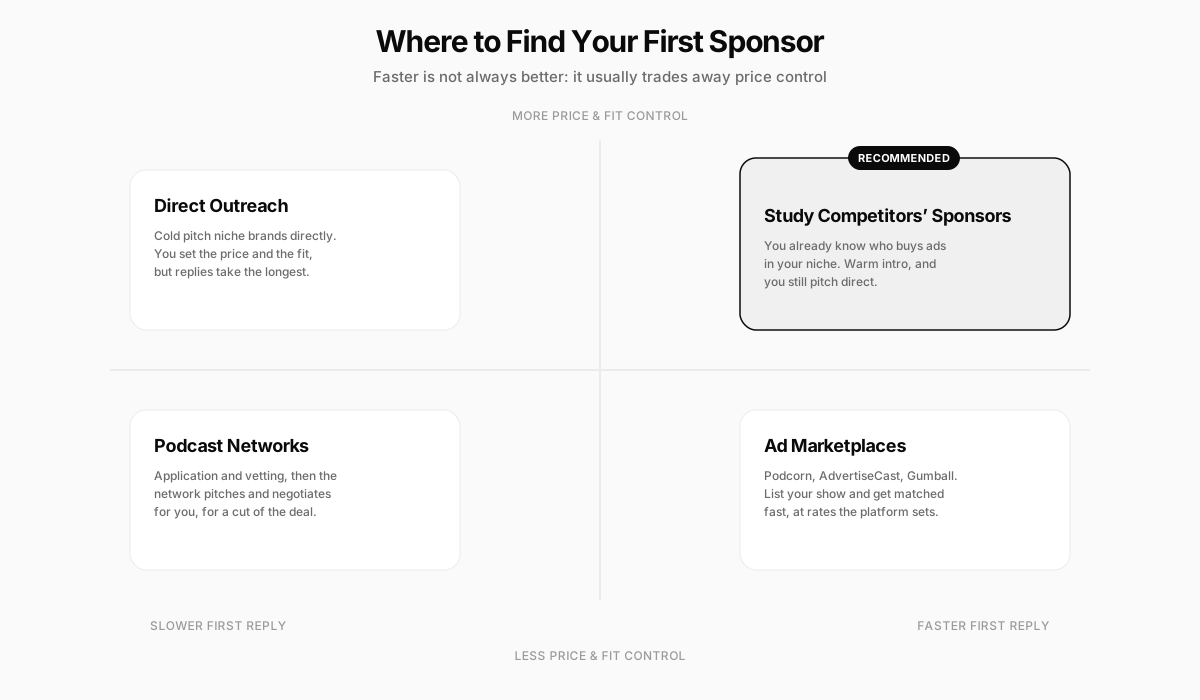
There's no single best channel, there's a trade-off between how fast you'll hear back and how much control you keep over the price and the fit.
Ad Marketplaces
Marketplaces like Podcorn, AdvertiseCast, and Gumball let you list your show, its audience, and your rates, then get matched with brands actively looking to buy podcast ads. They're the fastest way to get in front of sponsors who are already shopping, and several have lower download minimums than a traditional network. The trade-off is that the marketplace sets the structure of the deal, and takes a cut of what you earn.
Podcast Networks
Joining a network (Wondery, iHeart, and similar depending on your genre) means an application and vetting process, often a real bar to clear on downloads and production quality. Once in, the network pitches on your behalf and negotiates rates, taking a percentage in exchange for handling the sales work you'd otherwise do yourself.
Direct Outreach to Niche Brands
Going straight to a brand you'd actually want as a sponsor, a company selling something your audience uses, is the slowest path to a yes but the one where you set the price and the terms. Cold outreach from an unknown podcast gets a low response rate. It gets a much better one when paired with the next tactic.
Study Competitors' Sponsors
Listen to two or three podcasts with an audience similar to yours and note who's already advertising on them. Those brands have already decided podcast ads work for their category and budget, which means your pitch isn't cold, it's a warm intro backed by evidence: "you're already sponsoring shows like mine, here's why mine is a fit too." This is consistently the fastest route to a first yes, because you've done a brand's market research for them before you ever email.
How to Land Your First Sponsor, Step by Step
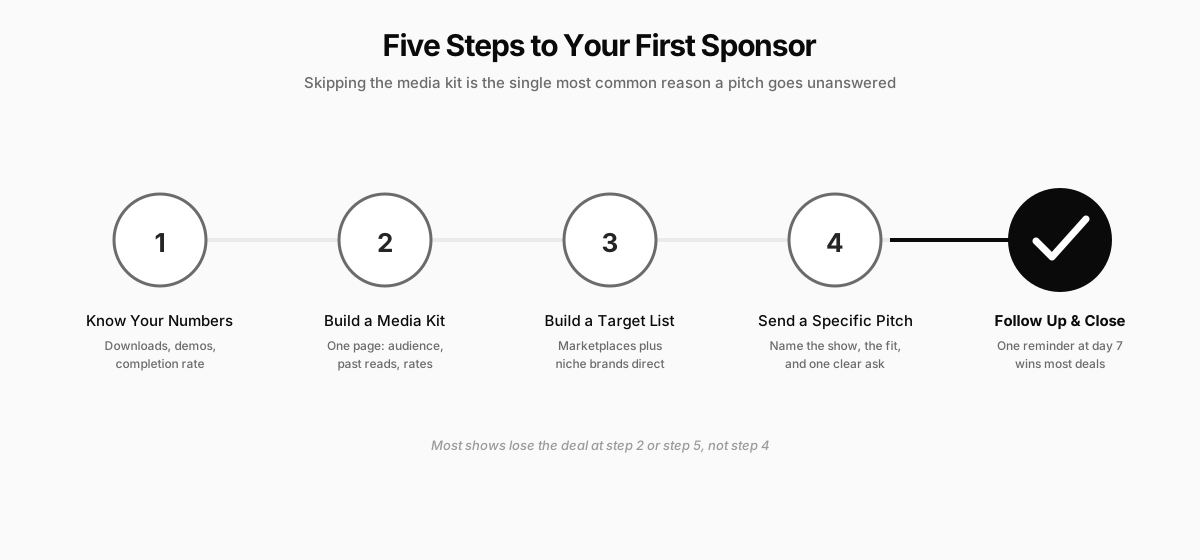
- Know your numbers. Downloads per episode (30-day average, not lifetime total), listener demographics if you have them, and completion rate. Vague numbers read as no numbers.
- Build a one-page media kit. Show name, format, audience description, download numbers, past sponsors if you have any, and your rates. One page. Sponsors skim, they don't read a deck.
- Build a target list. Combine a marketplace listing with 10 to 15 direct-outreach brands pulled from competitor research, so you're not relying on one channel alone.
- Send a specific pitch. Name the show, name why it fits this specific brand, and make one clear ask (a call, a rate card, a trial episode). Generic pitches read as spam and get filtered like spam.
- Follow up once, then close. A single follow-up at the one-week mark recovers a surprising number of deals that would otherwise die in an inbox. Don't follow up more than twice.
A Pitch Template You Can Actually Use
Subject: [Show Name] x [Brand]: a fit worth a quick look

Hi [Name],

I host [Show Name], a [genre] podcast averaging [X] downloads per episode
among [one-line audience description]. I noticed [Brand] sponsors shows
like [Competitor Podcast], and I think we'd be a strong fit for the same reason.

A few numbers: [download count], [completion rate if known], [any relevant
demographic]. Media kit attached.

Would a 15-minute call make sense to see if a trial episode is worth it?

[Your name]
Swap in real numbers before you send it. A pitch with placeholder-shaped numbers is more suspicious than one with modest real ones.
Mistakes That Kill Sponsorship Deals
- Pitching without a media kit. Sponsors evaluate dozens of shows a week. Making them ask you for basic numbers is often where the pitch dies quietly.
- Overloading an episode with sponsors. More than one or two ad reads per episode measurably increases listener drop-off, which shows up in your next pitch as a worse completion rate.
- Taking every sponsor who offers money. A mismatched sponsor (a product your audience doesn't trust you to have vetted) costs you credibility that's expensive to earn back, and future sponsors notice a show that will endorse anything.
- Never following up. Inboxes are noisy. One polite nudge at the one-week mark is expected, not pushy.
- Quoting a single flat rate for every brand. A niche brand with a perfect audience fit will often pay above your standard CPM. Asking is free.
Beyond Sponsorships: Build Revenue a Sponsor Can't Take Away
Sponsorship income has a structural weakness worth naming honestly: it depends on someone else's ad budget. A quiet quarter for advertisers, a shifted marketing strategy, a single big sponsor moving on, and a show that leaned entirely on sponsorship revenue can lose a large chunk of income overnight, through no fault of the host or the content.
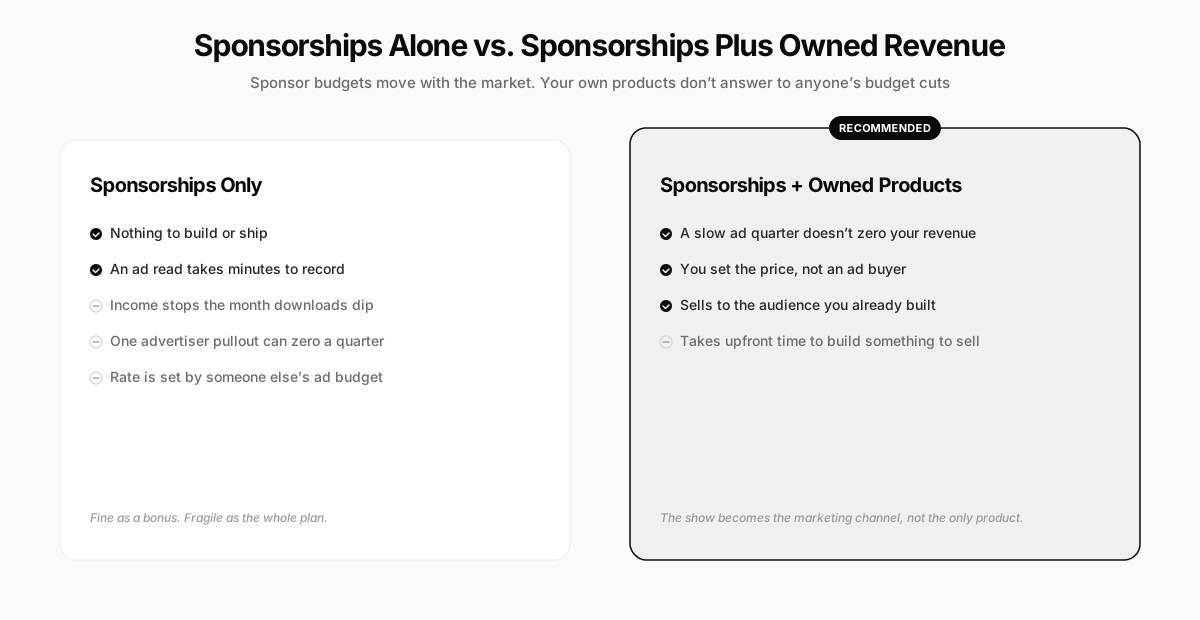
The fix isn't to drop sponsorships, it's to stop treating them as the whole plan. Most podcasters already have an asset sponsors are effectively renting: an audience that trusts them. That audience will also pay directly, for a course or download that goes deeper than the show can, a template or guide referenced in an episode, or a paid membership with bonus episodes and direct access.
This is where Crevio fits into a podcast's revenue mix. Crevio is an AI business builder: you describe what you want to sell, courses, downloads, or a paid membership, and it builds the storefront, sets up payments through Stripe, and handles delivery, so your engineering effort goes into the podcast instead of a checkout flow. It starts on a free Starter plan (5% transaction fee, two published products), with Pro at $20/mo (2.5% fee, unlimited products) and Business at $50/mo (1% fee, custom domain, no Crevio branding) as the show's owned revenue grows. None of that replaces sponsorship income. It sits next to it, so a slow month for advertisers doesn't zero out the show's income, and the terms are ones you set instead of ones an ad buyer sets for you. Sponsors pay you for the audience you already built. Owned products pay you for the trust it took to build it.
FAQ
It depends entirely on downloads and ad type. Using 2026 CPM benchmarks of $15-$40 for a spot ad, a show with 10,000 downloads selling one mid-roll host-read at $30 CPM earns about $300 for that ad. Stack multiple ad slots or a higher-value niche audience, and per-episode revenue scales up from there.
Traditional ad networks and larger marketplaces typically look for 10,000 to 20,000 downloads per episode. Direct deals and affiliate-style sponsorships have no hard floor. Shows with a few hundred downloads in a well-defined niche land sponsors regularly by pitching brands directly instead of waiting to qualify for a network.
A network vets and onboards a smaller number of shows, then sells and negotiates sponsorships on their behalf for a cut of the deal, similar to a talent agency. A marketplace like Podcorn or AdvertiseCast is closer to a self-serve listing platform: you list your show and rates, and brands browse and reach out, usually with a lower bar to join and less hands-on negotiation support.
Related Blog Posts
What will you sell today?
Describe what you want to sell — Crevio builds, launches, and grows it. Products, payments, and marketing, all on autopilot.
Start for free