Your business,
on autopilot.
One platform for creating, running and growing your business, powered by AI.
Best Microlearning Platforms in 2026: 6 Tools Compared





The microlearning market is worth an estimated $3.51 billion in 2026 and growing at roughly 13% a year, which is a polite way of saying every L&D team on earth has decided five-minute lessons beat two-hour workshops. The hard part isn't agreeing that short training works. It's picking the right tool to deliver it, because "microlearning platform" now covers everything from SMS text courses to full mobile LMS suites with AI-driven spaced repetition.
- Fastest to launch, no app required: Arist (SMS, Slack, Teams)
- Best free option for small teams: TalentCards
- Best for converting existing docs into a course fast: 7taps
- Best for training tied to software adoption: Whatfix
- Best free mobile LMS: SC Training (formerly EdApp)
- Best for AI-driven frontline enablement at scale: Axonify
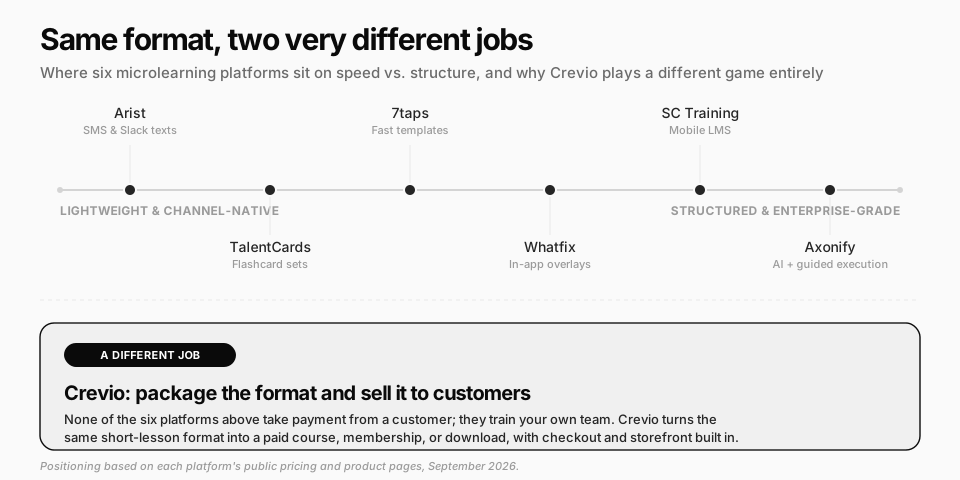
- The one that's a different job entirely: Crevio, for selling bite-sized lessons as a product instead of running them internally
Quick Comparison
| Platform | Best for | Starting price | How training reaches people |
|---|---|---|---|
| Arist | Sales & frontline enablement, no app to install | Custom, contact sales | SMS, Slack, Teams, email |
| TalentCards | Free flashcard-style training for small teams | Free (5 users); $0.80/user/mo | Native mobile app |
| 7taps | Turning existing docs into a course fast | Free (2 courses, 500 learners); $4,995/yr | Link, QR, email, Slack, Teams |
| Whatfix | Microlearning wired into your own software | Enterprise only, contact sales | In-app overlays inside your product |
| SC Training | Free mobile LMS with gamification | Free (10 seats); $24/seat/mo annual | Native mobile app |
| Axonify | AI-personalized training for large frontline teams | Custom, contact sales | Native app + guided execution layer |
| Crevio | Selling bite-sized lessons to paying customers | Free (Starter plan) | Your own branded storefront |
What Is a Microlearning Platform, and Who Actually Needs One?
A microlearning platform delivers training in short, focused units, usually 2 to 10 minutes, instead of hour-long courses. The format works because it matches how people actually learn on the job: in stolen minutes between tasks, not in a scheduled classroom block. Spaced repetition, quick quizzes, and mobile-first delivery are the common threads across almost every tool in this space.
But "microlearning platform" is really two different product categories wearing the same label:
Internal training tools. Arist, TalentCards, 7taps, Whatfix, SC Training, and Axonify all exist to train your own employees: onboarding new hires, keeping frontline staff current on procedures, or reinforcing software rollouts. Nobody pays for the content itself. The company pays a per-seat or per-learner fee to deliver it internally.
Content you sell. If you're a coach, consultant, or subject-matter expert who wants to package what you know into short lessons and charge people to access them, none of the six tools above are built for that. They have no checkout, no storefront, no way to take a customer's card. That's a different job, and it's why Crevio shows up separately in this guide rather than ranked against the others.
Figure out which bucket you're in before you read another comparison table. It's the single biggest factor in which platform actually fits.
The Best Microlearning Platforms in 2026
1. Arist: Messaging-Based Training for Slack, Teams, and SMS
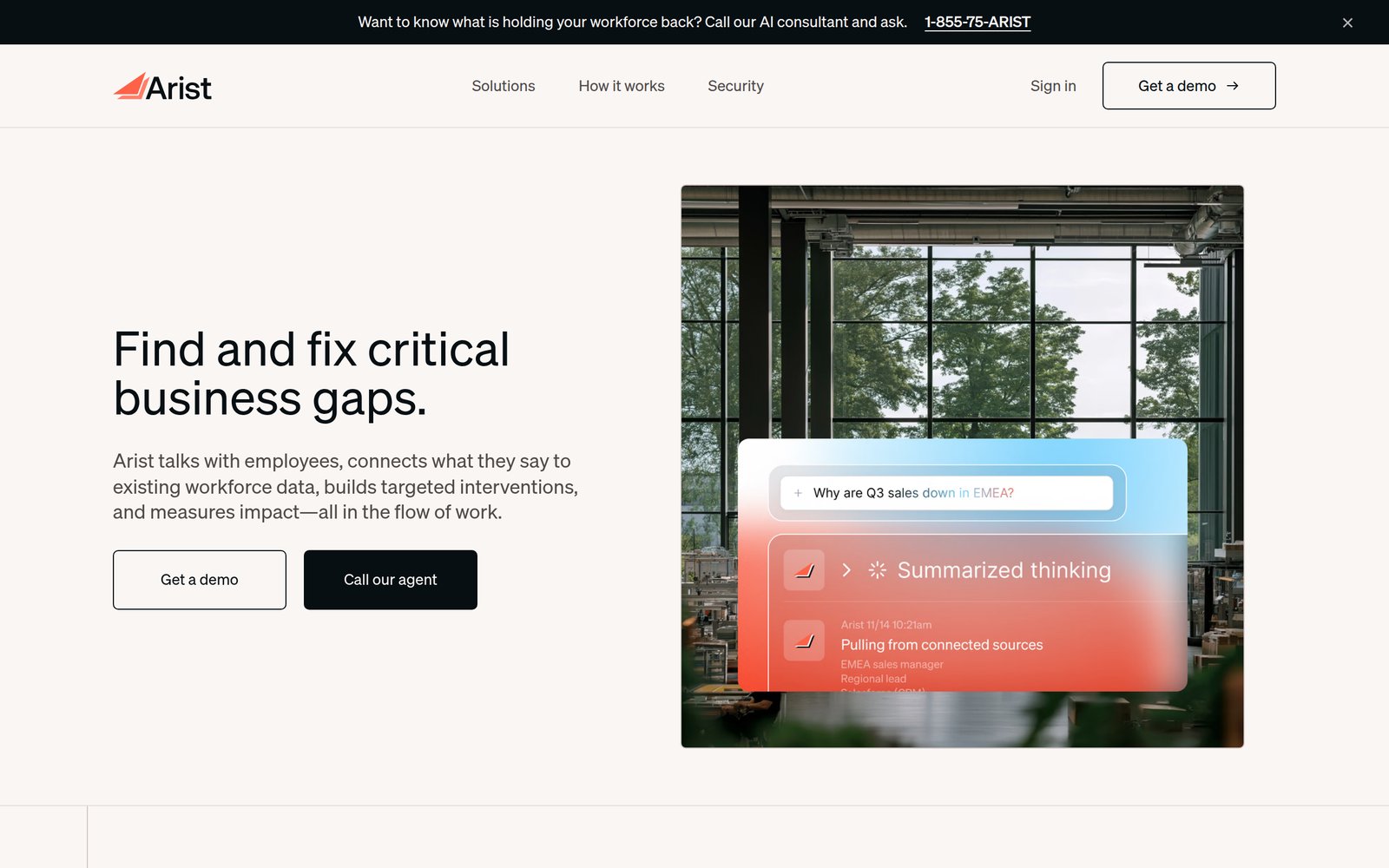
Arist delivers training as a conversation. Lessons arrive as SMS texts, Slack DMs, or Teams messages, 2 to 5 minutes a day, with no app to download and no LMS login to remember. Its AI agents can also convert existing internal documents (a wiki page, a policy PDF) directly into a message-based course, which cuts the authoring time that kills most training programs before they launch.
Where it fits: distributed sales teams, frontline staff without a company laptop, or any rollout where "download another app" is the reason adoption dies. It's the least "LMS-shaped" tool in this list, which is exactly the point.
Where it doesn't: Arist doesn't publish pricing anywhere on its site, not even a starting number. You talk to sales before you know what this costs, which rules it out if you're comparing options on a Friday afternoon and want a number today.
2. TalentCards: Flashcard-Style Training for Deskless Teams
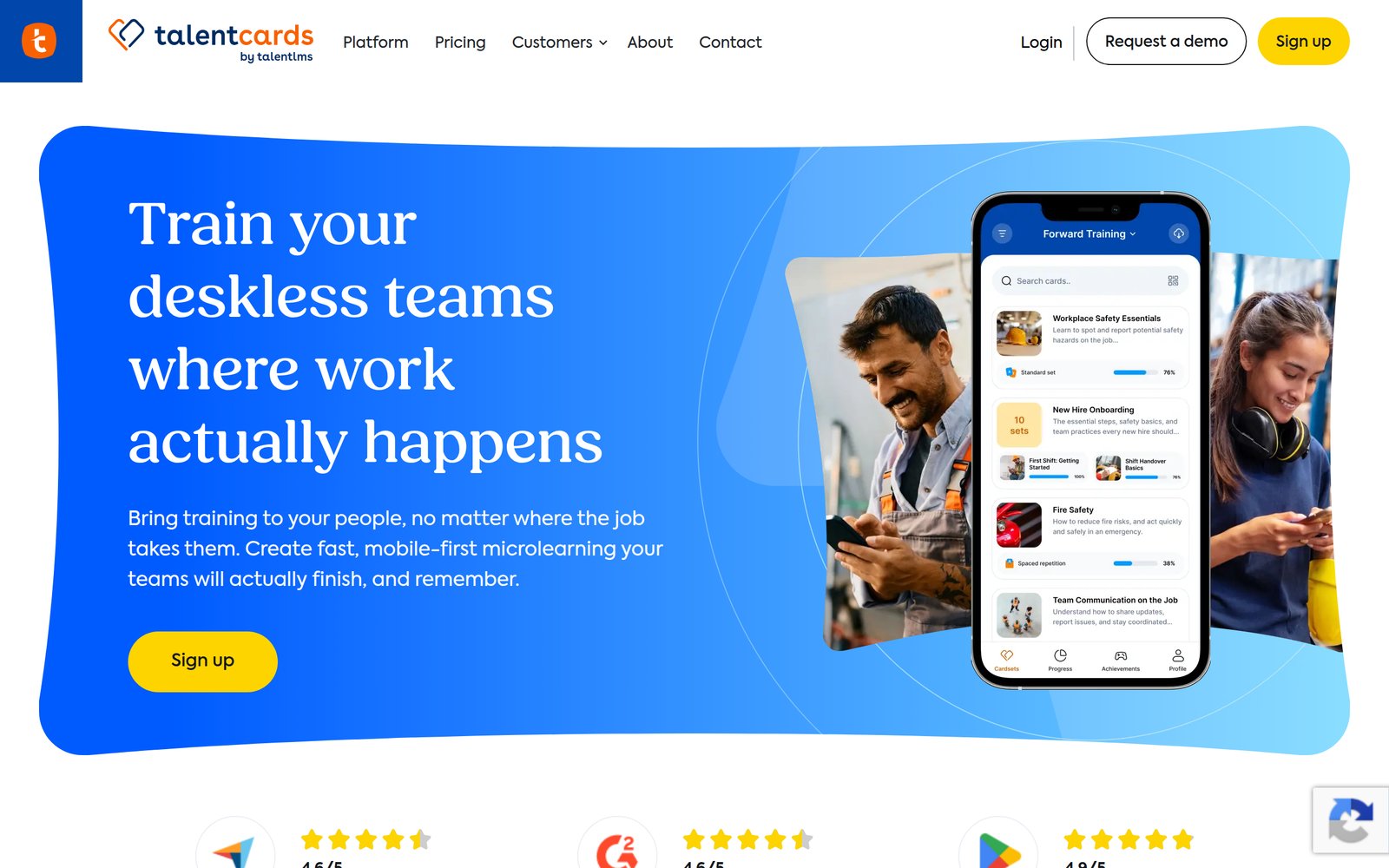
TalentCards, from the team behind TalentLMS, builds training as swipeable flashcard sets: an image or video on one side, a quiz on the other. It's aimed squarely at deskless and frontline workers (retail, manufacturing, hospitality) who learn on a phone between shifts, not at a desk.
The free plan covers up to 5 users with unlimited courses, spaced repetition, and custom branding already included, which is generous for a genuine free tier. Paid plans start at $0.80 per user per month on the Standard tier and $1.20 per user per month on Premium, both billed in blocks of 50 users up to 2,000, with 20% off on annual billing.
Where it fits: small and mid-sized teams that want real microlearning (not a stripped-down LMS) without an enterprise sales call. It's one of the few tools here where you can see exact pricing and sign up without talking to anyone.
Where it doesn't: flashcards are a narrow format. If your training needs branching scenarios, longer video, or a certification workflow, you'll outgrow the card metaphor.
3. 7taps: The Fastest Way to Turn Existing Content Into a Course
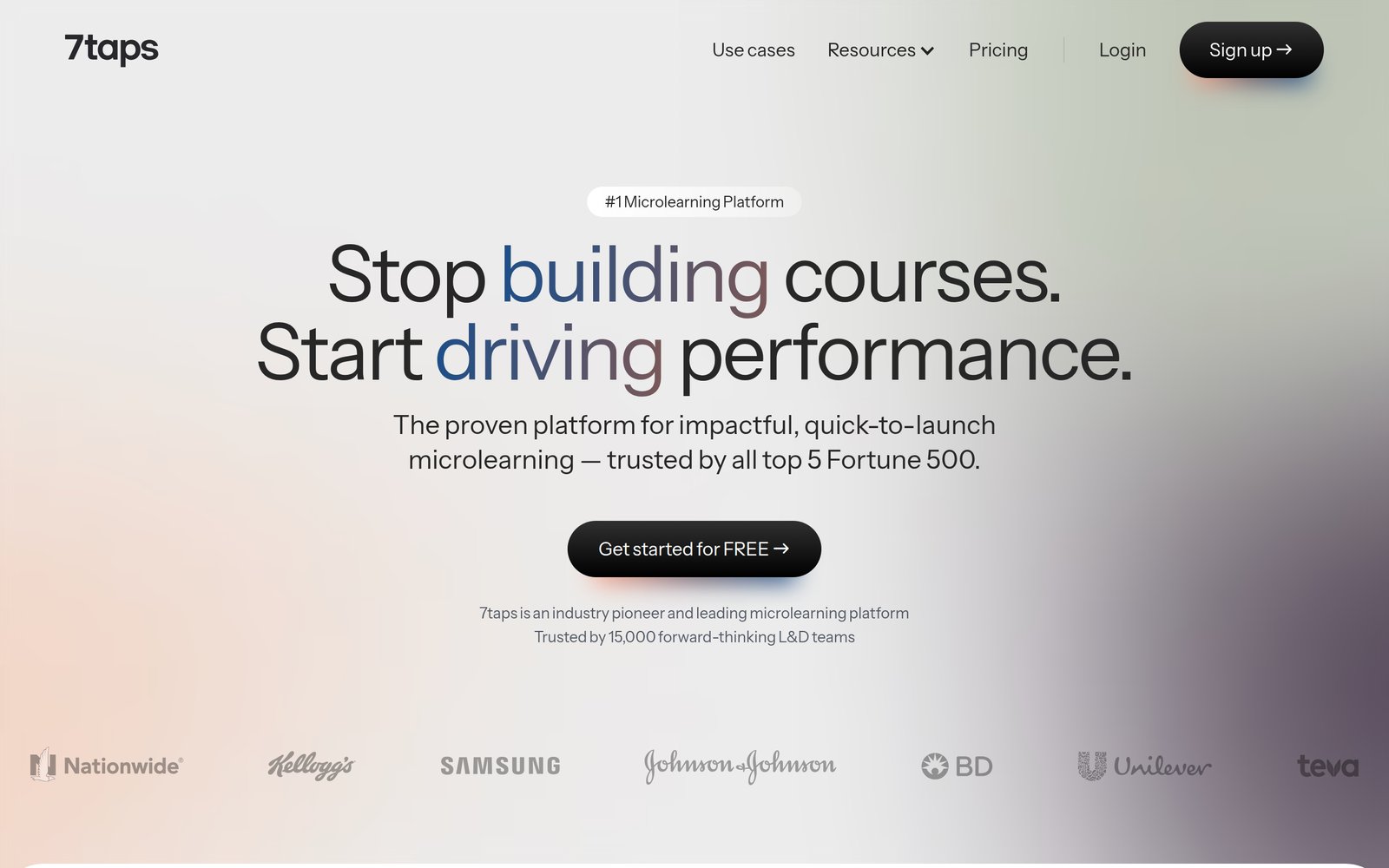
7taps leans hard into speed. Its AI content converter takes a slide deck, PDF, or even a rough outline and turns it into a mobile-first course in minutes, using pre-built templates instead of a blank-canvas authoring tool. It's built and marketed for L&D teams, with case studies from Fortune 500 companies like Kellogg's and Johnson & Johnson on its homepage.
The free tier is a real one: unlimited courses up to 2 published, 500 active learners, and the AI course builder included, with no credit card required. The paid Starter plan jumps straight to $4,995 a year for unlimited courses and basic analytics, which is a steep step up from free with nothing in between.
Where it fits: teams that already have training content sitting in old decks and PDFs and just need it converted into something people will actually finish.
Where it doesn't: the free-to-Starter price jump ($0 to $4,995/year, no mid-tier) is the single least gradual pricing curve in this comparison. Budget for it before you fall in love with the free plan.
4. Whatfix: Microlearning Wired Into Your Own Software
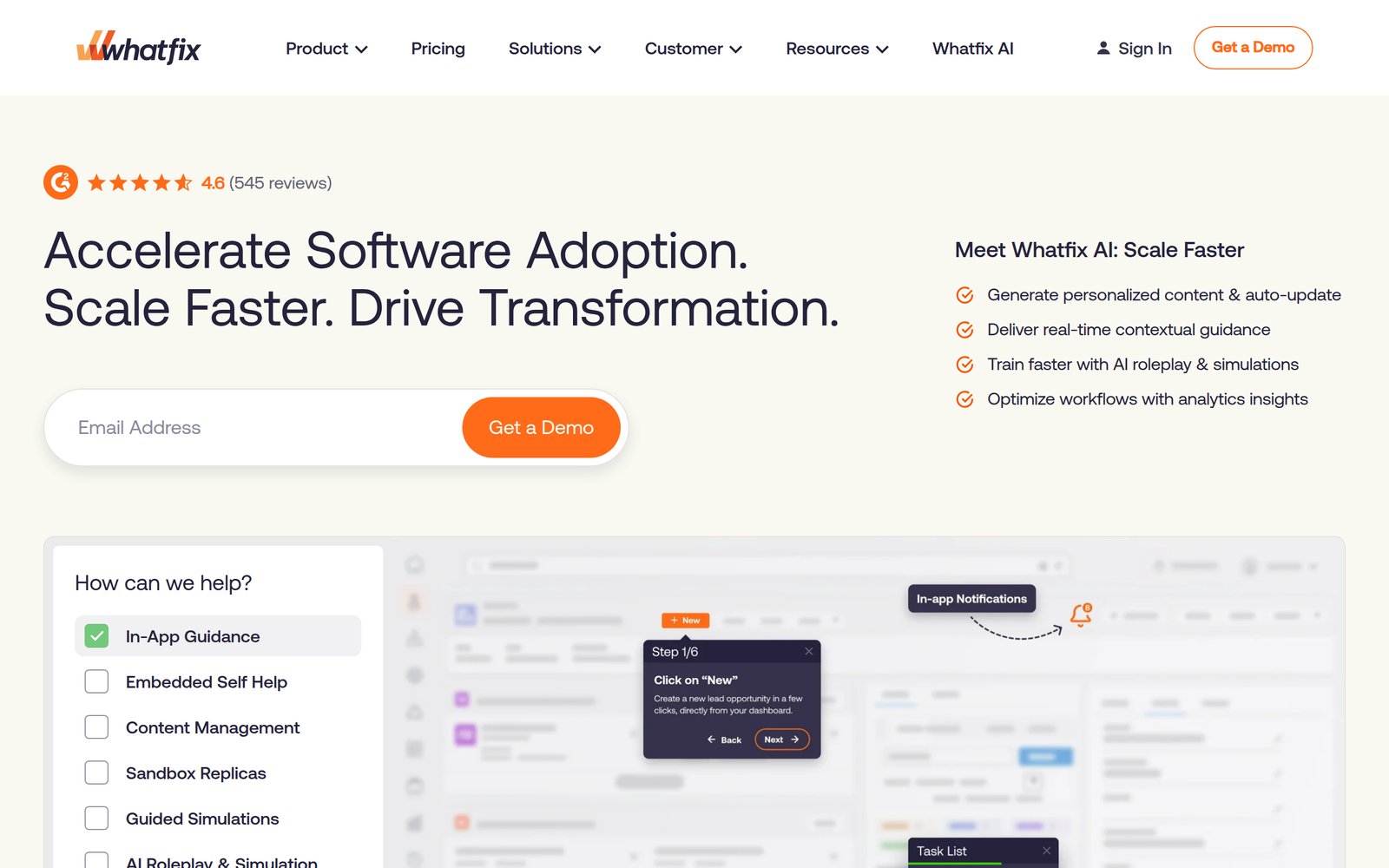
Whatfix is a digital adoption platform first and a microlearning tool second. Instead of a separate course a learner opens on purpose, Whatfix overlays step-by-step guidance, tooltips, and quick lessons directly inside the software someone is already using, walking a new hire through a CRM or ERP workflow the first time they touch it.
That's a genuinely different delivery model from everything else on this list, and it's the right one specifically for software onboarding and release enablement, where the training needs to show up exactly where the confusion happens.
Where it fits: enterprise teams rolling out complex internal software (Salesforce, Workday, a custom ERP) who need in-context guidance, not a separate course library.
Where it doesn't: Whatfix doesn't publish pricing, and third-party pricing trackers cite median annual contracts in the $26,000 to $38,000 range, so this is squarely an enterprise tool. It's also not a general-purpose microlearning platform; if your training isn't tied to software your team uses, Whatfix is the wrong shape.
5. SC Training (formerly EdApp): A Free Mobile LMS With Gamification
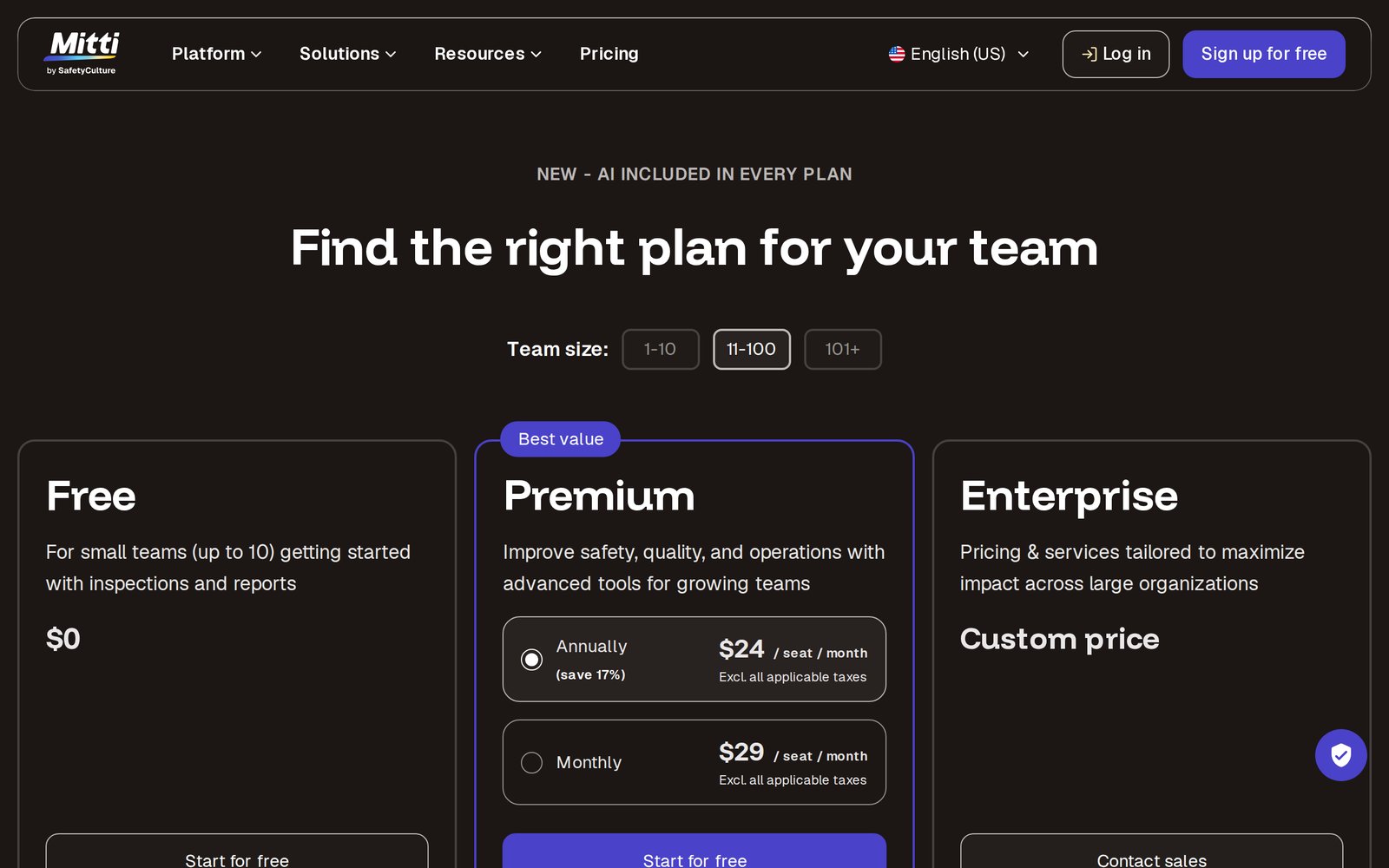
SC Training, the product formerly known as EdApp, is now part of SafetyCulture's broader Mitti platform. It's a mobile-first LMS with an editable content library, gamified quizzes, spaced repetition, and translation into dozens of languages, built for course sizes that fit a five-minute break on shift.
Worth knowing before you compare it: this product has rebranded twice in two years (EdApp to SC Training to folded into Mitti), and its pricing page now shows unified Mitti pricing rather than a training-specific SKU: free for teams up to 10, then $24 per seat per month billed annually (or $29 month to month) on the Premium tier, with a custom Enterprise plan above that. If you've seen older reviews citing a $5-per-learner number, that's the EdApp-era pricing; it no longer matches what the live pricing page shows.
Where it fits: small teams that want a genuinely free, full-featured mobile LMS to start, with room to grow into SafetyCulture's broader operations suite (inspections, tasks, asset management) later.
Where it doesn't: the repeated rebranding makes it a harder product to evaluate from search results alone. Check the live pricing page yourself before you budget against anything you read, including this article.
6. Axonify: AI-Personalized Training for Large Frontline Teams
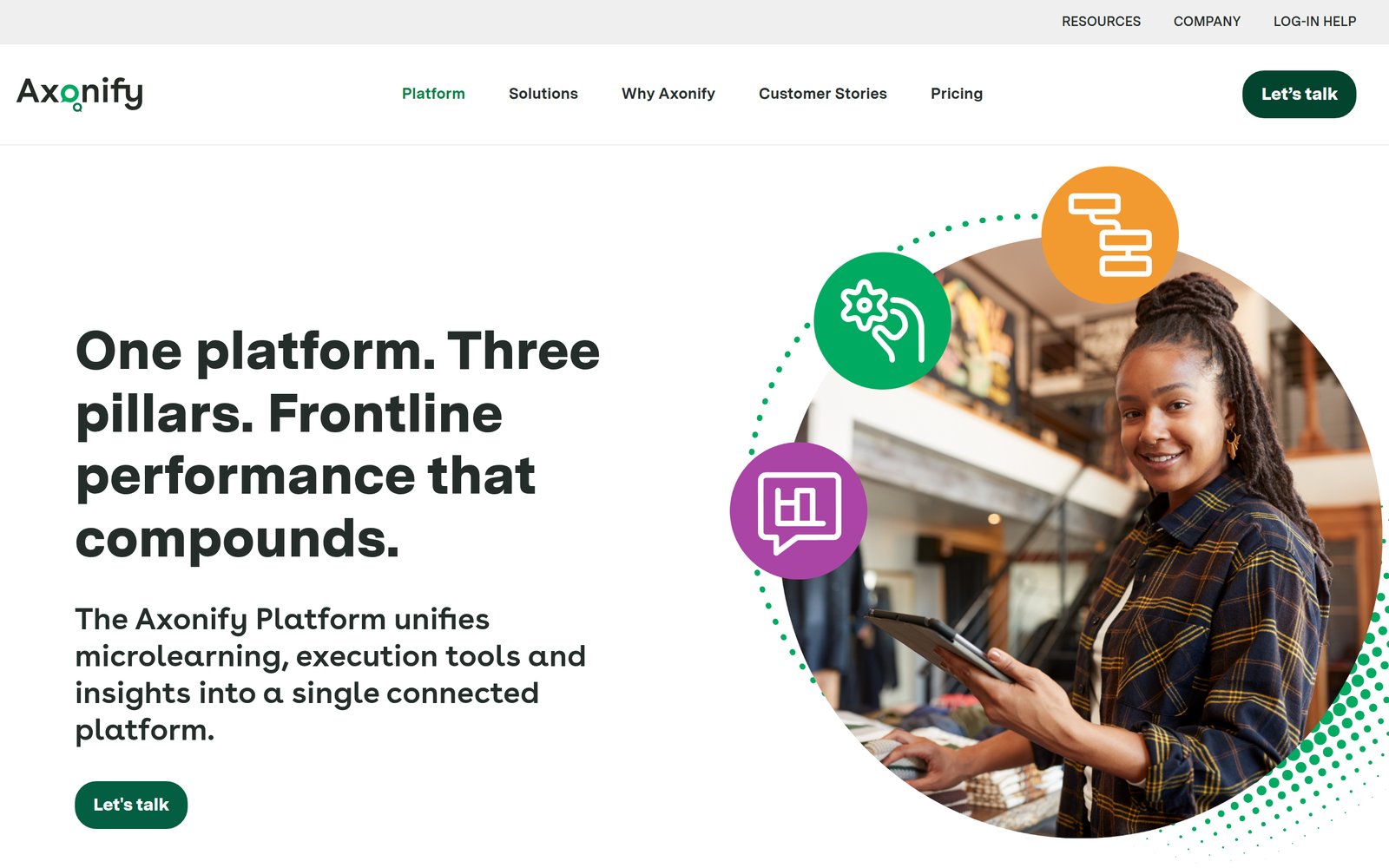
Axonify is the most structured, enterprise-oriented tool in this comparison. It combines adaptive microlearning (spaced repetition tuned to what each employee has already forgotten) with what it calls "guided execution," turning daily tasks and communications into tracked, in-the-flow-of-work actions, plus a manager-facing dashboard of confidence scores and readiness data.
It's built for large retail, call center, and frontline organizations where "did the training actually change behavior on the floor" is a question leadership is asking with real money behind it.
Where it fits: large frontline workforces (thousands of employees) where you need both the training and the operational follow-through tracked in one place.
Where it doesn't: like Arist and Whatfix, Axonify has no public pricing, and its feature depth is built for organizations with a dedicated L&D team to configure it. A five-person startup doesn't need what Axonify is selling.
Crevio: When You Want to Sell the Lessons, Not Just Deliver Them
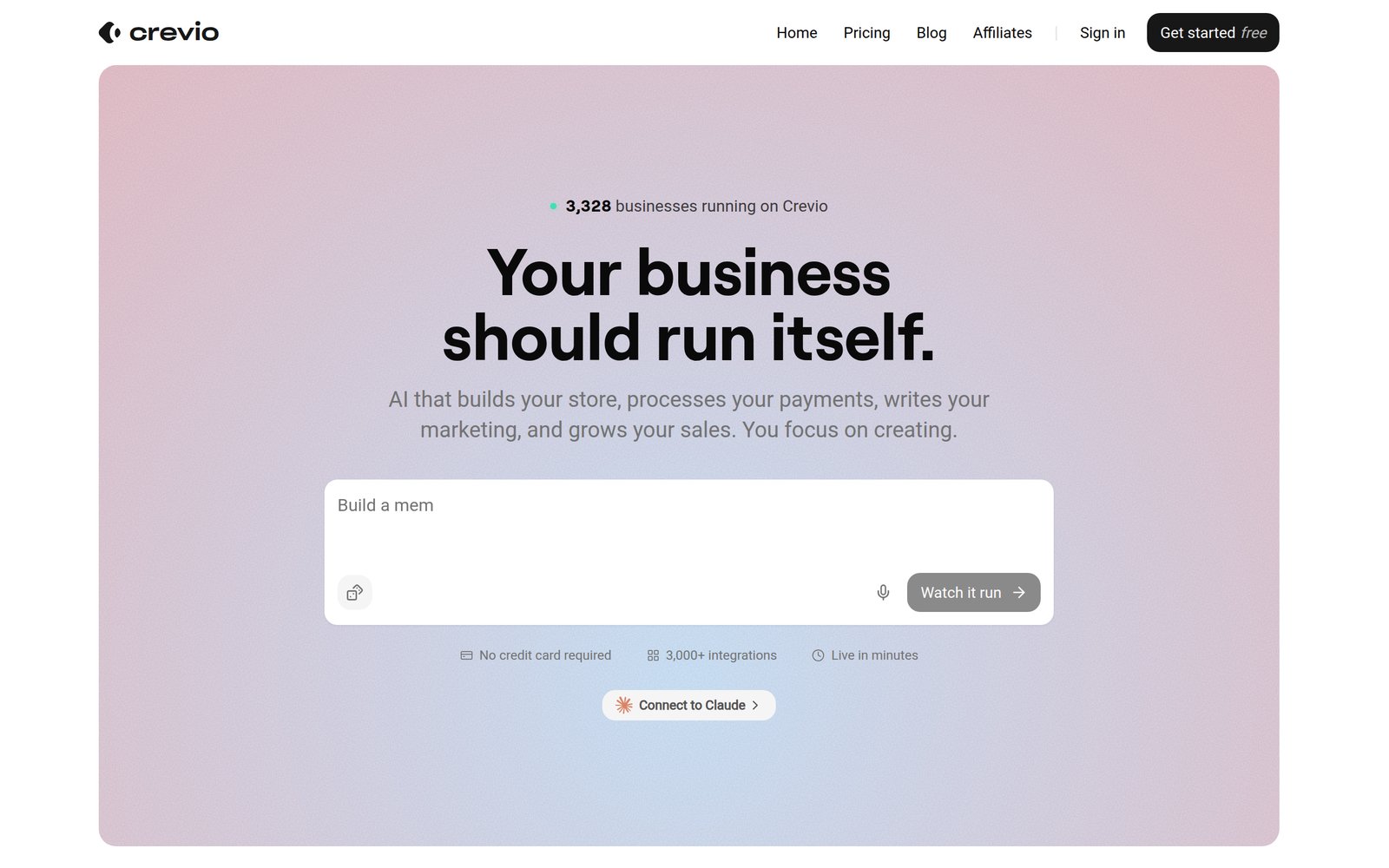
Every platform above solves the same problem from the same angle: how does a company train its own people faster. None of them solve a different, related problem: how does a coach, consultant, or subject-matter expert package what they know into short lessons and get paid for it.
That's what Crevio is for. It's an AI business builder, not a training platform: you describe what you want to sell, and Crevio's AI builds the storefront, sets up Stripe-powered checkout, and helps you launch it. Crevio's course product type supports exactly the kind of structure a microlearning-style offer needs: short modules and content items a customer buys access to, rather than a single monolithic video course.
If you're a coach who wants to sell a 5-day "skill sprint" delivered as short daily lessons, or a consultant packaging a process into a paid mini-course, Crevio gives you the storefront, payments, and marketing that none of the six tools above have, because none of them were built to take a customer's money in the first place. If you're still figuring out what to package in the first place, our guide on how to sell digital products is the better starting point; come back here once you know the format.
Be clear about what Crevio isn't. It has no spaced-repetition engine, no SCORM export, no employee-facing admin console for tracking internal training compliance. If you need to train 2,000 warehouse workers on a safety procedure and report completion to an auditor, that's Axonify's or SC Training's job, not Crevio's. Crevio's free Starter plan gets you started with a 5% transaction fee, dropping to 2.5% on the $20/month Pro plan and 1% on the $50/month Business plan, no revenue share model, and Stripe handling the actual payment processing.
How to Choose the Right Microlearning Platform
Work through these in order:
- Are you training your own team, or selling to customers? This single question eliminates most of the list. If you're selling, skip straight to Crevio. If you're training internally, keep reading.
- Does your audience have a company device, or just their own phone? Arist's SMS delivery beats every app-based tool if your learners are deskless and BYOD. If everyone already has the company app installed, a native mobile LMS like TalentCards or SC Training is fine.
- Do you have existing content to convert, or are you starting from zero? 7taps' AI converter is built for teams sitting on old slide decks. Arist's document-to-course agents solve the same problem for text-heavy source material.
- Is the training tied to a specific piece of software? If yes, Whatfix's in-app overlays will outperform a standalone course every time, because the guidance shows up exactly when someone is stuck.
- How many people, and how much budget for setup? Under a few hundred learners and a self-serve budget, TalentCards or SC Training's free tiers get you started today. Thousands of learners and a dedicated L&D team, Axonify or Whatfix's enterprise depth starts to pay for itself.
If you're building out full module maps rather than single lessons, our online course launch checklist covers the structuring work a microlearning platform won't do for you.
Every tool in this comparison assumes someone else is footing the bill for your training. The moment that stops being true, the moment you're the one asking learners to pay, you've left this market entirely and walked into a different one. Pick accordingly.
FAQ
A traditional LMS is built around longer courses, multi-module certifications, and formal compliance tracking. A microlearning platform is built around short, focused lessons (usually under 10 minutes) delivered more frequently, often with spaced repetition to reinforce what's already been taught. Some tools, like SC Training and Axonify, blend both; others, like Arist, skip the LMS shape entirely and deliver training as messages.
Not with the internal-training tools in this comparison. Arist, TalentCards, 7taps, Whatfix, SC Training, and Axonify are all priced and built to train a company's own employees, with no checkout or storefront for a paying customer. If you want to package short lessons as a paid product, you need a platform built for selling, like Crevio, rather than one built for internal delivery.
It ranges widely by audience. Team-focused tools like TalentCards start free for small teams and scale to $0.80 to $1.20 per user per month. 7taps is free up to 500 learners, then jumps to roughly $4,995 a year. Enterprise-oriented platforms like Arist, Axonify, and Whatfix don't publish pricing at all; expect a sales conversation and a quote scaled to your headcount.
Related Blog Posts
What will you sell today?
Describe what you want to sell — Crevio builds, launches, and grows it. Products, payments, and marketing, all on autopilot.
Start for free